

Last school year, I had the pleasure of supporting Regi’s Grade 6 class during their field trip to the Vancouver Aquarium. That experience taught us a lot about what it takes to design a field trip where students aren’t just visitors—they’re creators.
 Jen
Jen
Teachers like you have been shaping that learning, too! When Grade 6 Teachers, Alyssa and Raychelyn heard about the project, they immediately reached out to plan the next iteration together. After a great conversation, we decided to take the project in a slightly different direction.
This year, we’re channeling March of the Penguins.
Animal Documentary Filmmaking. 🐧
Iterating on the Plan 🔄
Last year, in Regi’s class, the students focused on creating animal-conservation news reports. They developed detailed scripts that mapped out exactly what they wanted to say and even the specific shots they planned to record once they arrived at the aquarium.
In the end, the plan was too rigid. The required shot list kept students waiting for animals to behave a certain way, and the scripted news-report format had them reshooting takes instead of actually engaging with the animal they were supposed to be learning about.
 Jen
Jen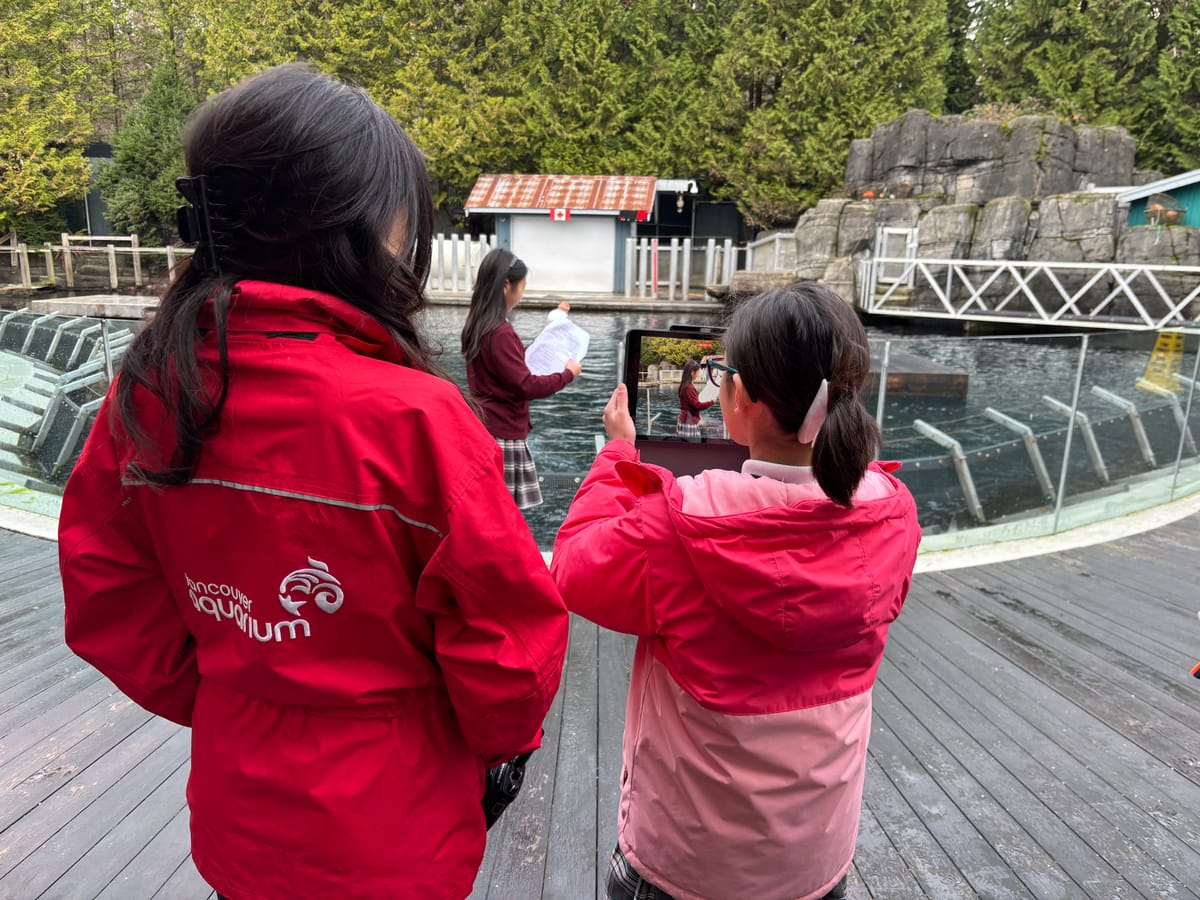
With Alyssa and Raychelyn's classes, we made a few adjustments to create more flexibility during their time at the aquarium. We also added two lead-up classes before the trip: one analyzing a few short animal documentaries, and another that functioned as a pre-production meeting focused on filming skills and camera movement.
From these changes, we aimed to improve the project in three ways.
First, we wanted students to develop a clearer sense of the kind of film they were creating by examining real documentaries.
Second, we planned to be more intentional about how students used technology and video while at the aquarium, giving them more time to actually interact with the exhibits.
Finally, we emphasized treating the Vancouver Aquarium as a place for field work—somewhere students would have a defined purpose and a responsibility during their visit.
Day 1: Analyzing Animal Documentaries
On the first day of the project, I spent about forty-five minutes with each Grade 6 class. We watched a series of short clips, each highlighting a different style of narration and documentation. Because the students were studying animals in extreme environments, we chose examples that focused on remarkable animal adaptations and experiences.
We watched:
- Penguins Huddle To Keep Their Eggs Warm - BBC Earth - huddling for warmth, focusing on answering the question of “how do penguins survive in this extreme environment?” voiceover matches what’s going on in the video
- March Of The Penguins - Trailer - storytelling aspect, focusing on music and strategic cuts in video
- Turtles Defrost After Freezing in the Winter - BBC Earth - adaptation example, timelapse
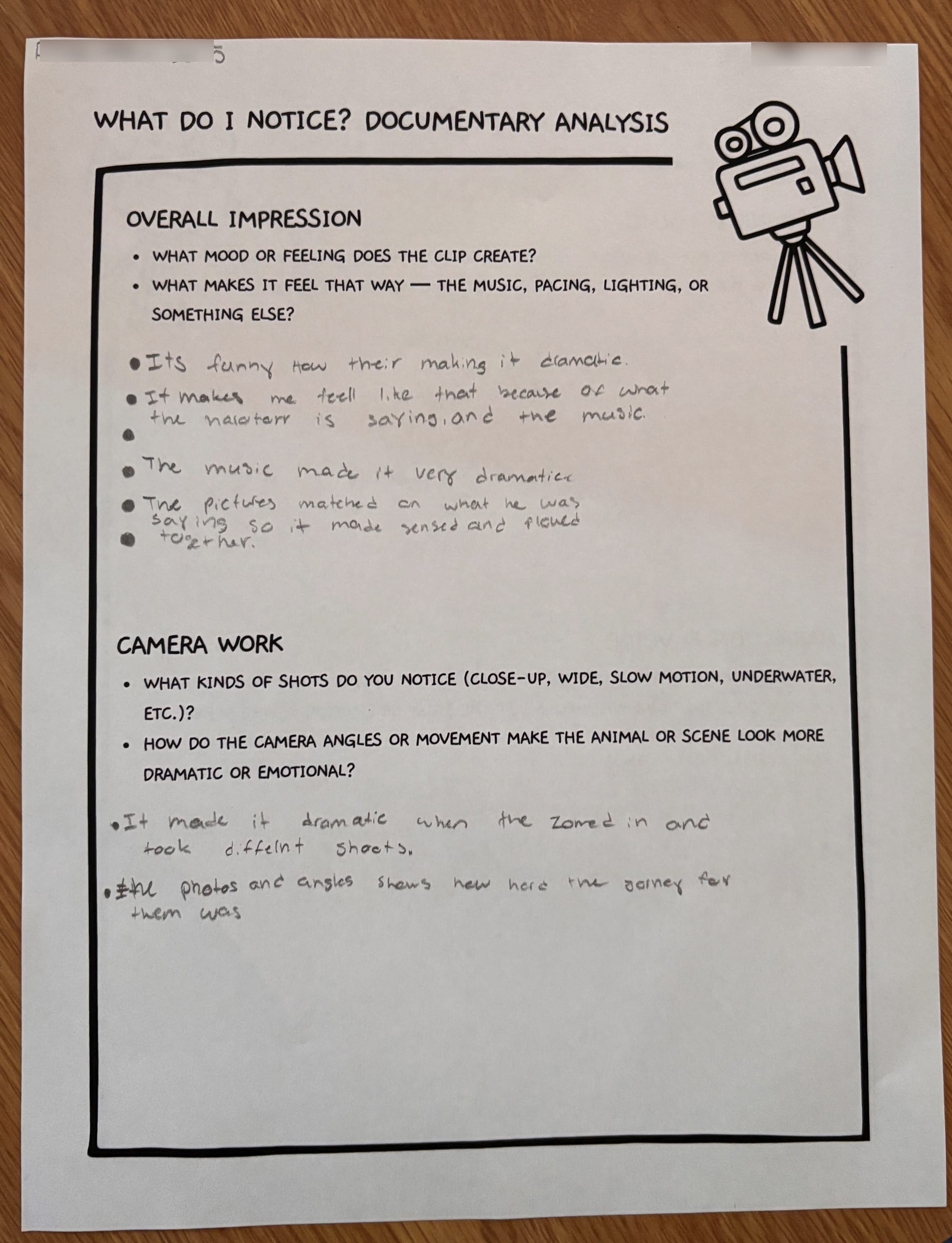
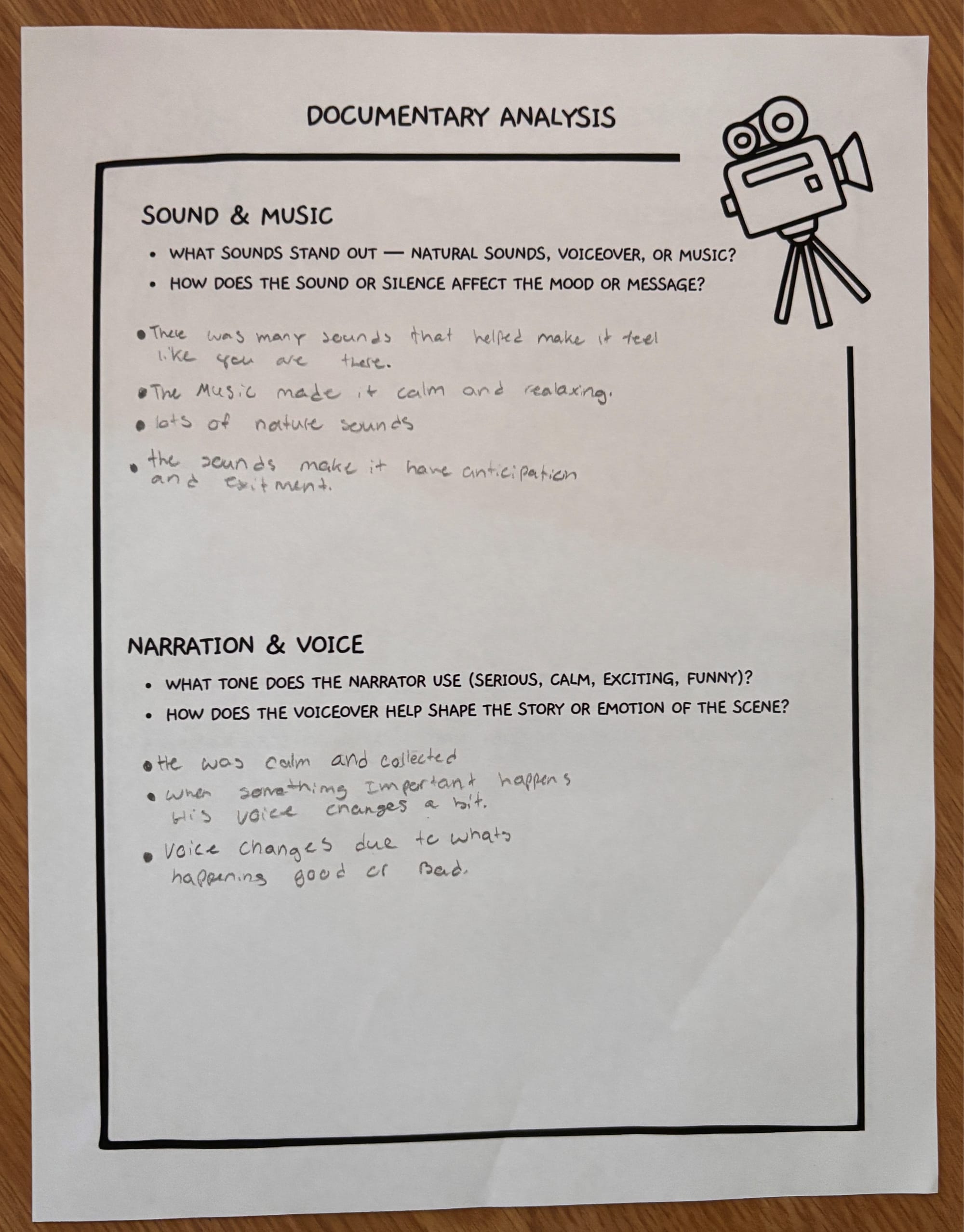
Structured handout for our analysis class. Download your own copy.
The students were fully locked in. After each clip, hands shot up immediately to share what they noticed.
The cuts between happy music and scary music made the video feel interesting the whole time.
There were multiple angles of the penguins being recorded, which gives us a better picture of what they are doing.
The shots of what the animals were doing matched up with what the narrator was saying, like when the narrator talked about the harsh weather conditions they penguins live in, the shot was of the penguins huddled around for warmth.
They used the timelapse feature to show the progression of time while the turtles hibernate in the winter.
As they spotted more and more filmmaking techniques, we started naming them and writing them down. This became the foundation for our pre-production meeting and eventually the scripts and shot lists they would use to create their own documentaries.
Day 2: Pre-Production Meeting 🏗️
I spent just under an hour with each Grade 6 class to give them a few tips and things to keep in mind for their recording day at the Aquarium next week. I framed it as a Pre-Production Meeting, which created a fun little buzz in the room once they realized they were doing something real filmmakers do.
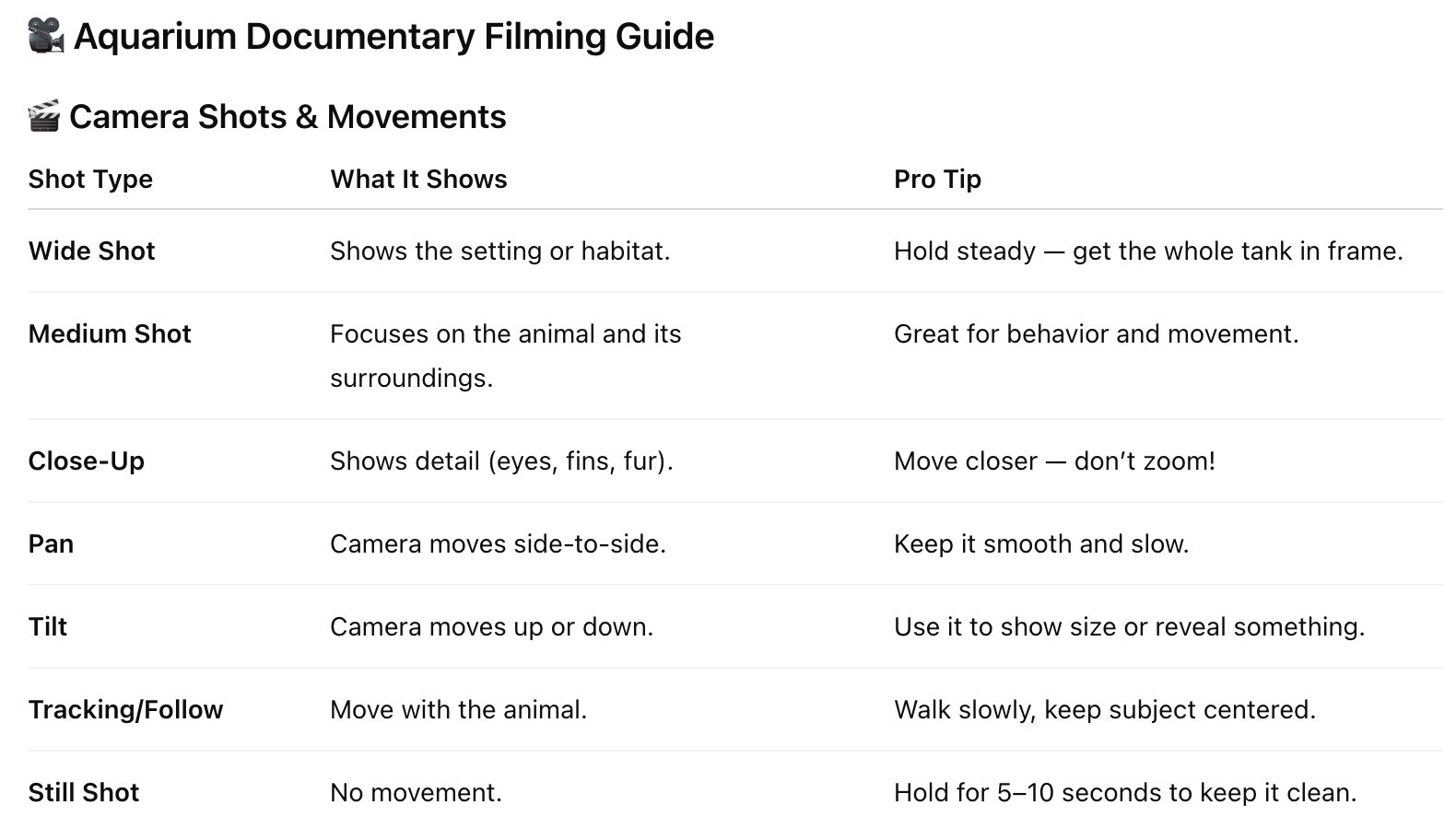
I brought in a small stuffed penguin to use as our subject and recorded examples of each shot in front of the class. As we watched them back, we talked about what each shot helps communicate. The students immediately made the connection that wide, medium, and close-up shots can be paired with movement shots like pan, tilt, and tracking to create more dynamic footage. 🐧
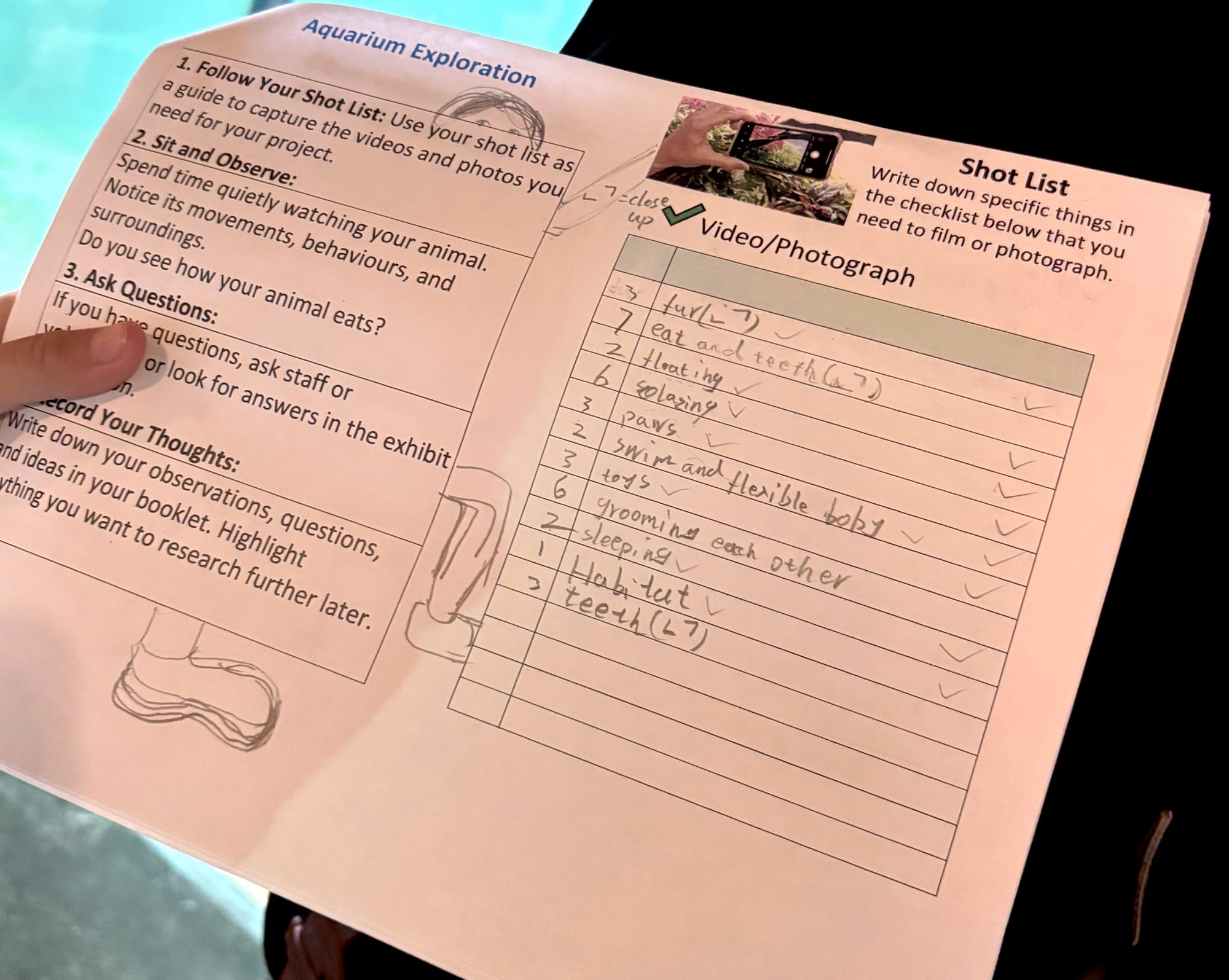
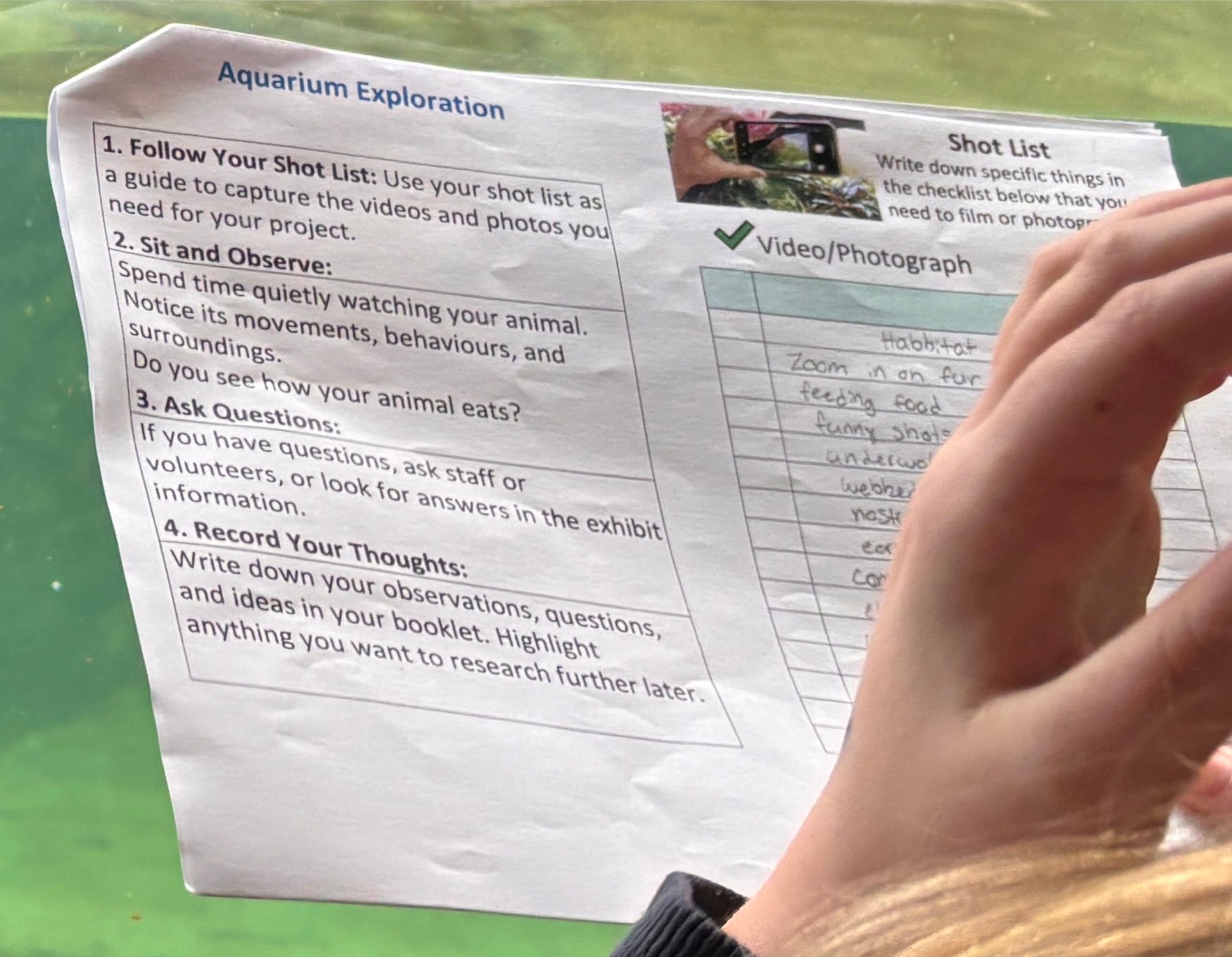
Students eventually came up with their own lists complete with shot types.
After that, I opened the Voice Memos app on the iPad and reminded them that sound can be recorded separately. If they hear something worth capturing—like the sea lions splashing—they can record audio on its own and layer it into their videos later.
One student asked about panorama photos, so I showed them how the feature works. At first, I didn’t think it would matter for this project, but once we tested it, I realized it could be incredibly useful.
They can take a pano shot of an exhibit and use it as a backdrop for any segments where they want to report from the field. That means they can film those parts back at school instead of spending precious time at the Aquarium trying to get the perfect reporter shot.
Last year, a few groups got stuck doing that instead of exploring, so this felt like a meaningful improvement.
Day 3: Field Work at the Vancouver Aquarium 🔎
Just before opening, I joined Alyssa, Raychelyn and their classes outside the Aquarium. I introduced myself to the parents and gave the students a quick reminder about their iPads. We emphasized trying to capture most of their footage within the first hour, when the exhibits are the least busy, so they could spend the rest of the day enjoying the feedings, shows, wet lab experiences, and the 4D movie.
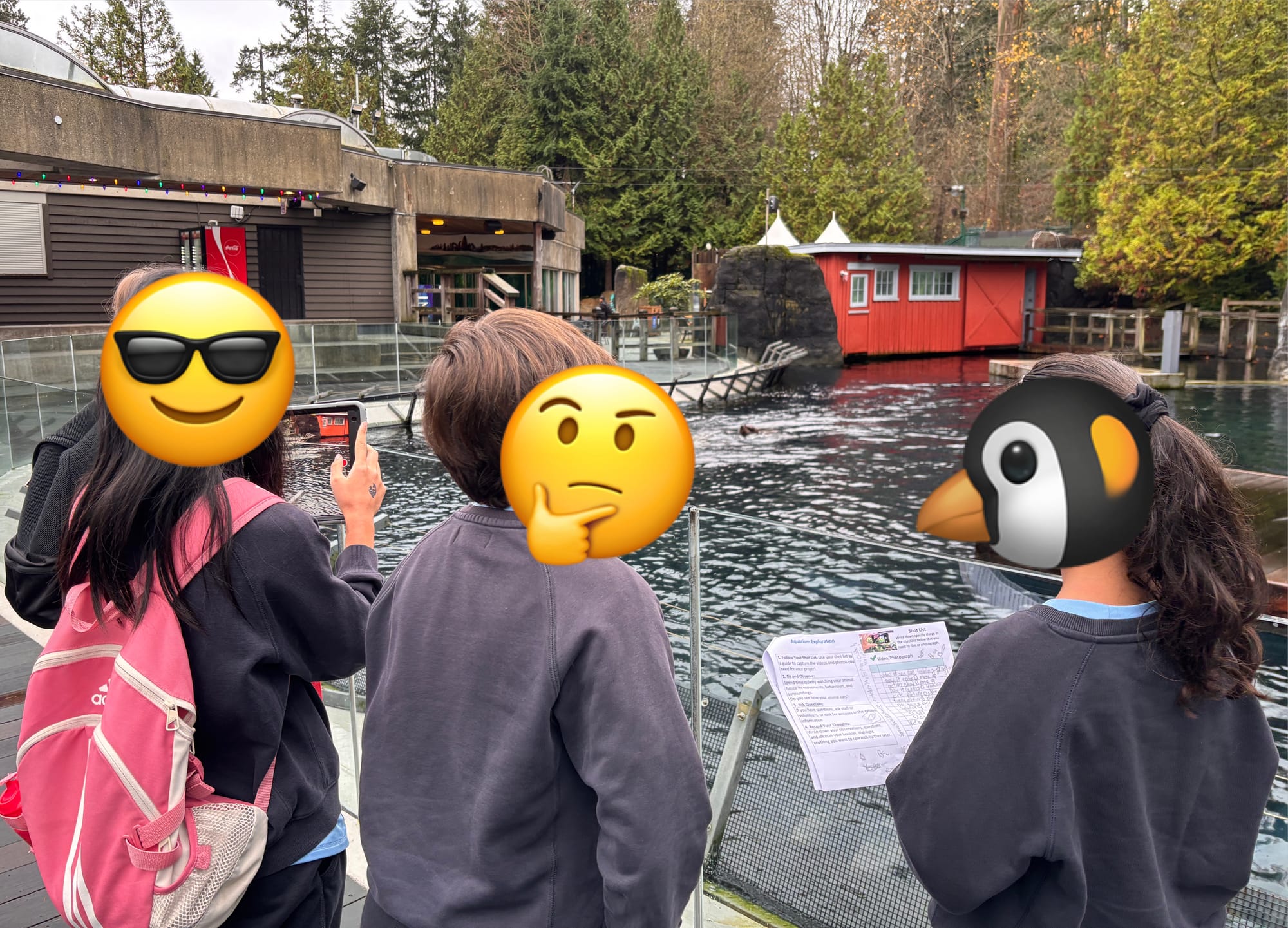
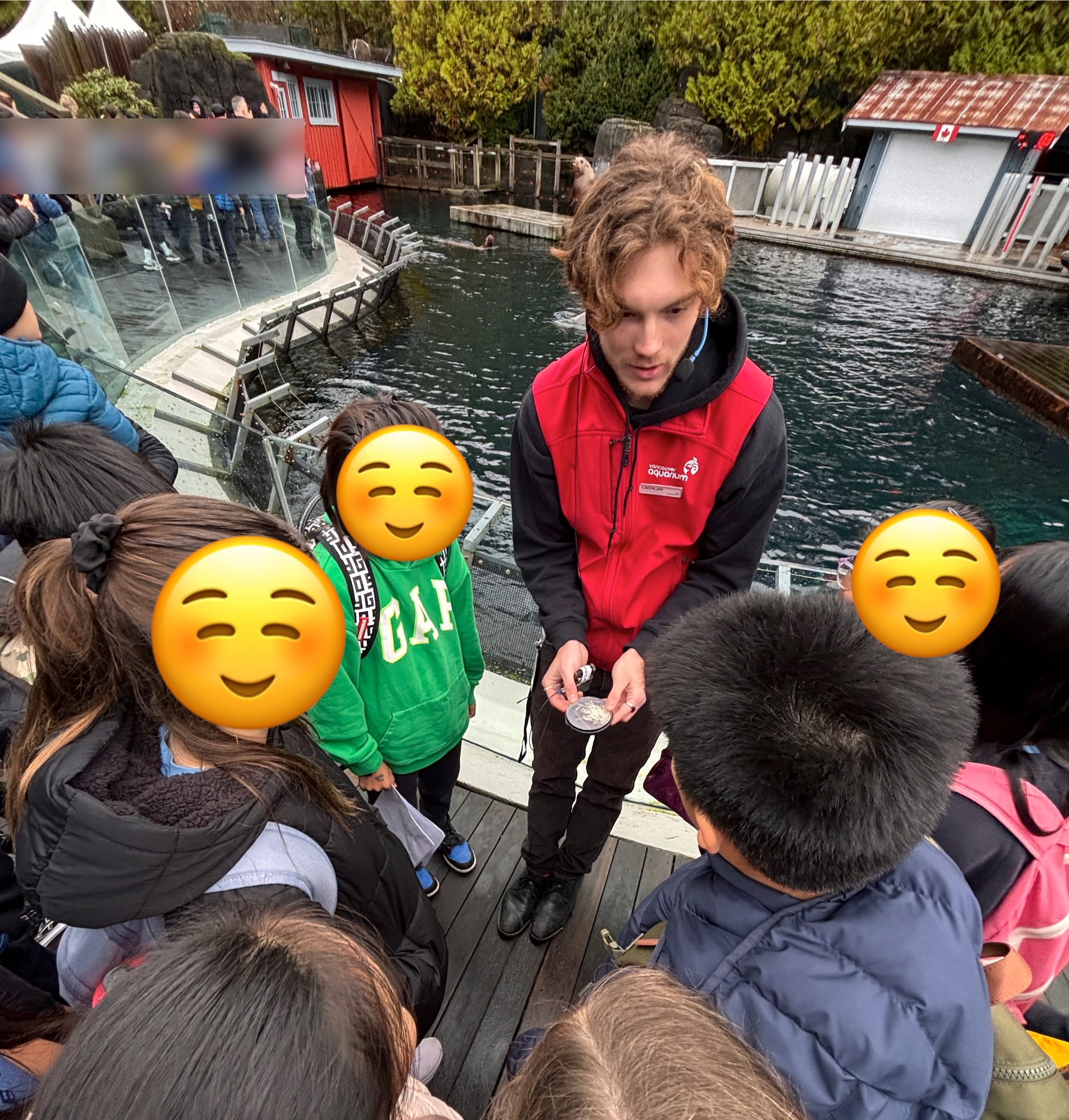
Following the shot list and getting advice from staff.
Once inside, I circulated between groups as much as I could. I encouraged a few to ask aquarium staff the questions they were wondering about the otters and sea lions. It was great hearing students use the language from our pre-production lesson—“Get a good close-up of their teeth,” or “I want to stand farther back for an establishing shot of the environment.” I saw them anchoring their elbows (their “T-rex arms”), using movement shots, and genuinely thinking like filmmakers.
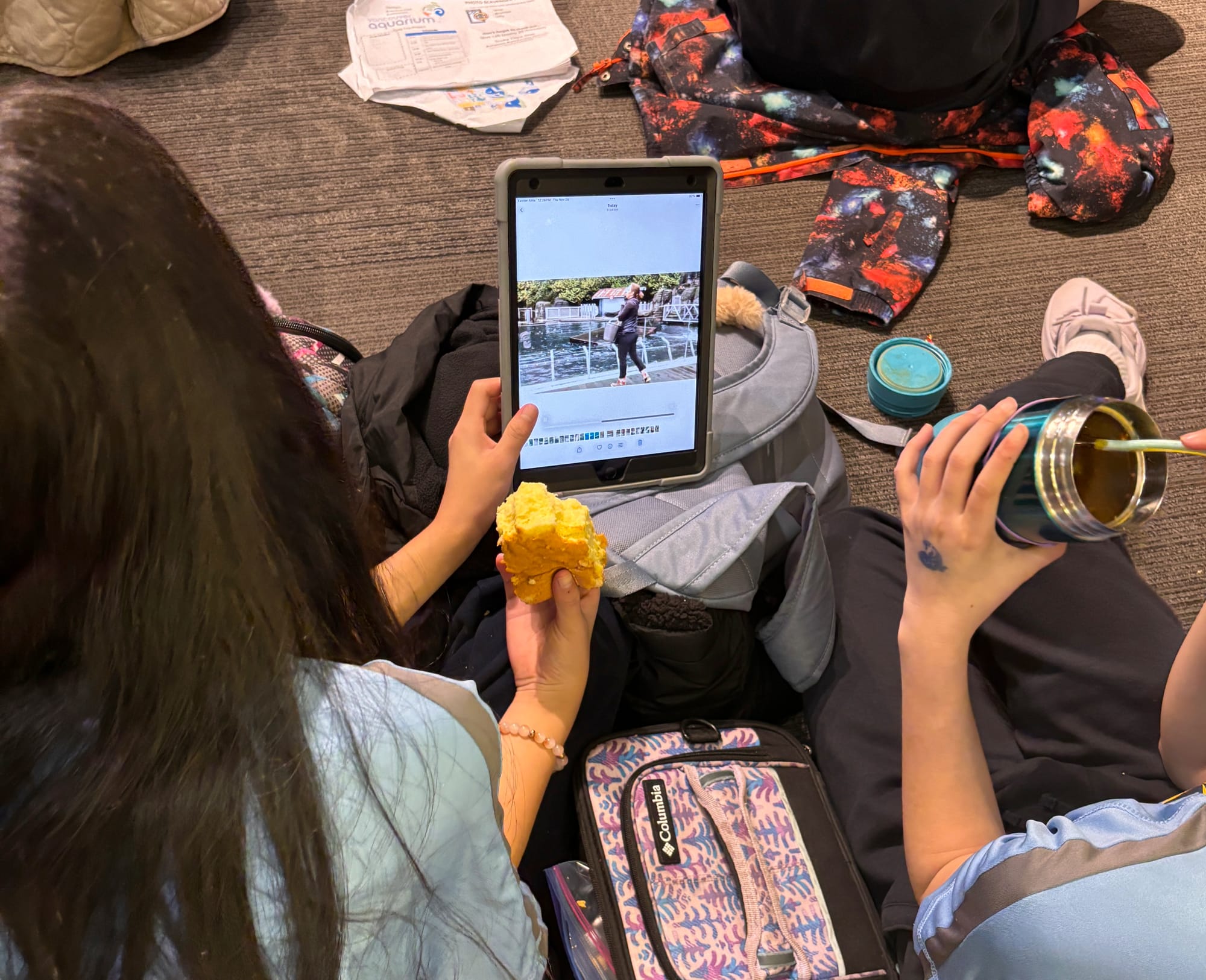
At lunch, several groups were already reviewing their footage, checking if they had everything they needed or if they should go back for one more shot. Two students from different groups approached me looking worried—they hadn’t managed to capture much because their assigned animal, the caiman, hadn’t moved the entire morning. They had waited, but eventually had to leave to catch the scheduled sea lion feeding. Now they needed help figuring out how to still capture something meaningful.
Raychelyn caught this moment and loved it, because it showed two things: the students recognized what their project still required, and they knew to seek support when they needed it.
Thankfully, when we all went back as a big group, the caiman was suddenly wide awake—swimming, circling, and giving the students exactly what they had hoped for. Those two groups lit up. They captured footage from every angle they could manage.
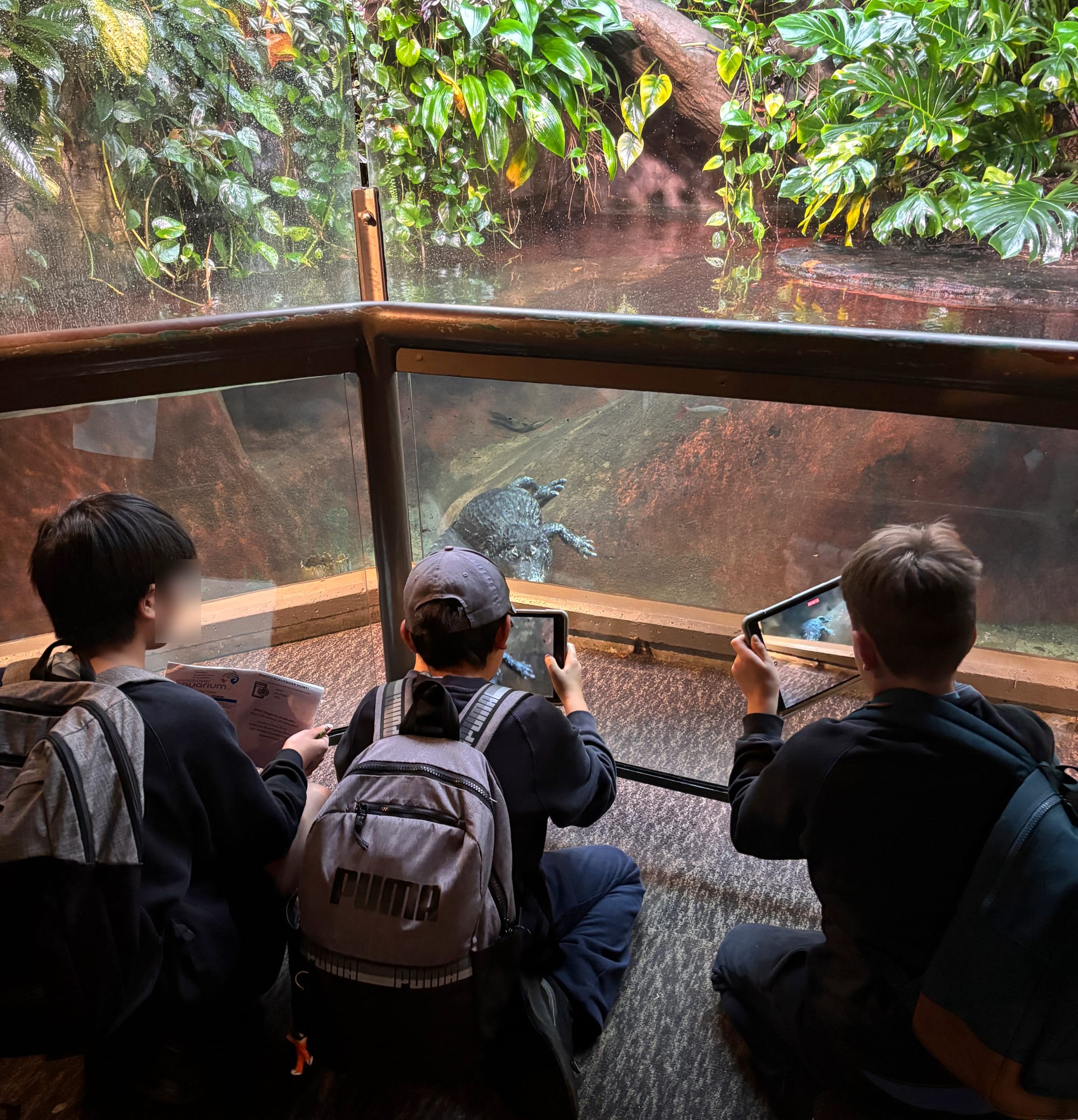
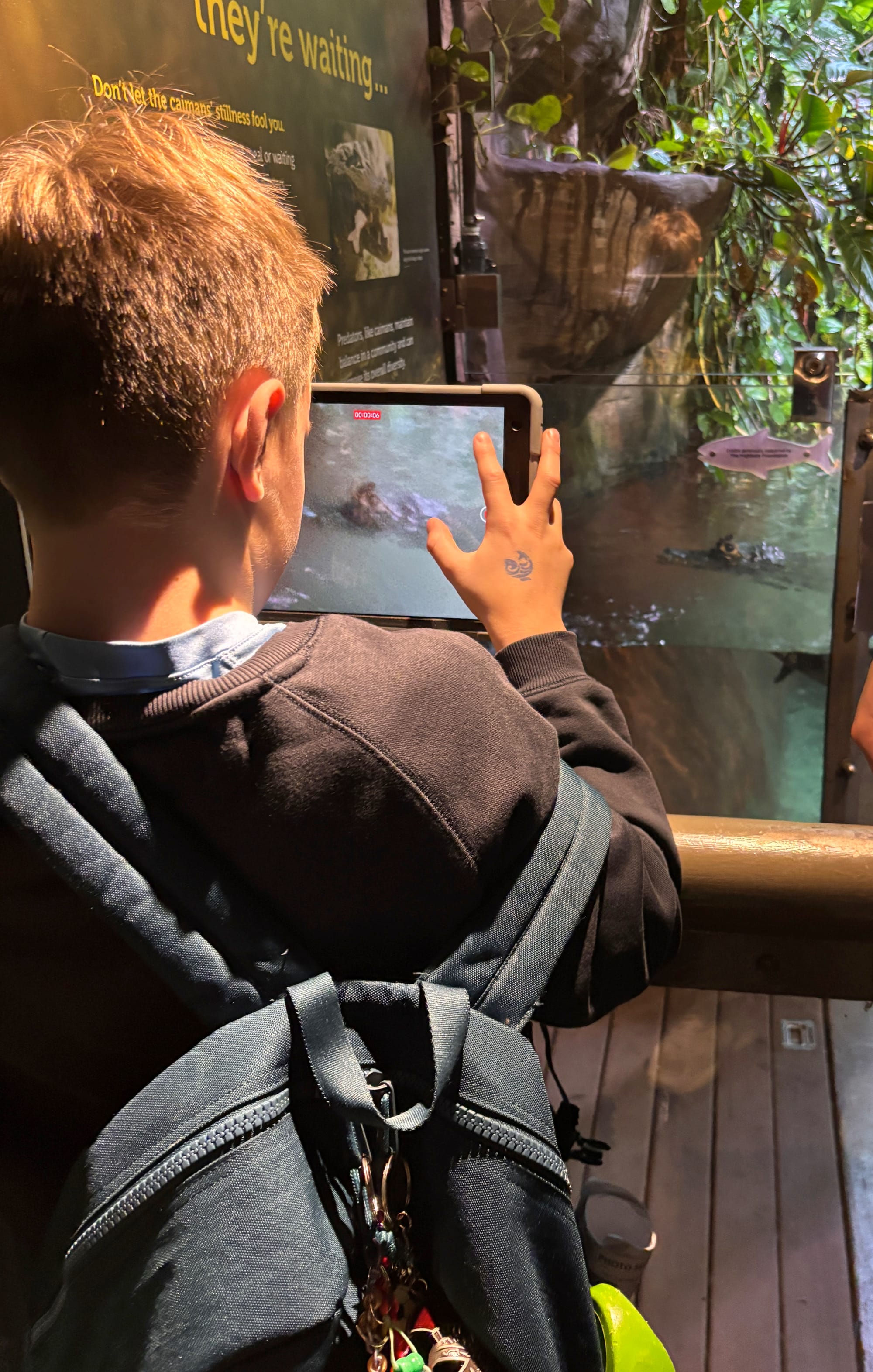
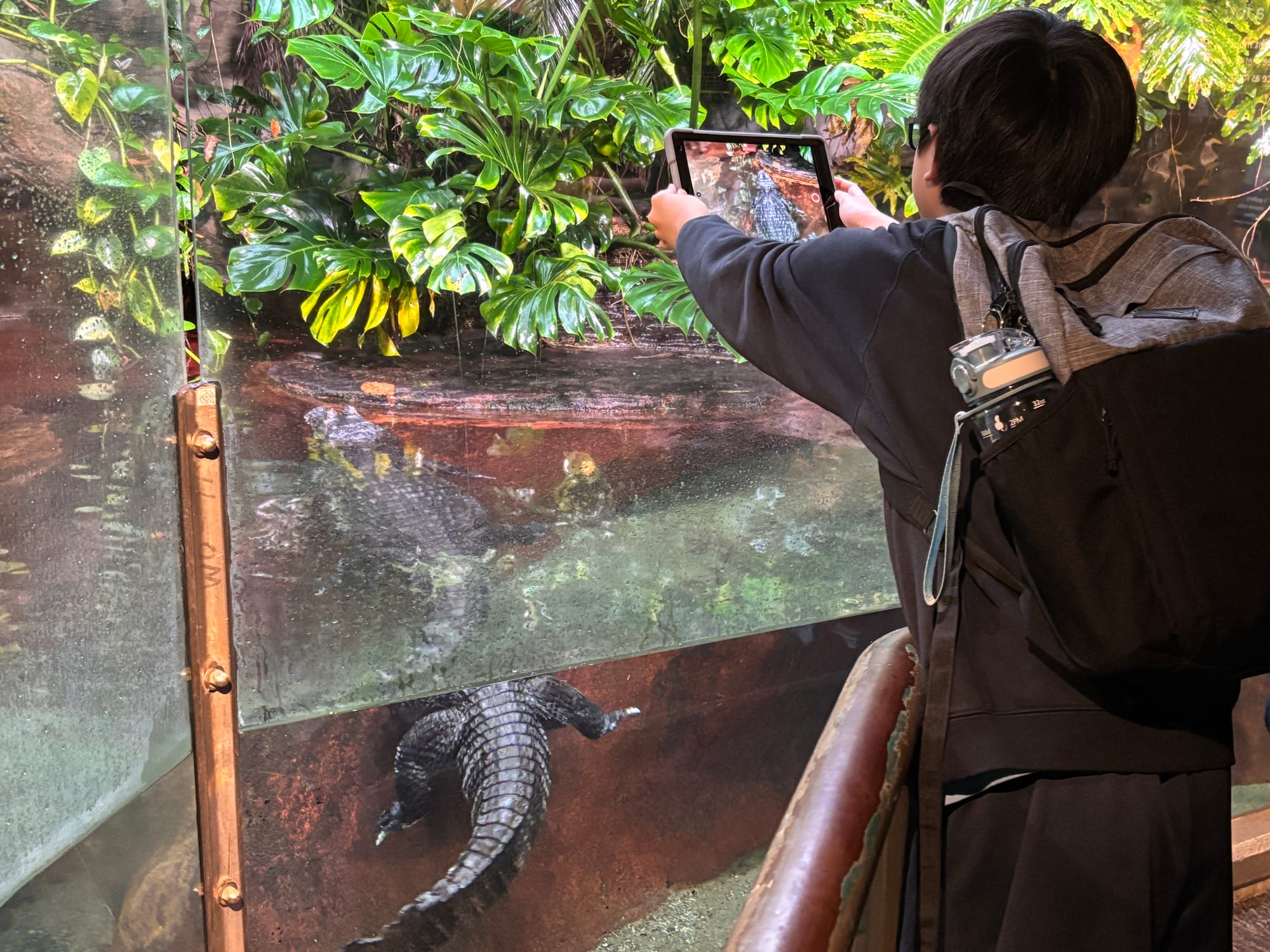
Return of the caiman!
We ended the day in the 4D theatre watching the feature film—which, in perfect poetic fashion, turned out to be a penguin documentary. The penguin theme truly never ends. Jokes aside, Alyssa was thrilled, because it gives her the perfect hook to revisit documentary structure with the class next week. 🐧
Award Worthy Advice 🏆
Looking back on the day, what stood out most was how quickly the students shifted from field trip mode to filmmaker mode. These junior filmmakers were observing, questioning, framing, listening, and making decisions with purpose.
Every group left with footage they were proud of—and plenty of material they’ll need to sort, shape, and refine once we’re back at school. The real work of documentary-making begins in the edit: choosing the right shots, pairing visuals with narration, and building a story that feels true to the animal they studied.
And we’re not done yet. Our next step is to help them take that raw footage and turn it into something polished, professional and informative.
Raychelyn and Alyssa have even organized a special guest filmmaker to join them in the classroom… someone who knows exactly how to bring a story to life from behind the camera.
You won’t want to miss it! 🎬