

The question we’d been circling for weeks was simple: How do you get meaningful, in-the-moment reflection in a space designed for motion, noise, and unpredictability? A gym isn’t exactly built for quiet thinking and flying volleyballs don’t exactly mix well with iPads.
We didn’t want reflection to happen only at the end of class. We wanted kids to name what they were learning while they were still feeling it. So, Dorita and I started looking at how athletes reflect in the real world. Courtside interviews. Post-game scrums. Moments where an athlete is still catching their breath and a mic appears. Suddenly, they’re talking about what they noticed in their own performance.
We wondered: What would that look like for her students? Could students reflect while still in the headspace of what their bodies were doing?
Planning the PHE Class 📘
We built a plan around that idea. I’d come in for each Grade 4 PHE block and run a small reflection station while the rest of the class rotated through volleyball skills and conditioning stations. Outside the gym, we would set up iPads so students could step out of the noise for a moment and record their responses.
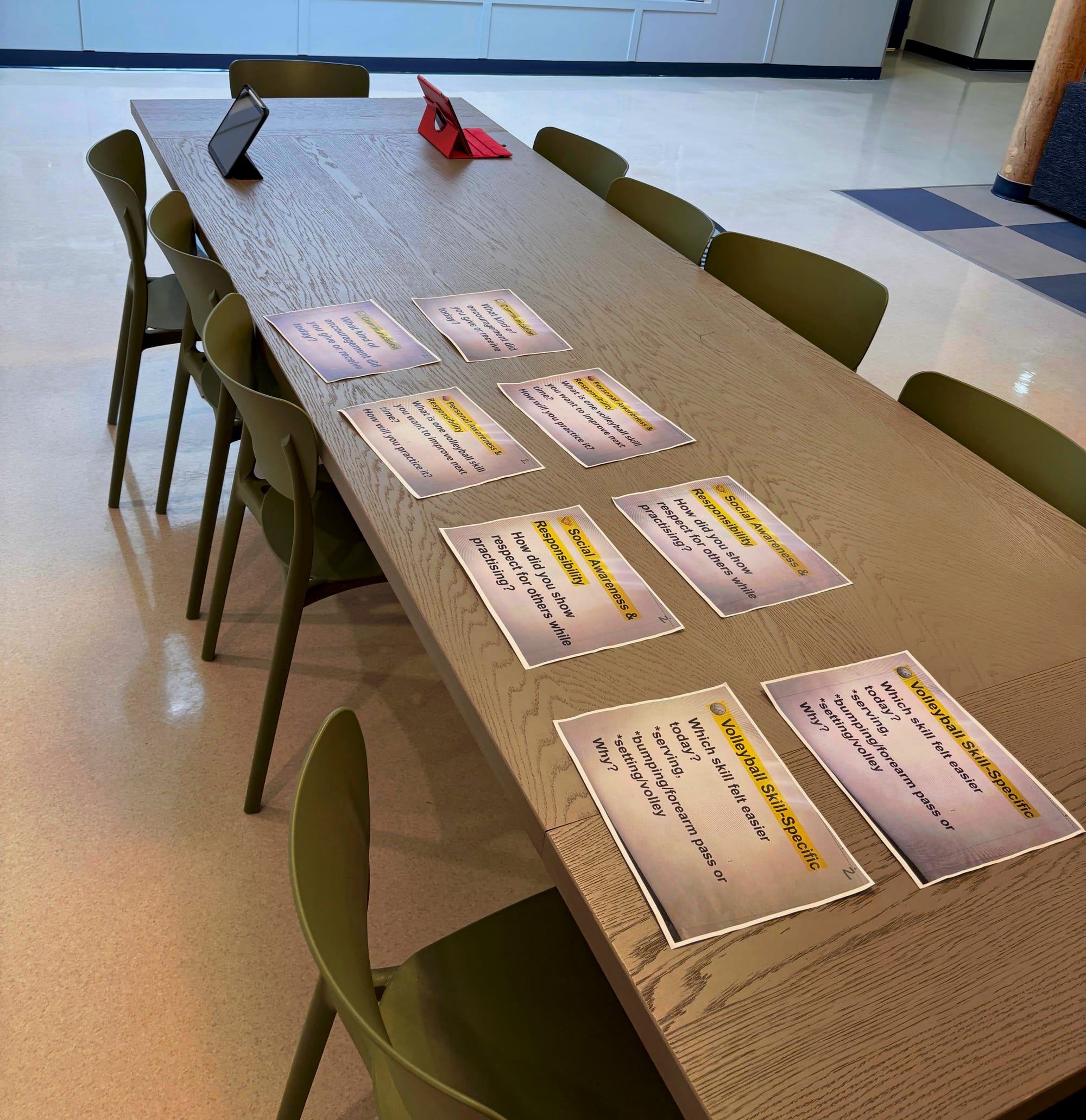
Then Dorita and I chose prompts that connected directly to the core and curricular competencies we wanted to highlight. When students reached the reflection station, they would pick the prompt that spoke to them the most:
- Personal Awareness & Responsibility 🌝
- What skill did you focus on today? How did your body feel while practicing it?
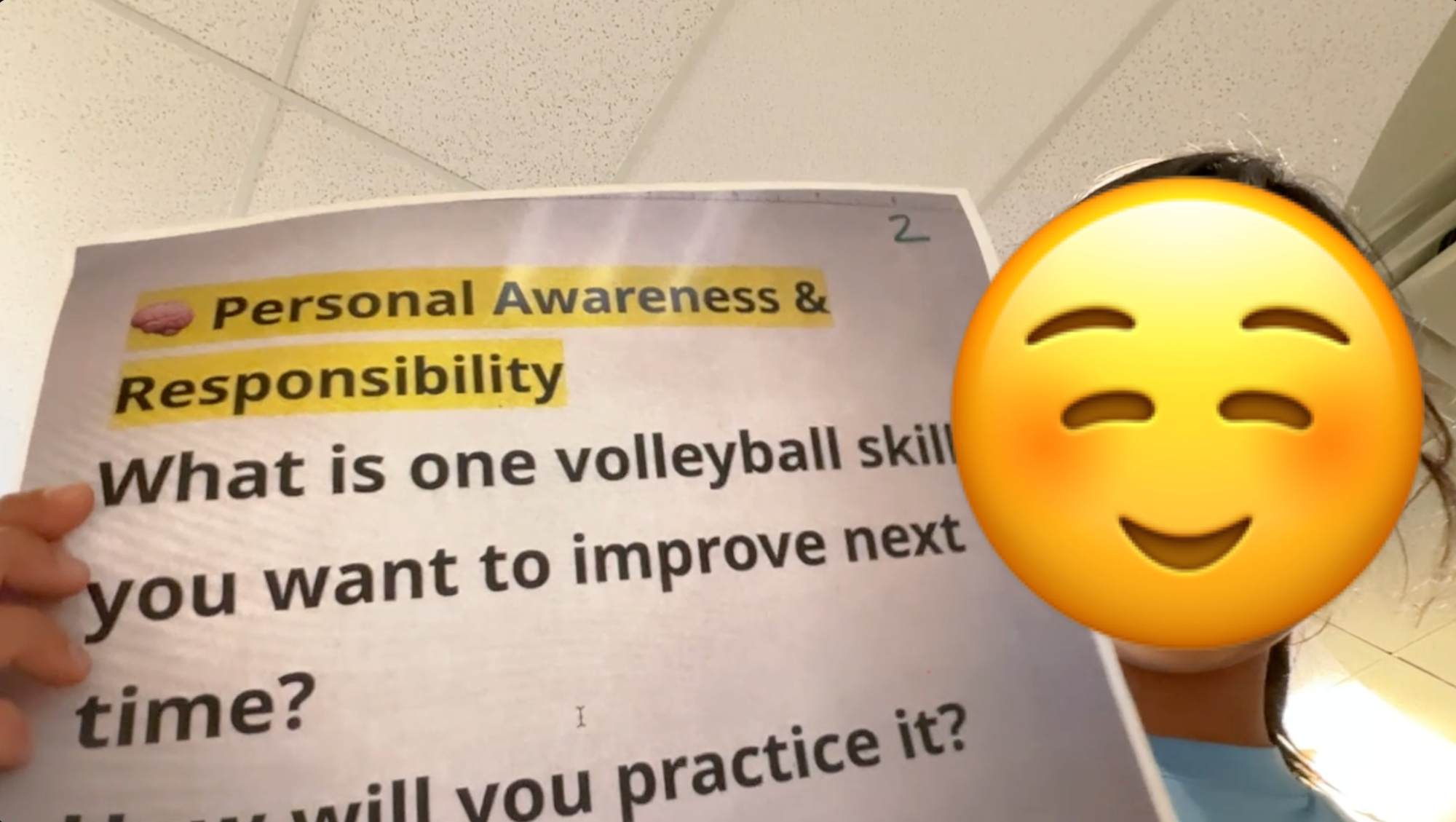
- What is one volleyball skill you want to improve next time? How will you practice it?
- Communication 💬
- What kind of encouragement did you give or receive today?
- Social Awareness & Responsibility 🙌
- How can you make sure everyone feels safe and valued during PHE?
- How did you show respect for others while practicing?
- PHE Skills
- Which skill felt easiest today? Serving, bumping, setting? Why?
We chose a simple Seesaw portfolio template to record the videos and scheduled the activity for next week. Dorita was equal parts nervous and excited. I reminded her it was a trial run—if timing, tech, or behaviour got in the way, that wasn’t failure. That was valuable info for the next iteration of the project!
Reflection Station 🤔
As we prepared for the class, we spent a couple minutes troubleshooting—getting iPads unlocked, connected and charged. Once set up, we were ready for the students to cycle through.
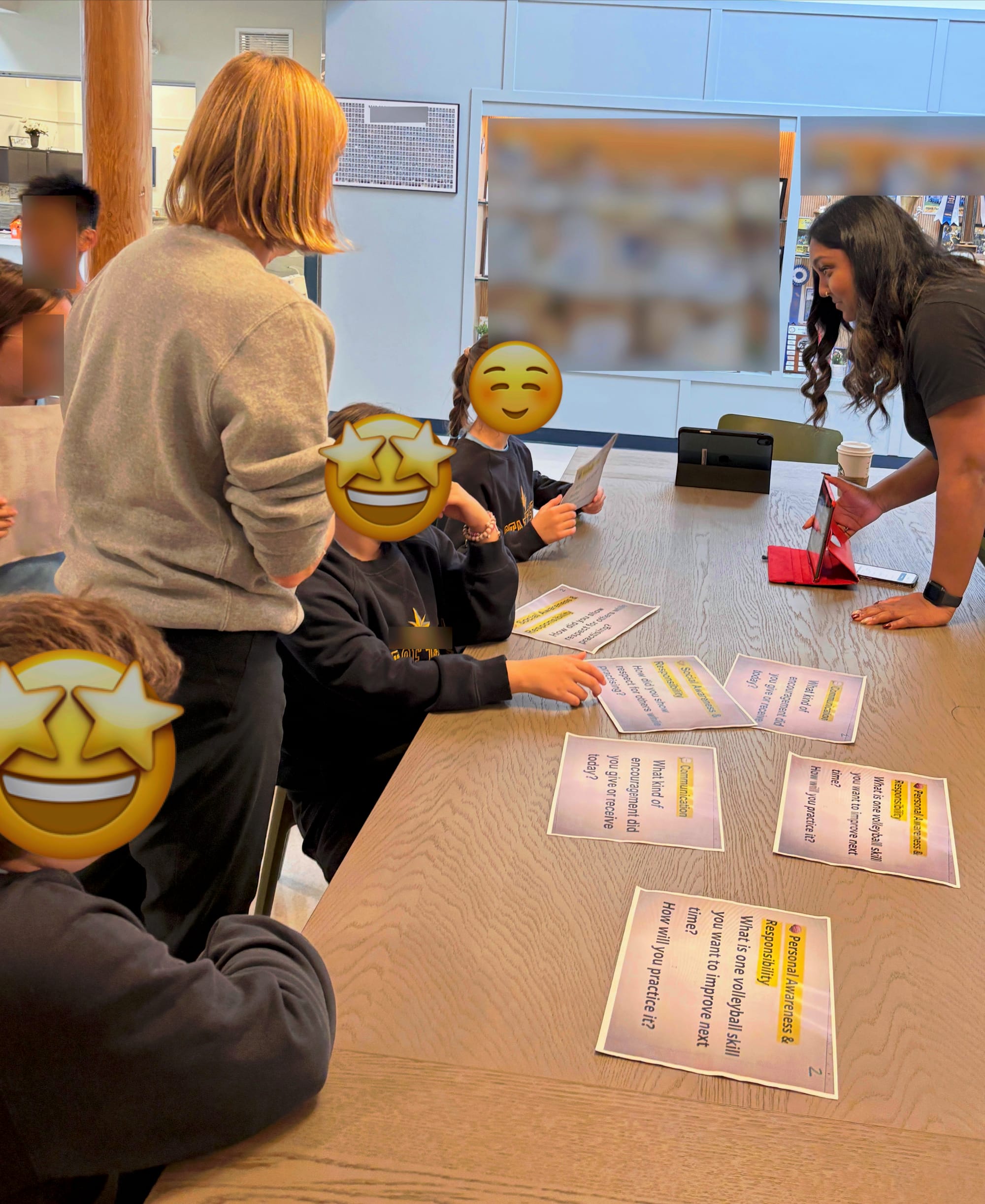
Kids moved through fast: we had a five minute timer set for each station.
As each student arrived, I helped frame the question to them like post-game interviews. Reporters don’t hand athletes the questions ahead of time. So students had to respond in the moment. Their thoughts are quick, imperfect and honest.
This framing helped. The students are used to reflecting, but many still overthink their answers. The raw thoughts welcome angle helped loosen things up.
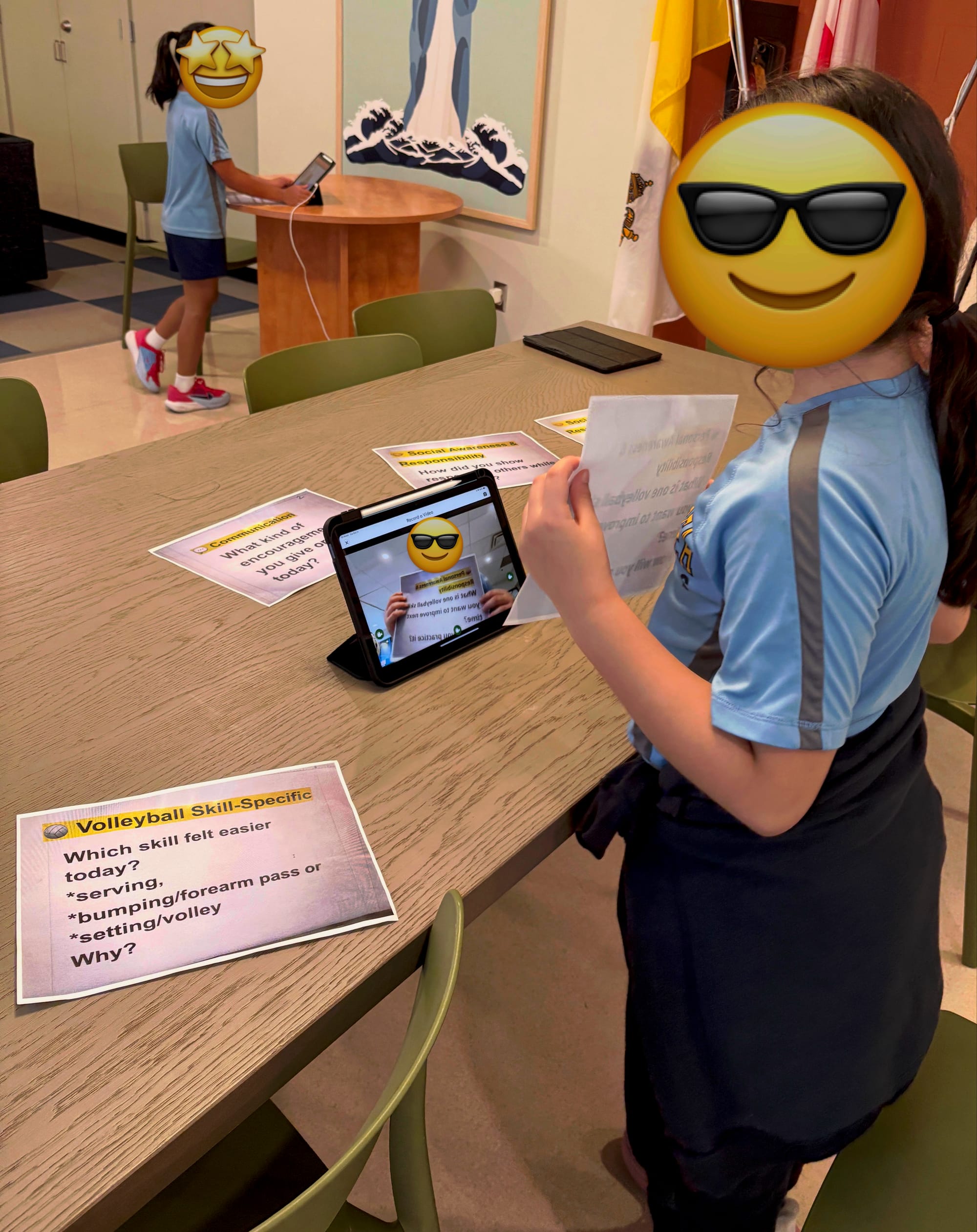
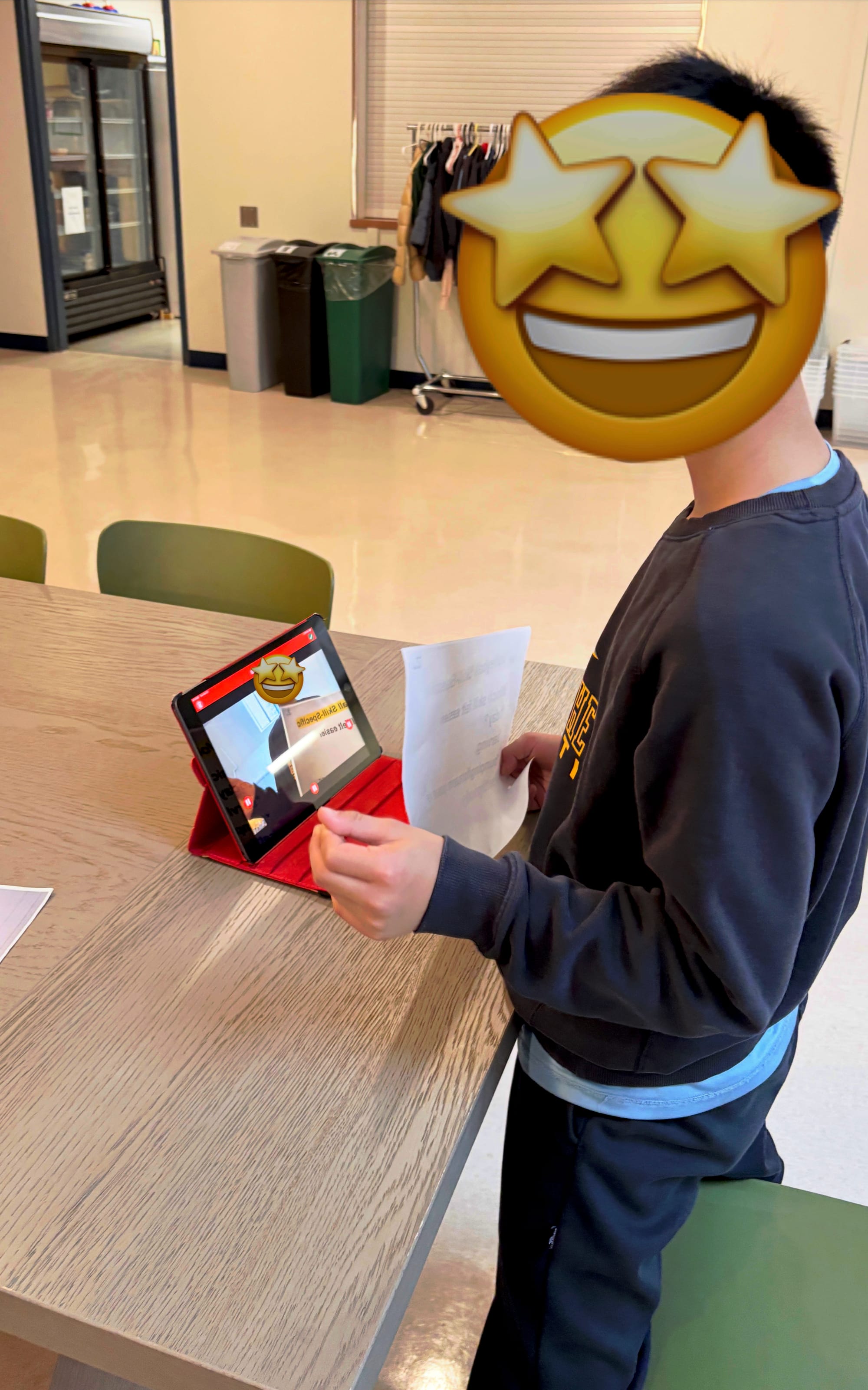
Self Serve Reflections!
One particular student was clearly overthinking their answer. The phrasing just wasn’t coming to them. I took the paper prompt away and asked them the same question, just more conversationally. When the answer came to them more naturally I said, “Great! Now just record exactly that!” Some students needed the extra push of a reporter asking them the question. 🎤
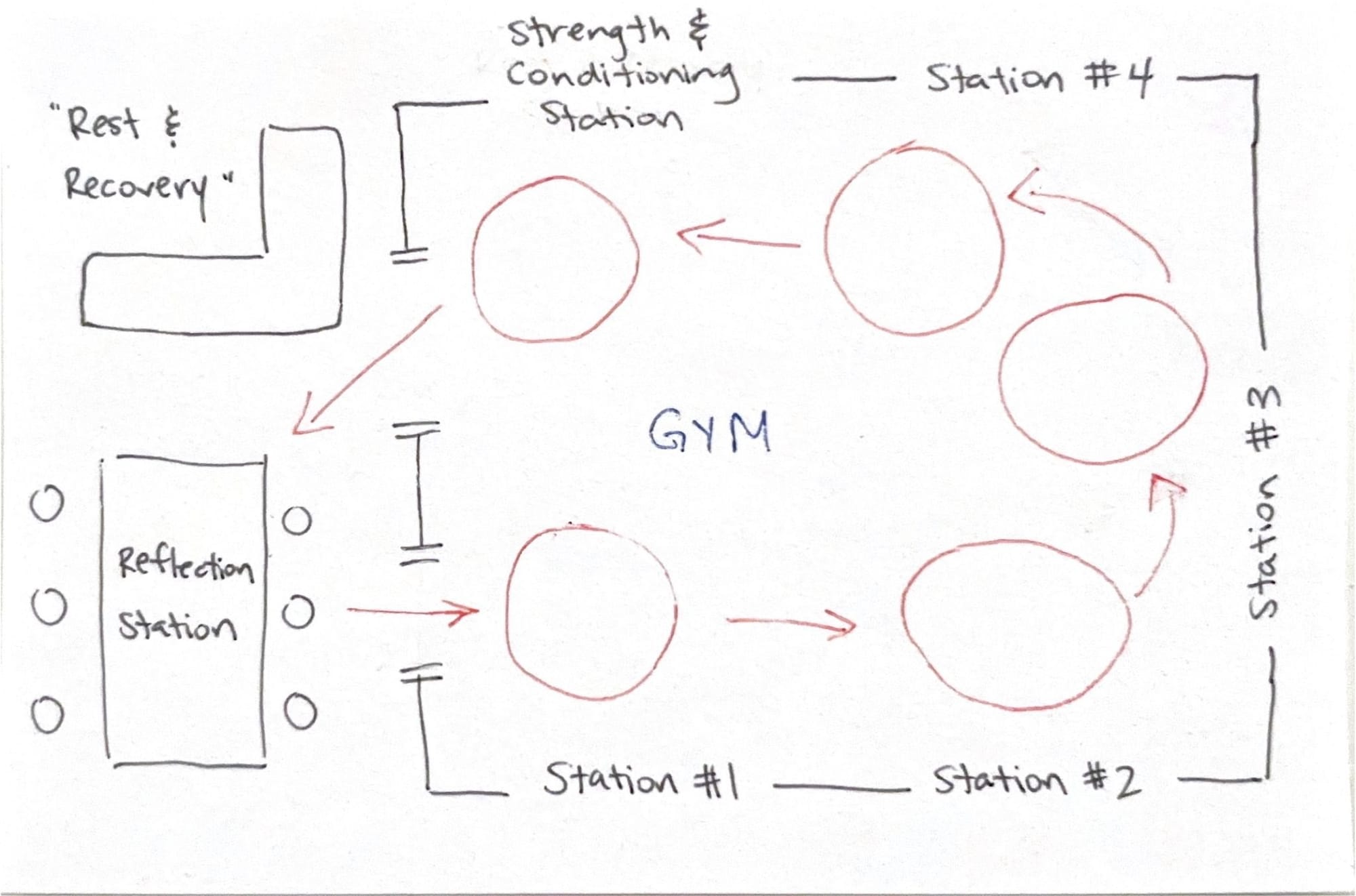
Inside the gym, we had four volleyball stations and one strength and conditioning station (push-ups, jumping jacks, that kind of thing). Since each station had a theme, we named our area the rest and recovery station. Students grabbed a drink of water, answered their question, then sat on the lobby couch to stretch while waiting for their group to cycle back. It felt surprisingly natural, like an actual break in a workout circuit.
Dorita loved that framing. It fit perfectly with what she’s been teaching about pacing, rest, and listening to your body during physical activity.
Mindful Movement 🧘
All in all, this felt like the right mix of movement and mindfulness. The kids stayed in the rhythm of the class, but still had a moment to check in with themselves. And for a first run, the reflections were honest, quick, and connected to what their bodies were actually doing.
From Dorita’s point of view, this was simple, engaging and repeatable. That’s a win we can build on.
Video Delay Training 🪞
Want to bring your skills training to the next level? Set up a Video Delay on an iPad to have your students self assess. Video Delay is like a mirror on a 5 second delay. Students do an action then, within a few seconds, can watch it back before trying again. Check out this example.