

Field Work not Field Trip
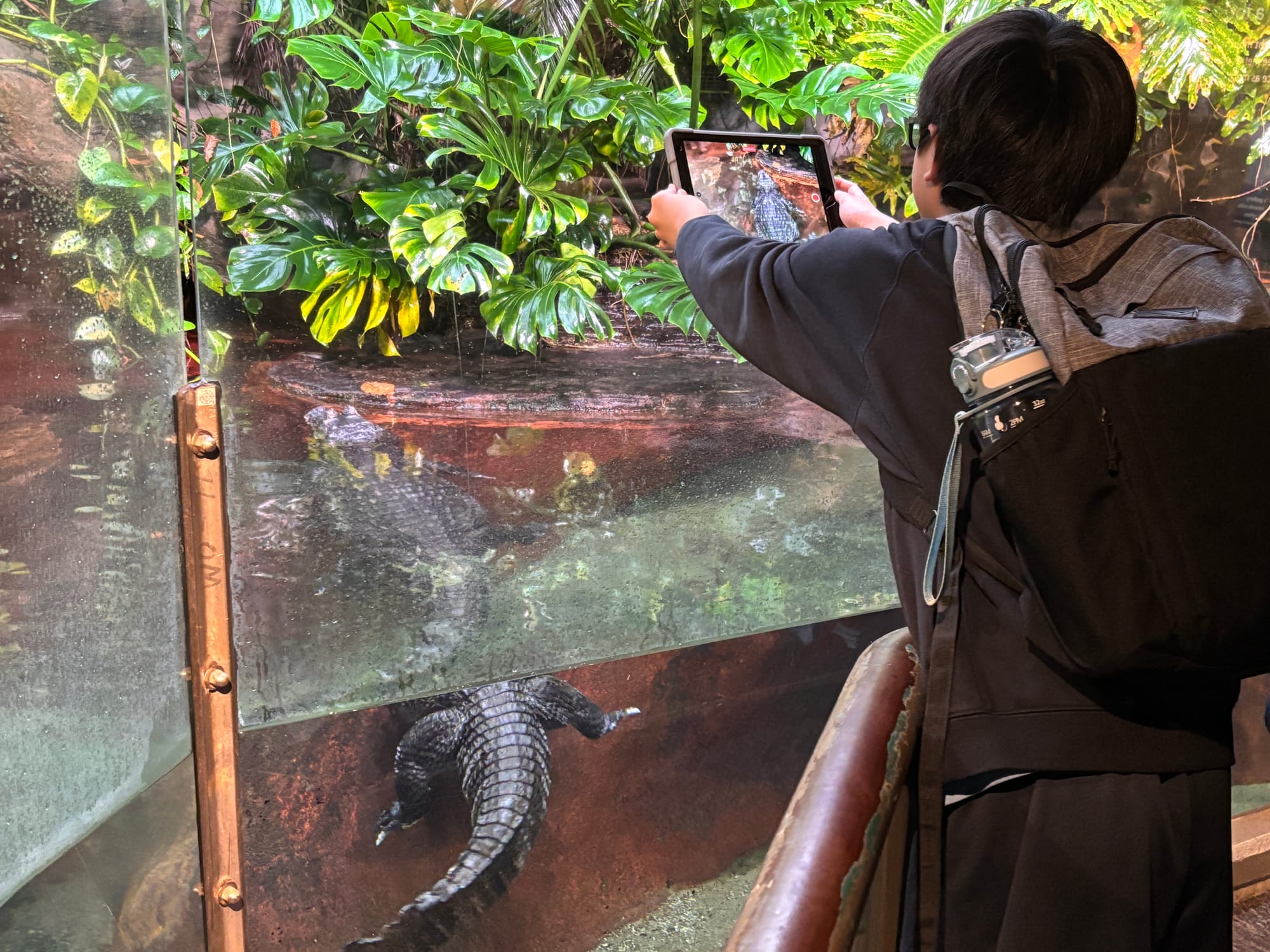
As I wrote in our last write-up about the aquarium, this field trip was designed around purpose. Students weren’t going as visitors or spectators, but as filmmakers and writers gathering material for a larger project. The aquarium became a source for footage, observations, and ideas rather than the experience itself, and that shift in intention shaped how students moved through the space.
That difference showed up almost immediately. After the field trip, a parent reached out to share how excited their child had been about the aquarium visit, despite having been many times before through camps and school outings. This time, the experience felt meaningful because the they had a clear reason for being there. They were there to document.
An Expert in the Classroom 🎞️
When our team collaborates with teachers, we regularly design projects that place students in the role of professionals—artists, scientists, videographers, podcasters—so they can experience what it feels like to work within a discipline. What we don’t always have is the opportunity to connect that work to someone actively practicing in the field.
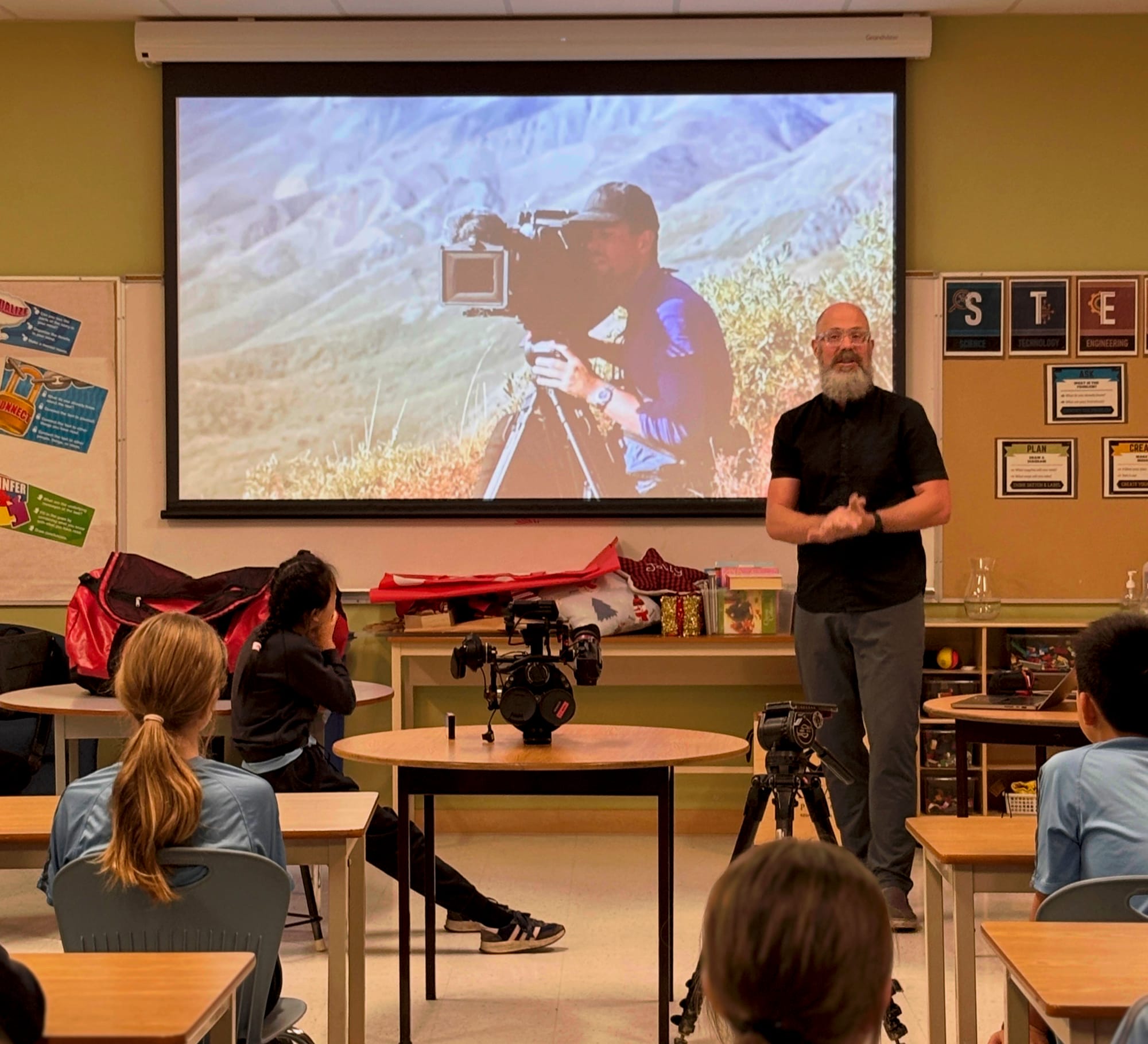
This project was different. It just so happened that the school principal is friends with an Emmy Award winning filmmaker! Ian Kerr entered the classroom with a large duffel bag filled with camera gear, polar bear fur samples, and gloves made from seal and fox fur from Northern Canada.
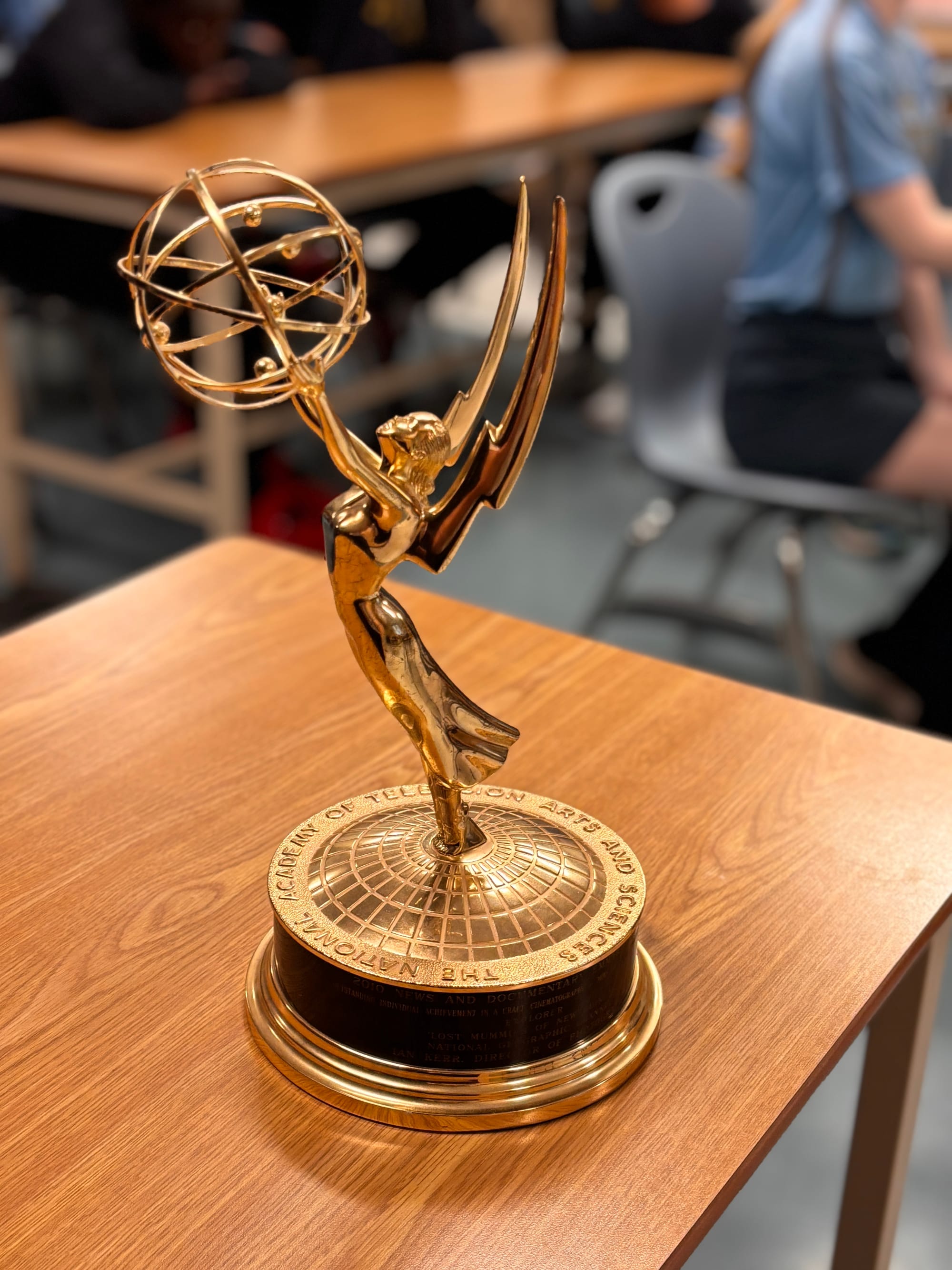
Oh, he also casually pulled out his Emmy for everyone to see.
He opened the conversation by asking the group a few questions:
- “Who wants to travel the world for work?”
- “Who wants to meet Taylor Swift?”
- “Who wanted to meet the Queen of England?”
Every hand went up, especially at the mention of Taylor Swift. Ian then shared that through his work as a cinematographer and filmmaker, he’s been able to do all of those things. His résumé is impressive—he’s worked on MasterChef Canada, The Amazing Race, and The Bachelor, has been sent to remote locations by National Geographic, and most recently filmed all three days of the Eras Tour in Vancouver.
But it wasn’t his accolades that kept the kids engaged—it was his story. He spoke deliberately about his role as a storyteller rather than simply a camera operator, and about the non-linear path that led him into cinematography.
He also touched on the idea of you are what you eat in the context of media consumption. If you only take in low-quality work, that’s what you’ll produce. If you want to be a strong artist, you need to study strong art. The same principle applies to any discipline, from filmmaking to athletics.
Q&A with a Filmmaker 🙋
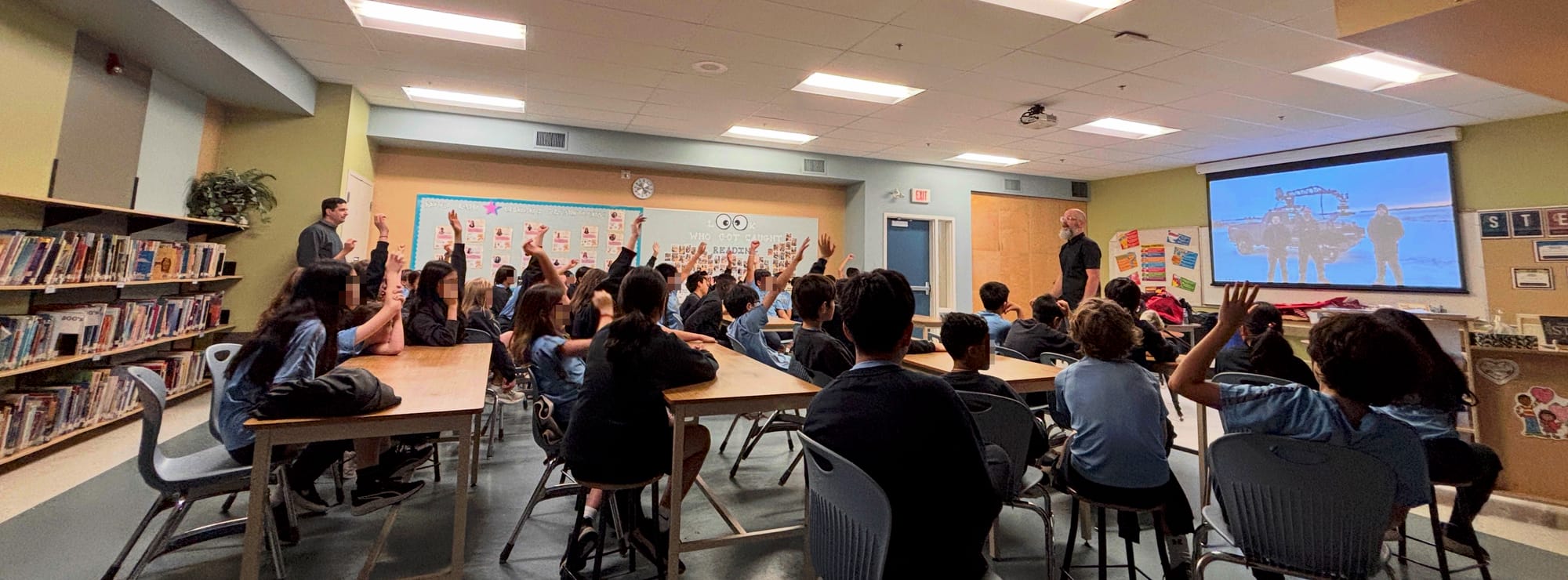
Before his visit, the Grade 6 classes watched a seven-minute version of Ian's polar bear documentary and spent time generating questions as a group. During the Q&A, Ian invited students to hold his Emmy as they asked their questions:
Question: How close to the polar bears do you actually stand?
Answer: He demonstrated the distance but then shared how he keeps the bears safe by making sure he never gets close enough for them to have to get aggressive. If that happens, it means someone will have to shoot the bear and that's the last thing he wants.
Question: What's something you're excited to do next?
Answer: Another polar bear documentary where they spend time living with the bears and documenting their day to day.
After the students left, I had the chance to talk further with Ian. I shared more about the work leading up to this project, including the time spent watching professional documentaries, breaking down structure and pacing, and introducing technical language around shots and composition. He was genuinely excited to hear that students had been analyzing real documentary clips and applying that thinking to their own work, especially when I told him I’d been hearing students use terms like “establishing shots” while they filmed. 🙌
Becoming Editors 🎥
Jump ahead a few weeks, and I spent an afternoon in Alyssa’s Grade 6 classroom while students were editing their documentaries. Seeing them work with footage they had recorded themselves was exciting, but it also revealed a common challenge. Many of the videos were overloaded with narration, with students trying to include every fact they had learned. The pacing felt rushed, and the visuals and audio didn’t always support one another. Alyssa had noticed the same thing, particularly in contrast with another class whose edits were slower and more deliberate.
We queued up the documentaries we had studied earlier and revisited what students had noticed then: how music sets tone, how narration is used selectively, and how not every piece of information needs to be included.
I reminded the class that their understanding of the animals had been assessed throughout the process, not just through the final video. This project wasn’t about proving how much they knew, but about shaping something thoughtful and cohesive.
That reframing helped. Students began making different choices, slowing down, and focusing on how their work felt to watch. We started seeing the influence of Ian’s visit. The inspiration carried through into the editing process, as a clearer understanding of the craft and what it takes to create something intentional.
Student Showcase
Check out some of their work!