

Bragging about Their Work
Jen
Last week, I had a Grade 6 teacher tell me about a new folder she was starting on her Seesaw class: The “Brags” Folder.
It started when she noticed her students often go up to her, excited to share an accomplishment from recess, like perfecting a basketball lay up, or a drawing of their favourite manga character they did during class downtime. She thought to herself, it’s really such a shame that this doesn’t always get documented anywhere, and sometimes, parents don’t even know this is something their child is proud about.
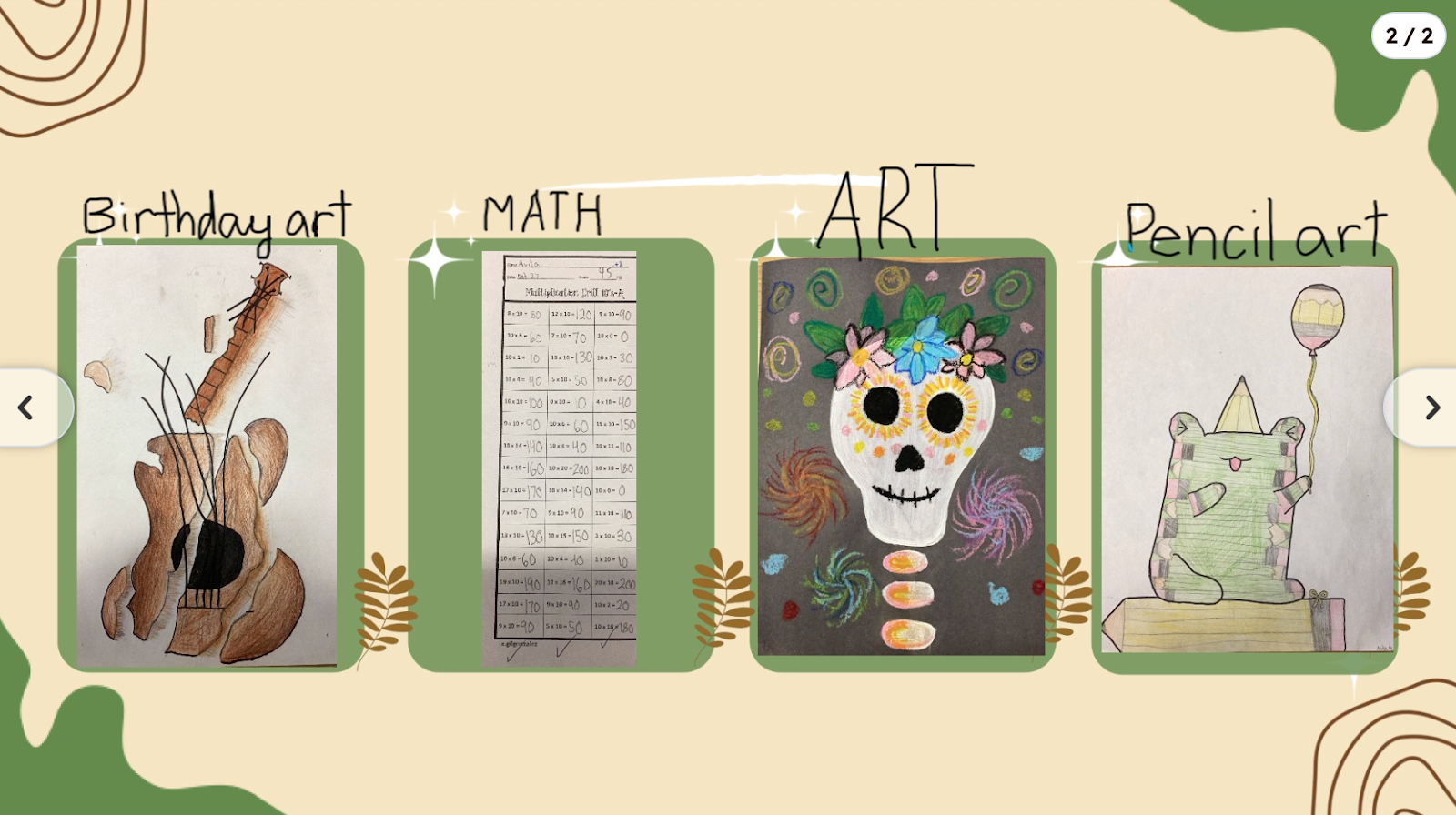
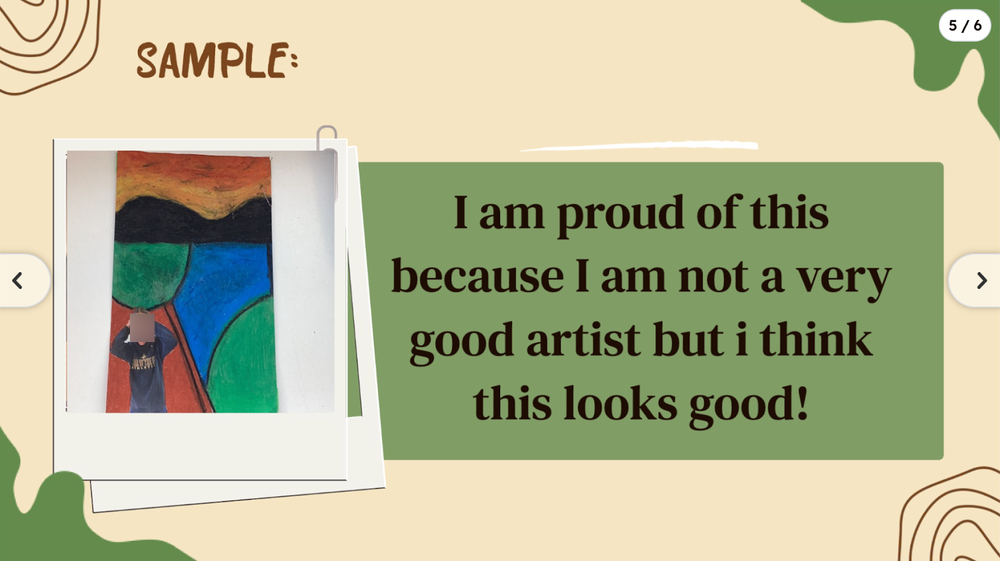
That’s where this folder comes in. In their Seesaw class, students can post anything they want to “brag” about, whether it’s related to an assignment or not. The teacher made a template on Canva and assigned it for students to do to kick things off, but she’s hoping it will eventually evolve into a habit for students to go add something to their journal anytime they have something to brag about!
Inefficient or Learning in Action?
Carlo
In a class I visited last week, a group of Grade 5 students ran into a small challenge during a presentation. Each student needed a video copy of their presentation in their own Seesaw portfolio, but the video had only been recorded in one account, and they didn’t identify an obvious, one-click way to share it.
After some brainstorming, they decided to record the presentation two more times so each student would have their own copy on their own device. Later, they realized they could have recorded it once on three devices at the same time—but that was a lesson learned.
From an adult point of view, this probably felt a bit inefficient (and one teacher even named that feeling). There were faster, cleaner ways to do it. But in this case, the real value wasn’t in finding the most streamlined workflow, but rather in the process. The students identified the problem, proposed a solution, weighed their options, and made a decision together. That kind of hands-on problem-solving is experiential learning at its best, and it tends to stick in ways step-by-step instructions rarely do.
The next time these students face a similar situation, they won’t be starting from scratch. They’ll remember what worked, what didn’t, and maybe they’ll come up with a better solution next time.
Sometimes trusting students means letting things take a little longer, and that should be okay. Our role as educators is to recognize when learning is already happening, even when it doesn’t look perfectly efficient.
Using Paper in a Paperless Classroom.
Dylan
Inspired by a class Jen supported a few weeks earlier, I tried something small in a PHE class: a Seesaw reflection template built for speed.
Tania's Grade 6 class broke into teams for a basketball scrimmage. There are only a few seconds to catch students while the game is still fresh, before the moment passes and the details flatten out. Like Jen, we framed the reflection as a courtside interview.
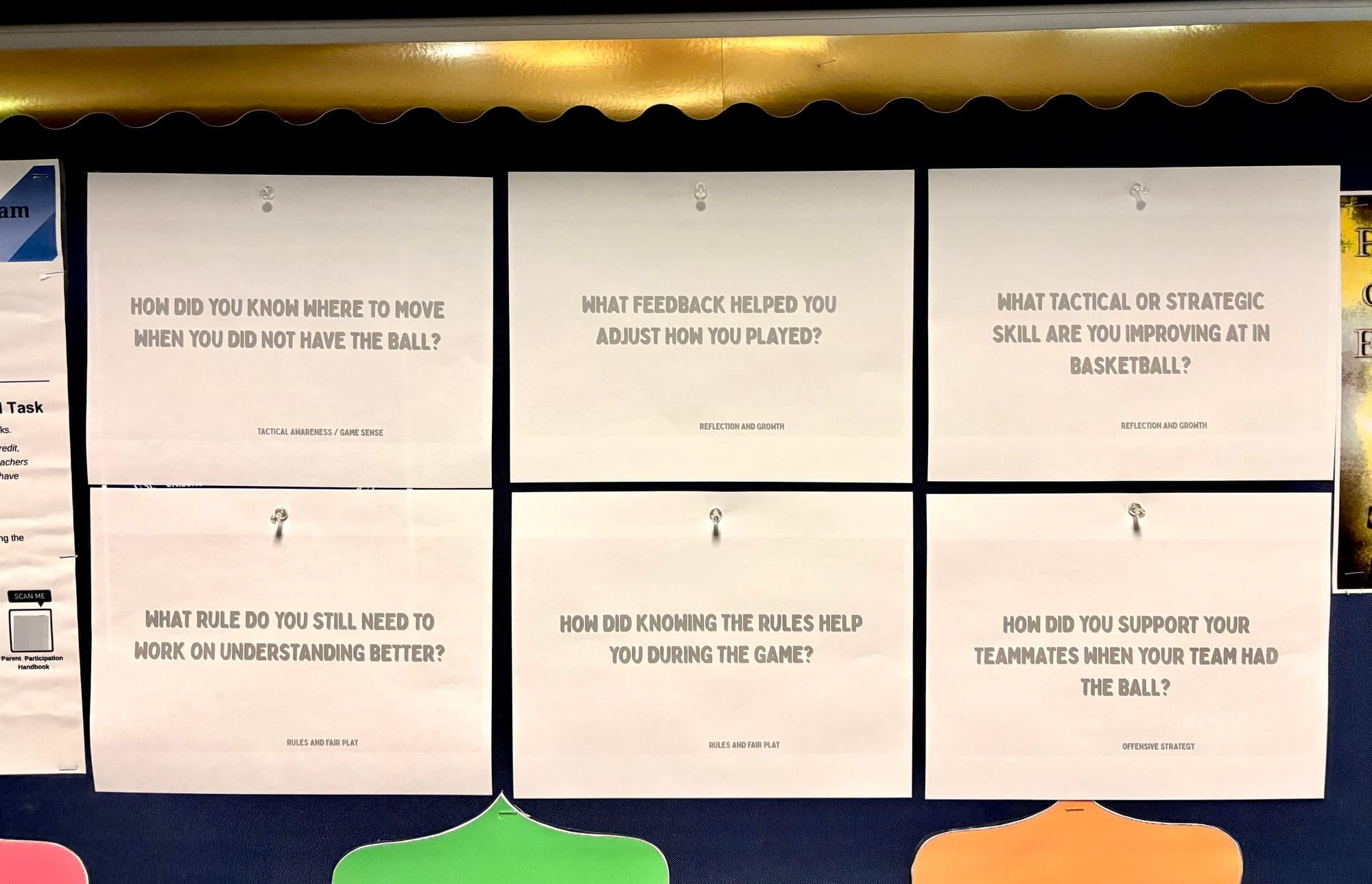
At the end of each 5 minute game, one team joined me in the gym foyer for an interview. On the wall we had printed off 6 questions. They were given a few simple instructions:
- Read all the questions and consider which one you have an answer for right away.
- Take a photo of that question.
- Record yourself answering the question.
- Submit!
As they recorded, some tucked themselves just outside the doors, others slipped into the gym office.
What stood out was how authentic the responses felt. They weren’t polished or rehearsed. Some were short. But every answer was grounded in the game they had just played. The immediacy mattered more than length.
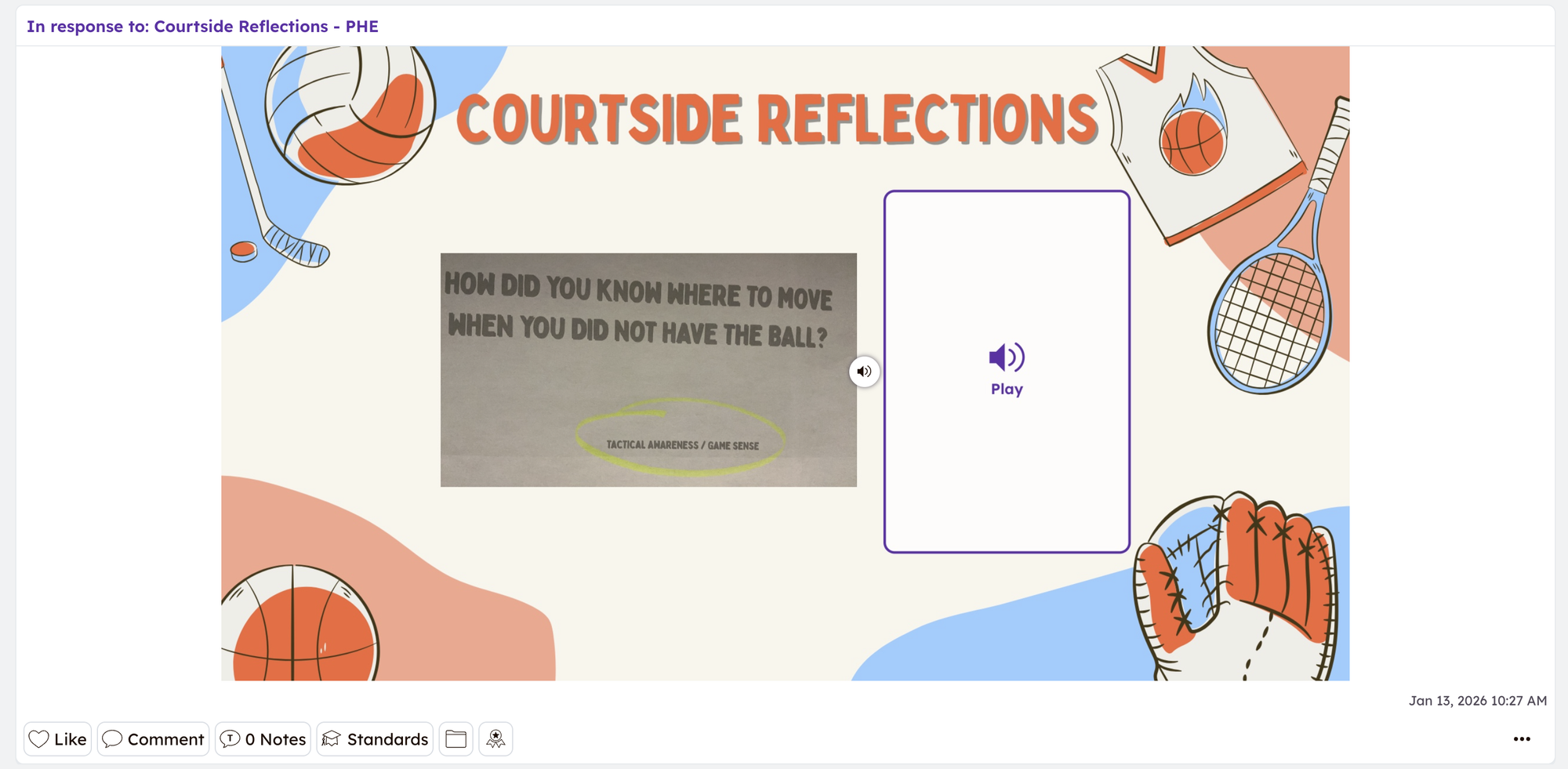
At one point, a student took over the process entirely. He organized his classmates into a recording order so their audio would be clean and no one would distract each other. As they moved around the room, the confidence in each response grew. There was no hesitation about what to say. One student even recorded her answer twice, after receiving some good advice from her peers about her first recording.
When Tania and I debriefed afterward, it was clear this wasn’t just a gym solution.
The key was simple: print the reflection question. Students take a photo of the question and record their response. No swiping through slides. No getting lost in the interface. No disappearing into an iPad and away from the group. The same Seesaw template can be reused over and over—only the printed prompt changes.
- 🎶 Take a picture of a musical scale and record yourself playing it.
- 🇫🇷 Take a picture of a French phrase and record yourself saying or responding to it.
- ➗ Take a picture of a math equation and record yourself solving it while talking through your steps.
The goal isn’t perfect answers. It’s building a routine that gets stronger every time students practice switching quickly between doing and reflecting.