


On a student-led tour of Canyon Falls Middle School in Kelowna, the first thing we notice is the sound. It’s not the hush of closed doors and isolated classrooms. It’s the low, steady hum of a place in motion: voices in discussion, chairs shifting, groups moving between spaces. The students guiding the tour speak with easy pride, the way people do when they believe a place belongs to them. They point out how walls fold back and glass garage doors lift to turn separate rooms into one shared studio. In their words, it’s a school built for collaboration, and lived in that way every day. One student gestures at the tables and whiteboard surfaces where ideas can be sketched on the fly, explaining how spaces open up when communities combine for big lessons.
By the time the tour finishes, the atmosphere feels less like a hallway system and more like a lab or workshop. Canyon Falls calls its classrooms “learning studios”, and the name fits. Students describe working across rooms when needed, sometimes in grade-level groups, sometimes as a bigger mixed-age cluster, depending on the project.
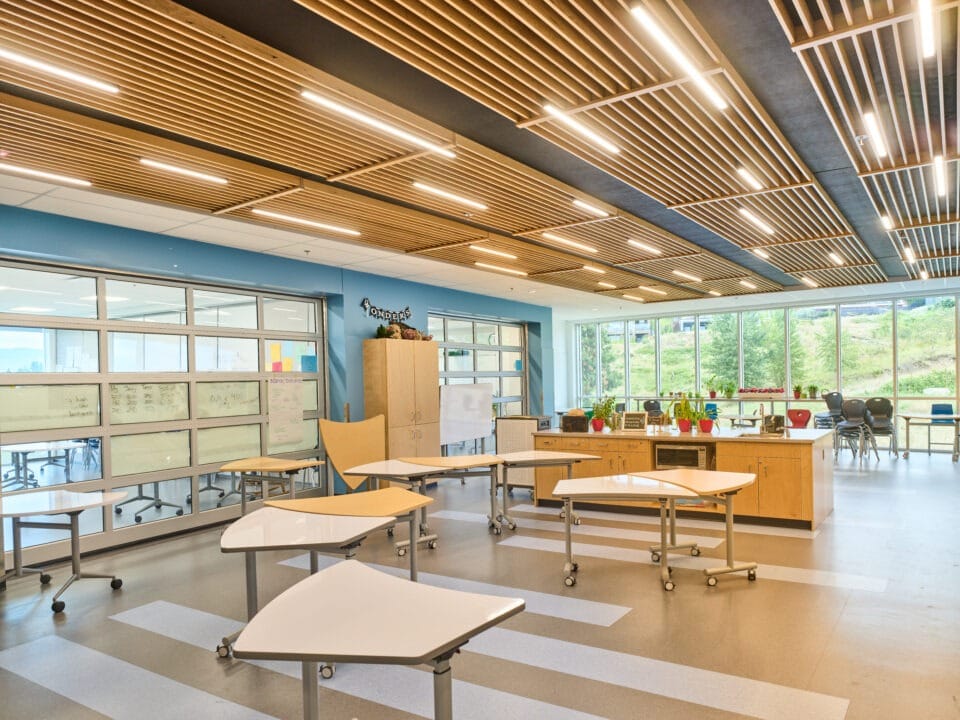
That opening impression becomes the backbone of everything else you hear from teachers later in the day. Canyon Falls is organized around learning communities (six in total), each made up of four to five teachers and a mixed cohort of Grade 6, 7, and 8 students. The model is simple to describe, but its effects are unusually deep. Over and over, teachers point to three features that make the school feel distinct: constant teacher collaboration, mixed-grade communities, and three-year relationships between teachers and students.
Teacher collaboration as the engine
In most middle schools, teaching happens behind closed doors and prep time occurs in isolation. At Canyon Falls, learning happens in the open and together. And each team of teachers in each learning community has a shared office right beside their studios. Students notice it as part of the landscape: a place where teachers plan as a group, and where the rhythm of collaboration is visible to kids every day.
Teachers describe collaboration as the core of the job. It isn’t an occasional meeting or a nice add-on. It’s the daily method that allows them to give their collective group of students memorable learning experiences. One teacher explains that nearly every lesson is shaped through quick, constant micro-consultations: “I’ve got this idea,” “what if we tried this,” “how would you build it?” Those exchanges push instruction somewhere none of them could get alone.
They’re honest that this kind of work takes skill and stamina. A few call it a “forced marriage” at first: teams are created by design, and sometimes people shift until the mix works. The teachers who stay are the ones who want that vigour: the sense that real professional growth comes from building things alongside other adults, week after week. The school schedule bakes in collaboration: while an entire Learning Community attends Physical Health Education together, that community’s teachers get 100 minutes of uninterrupted planning time twice a week.
Students absorb that culture, too. They see adults thinking out loud together, disagreeing respectfully, iterating, and improving. Later, when teachers ask students to collaborate, they’re asking students to do what the adults in front of them are already doing.
Mixed grades, shared identity
Each learning community intentionally mixes Grade 6, 7, and 8 students. On paper, that can sound like a mentoring structure where older kids “help” younger ones. The students and teachers say it’s more fluid than that. In practice, a Grade 6 student fresh with curiosity might support a Grade 8 student who’s stuck. Communities learn to trust competence instead of age.
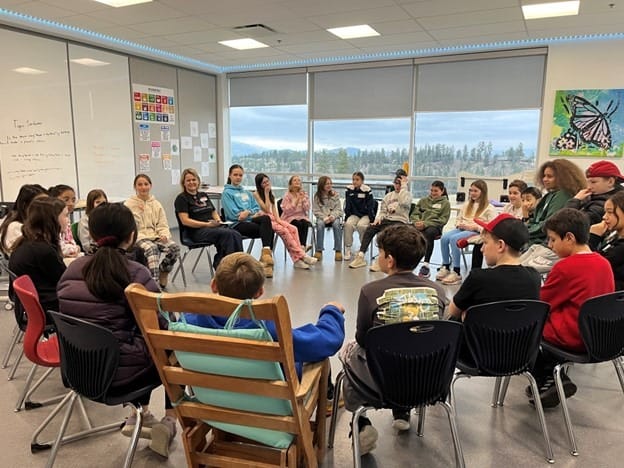
This mixing shapes belonging and identity in subtle ways. Middle school is when students are actively trying on new versions of themselves, hunting for where they fit. In a conventional structure—grade silos, new teachers every year, constant class switching—identity gets rebuilt every hour. At Canyon Falls, the community stays stable and interdependent. Younger students learn who they can become by watching older peers nearby, and older students keep evolving because younger peers are still entering with new energy and ideas.
Three-year teacher-student relationships
If teacher collaboration is the engine of Canyon Falls, the three-year relationship is the emotional and academic spine. Teachers don’t “get a class for the year.” They get a community of kids for a full middle-school cycle. By the second and third year, teachers aren’t learning who students are from scratch. They’re picking up a conversation already in progress.
Teachers describe how that continuity affects everything: assessment becomes more natural and human because they know students deeply over time; support becomes more precise because teachers understand learning patterns and personal contexts. One teacher notes how families initially worry about high school readiness, and how those worries fade as the long-term trust in the model grows. Graduating Grade 8 students attend the nearby high school the following year and find connections with older peers from their time at Canyon Falls, carrying three years of shared culture with them.
You can also hear the relational weight in smaller details. Teachers say they know where their students are at, almost instinctively, because the community functions like a family. Students track each other, notice absences, and help the adults keep the social fabric intact.
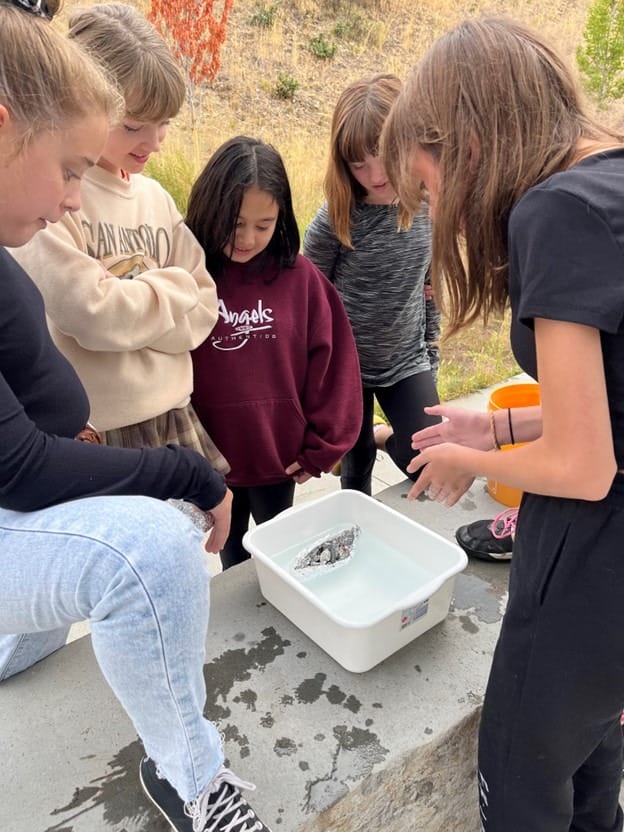
In many middle schools, behavior systems and relationship resets are the hidden curriculum. At Canyon Falls, long-term relationships are the model itself, and many downstream benefits—trust, confidence, fewer social restarts—flow from that.
What Canyon Falls is quietly proving about middle school
Stepping back, Canyon Falls is challenging a common assumption: that middle school is mainly a bridge to high school. The learning-community structure treats early adolescence as its own developmental moment with specific needs. In the book, Finding the Magic in Middle School, author Chris Balme points out that early adolescence is a time of becoming, not just surviving, and that the real work of middle school is belonging, identity, and contribution. What we saw at Canyon Falls feels like a living expression of that philosophy. Mixed-grade communities, long-term relationships, and visible adult collaboration create the kind of developmental ecosystem Balme describes — one where middle schoolers don’t just get through the years, but actually grow into themselves.
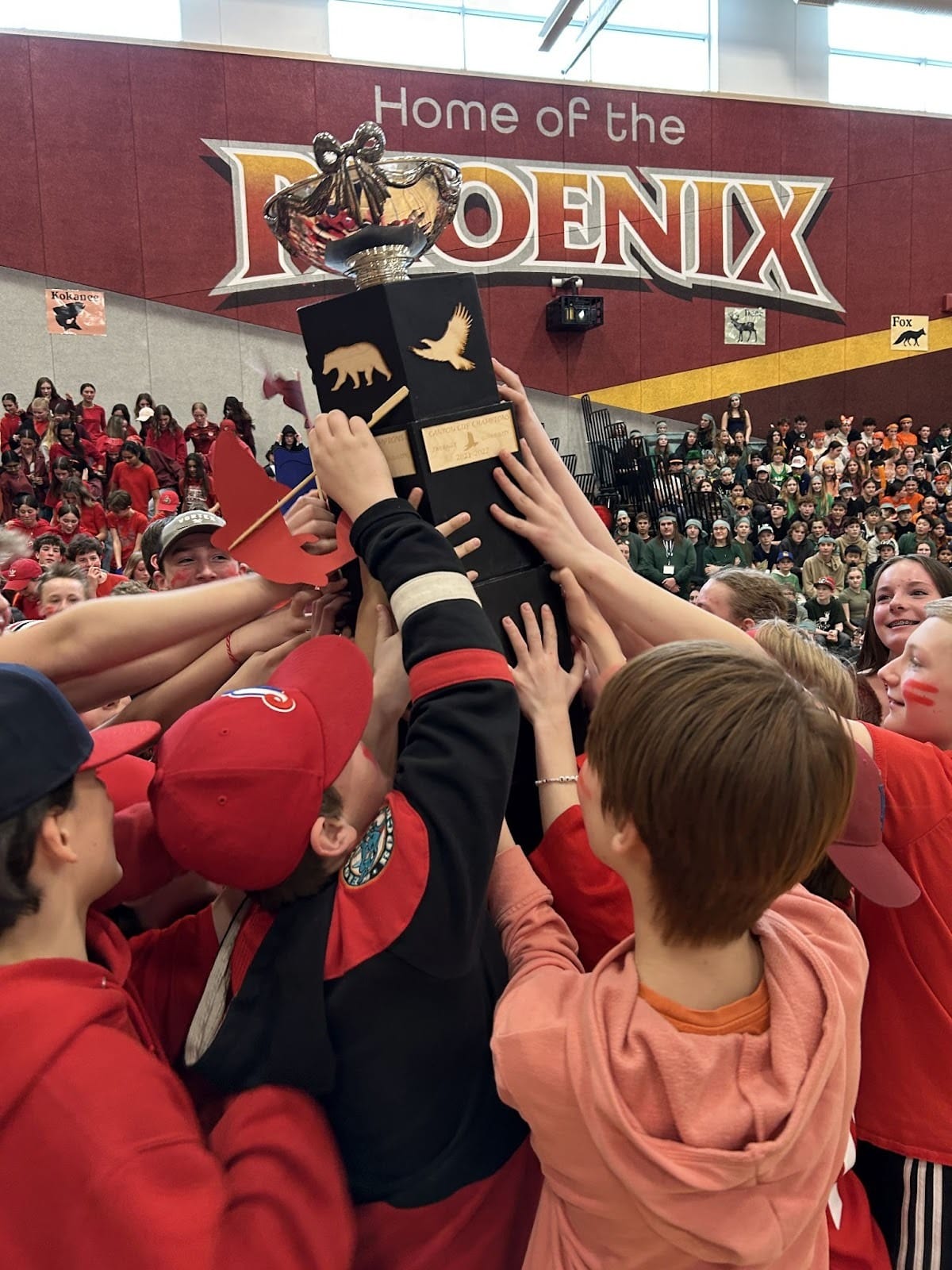
And while the school’s building design strengthens those needs rather than fighting them, teachers stress that the magic here isn’t only architectural. The glass, movable walls, and shared hubs help. Yet the heart of the model is intention and structure: teams planning together, students mixed on purpose, relationships built for the long haul. A school without a purpose-built building could still move in this direction by starting with the collaboration piece and creating time and norms that make it real.
A different picture of what middle school can be
When we think back to our time at Canyon Falls, the phrase “middle school” starts to feel too small. What we saw there was a learning culture designed for a particular season of life. A place that expects young adolescents to be social, capable, and in-process all at once, and gives them a structure that matches those realities.
If middle school can look like this, it stops being a waiting room for high school. It becomes a model of its own: a community-centered way to learn who you are, alongside people who know you well enough to help you keep becoming.