


On an early school day morning, we drove the winding road out to Chilliwack, BC from our home base in Vancouver. As we crossed bridges and the trees turned to corn fields, Jon, Jani, Nick and I talked about what we were hoping to see.
This wasn't our first time at A.D. Rundle Middle School — we'd met some staff during an earlier visit to nearby Imagine High. But this was the first time we'd come with a purpose: to see their Integrated Arts & Technology (IAT) program firsthand, meet the people behind it, and understand what it actually takes to build something like this.
 Jon
Jon
Walking through the front door, I caught a snippet of conversation between two students. "I just raised my assessment in Math from No Evidence to Proficient!" "OMG, I'm so proud of you." Just background noise at the time, but looking back it set the tone for everything that followed.
What is the IAT Program? 🎨
The Integrated Arts & Technology program at Rundle is a program of choice, open to students from across the Chilliwack School District. Students in Grades 6–8 still cover all the core subjects — English, Math, Science, Social Studies — but instead of learning them in isolation, they show their understanding through projects that blend arts, technology, and design thinking. Digital media, building, performing, recording, presenting. The goal is to develop confident, creative, collaborative thinkers while still meeting every provincial curriculum requirement.
It's a cohort program with limited spaces, so families apply through the district rather than just enrolling by neighbourhood. And for students who thrive in it, there's a natural next step right next door — Imagine High, which runs the same IAT model for Grades 9-12.
Six years ago, when Rundle launched the IAT cohort with all three grades at once, they faced a practical problem: developing three full years of curriculum from scratch is a massive undertaking, especially when teachers are still finding their footing in a new way of teaching. Their solution was unconventional: all three grades would tackle the same content at once, scaled to their grade level. They started with Grade 8. Next year, they'd do Grade 7. And Grade 6 the year after that.
It wasn't a permanent solution, and the teachers will tell you that themselves. But it had an unexpected upside.
Classrooms Built on Care 🤝
Because every teacher was building curriculum for every grade level, projects had input from the whole cohort. Problems were solved together. And somewhere in that process, something clicked between the staff.
You could feel it immediately when talking to them. Each teacher, independently, lit up when talking about their colleagues — pointing us toward other classrooms, telling us what we absolutely had to see, describing each other's strengths with real enthusiasm.
Scott, a Grade 6 teacher, told us how Haley — Grade 7 — has such a sharp eye for curriculum design that she helps him take his big lofty ideas and turn them into actual classroom projects. Haley and Hannah both pointed us toward Gage's Grade 8 class, urging us to pick his brain about roleplaying games, robotics, and 3D printing.
We're glad they did. Gage's room is a proper Makerspace — projects everywhere, big wheeled desks that students rearrange to suit whatever they're working on, space to build and think. And yes, his 3D printers have name tags. "Fresh Prints of Bel Air." The room was more than a classroom, it was a place where passions are being shared from teacher to student and back again.
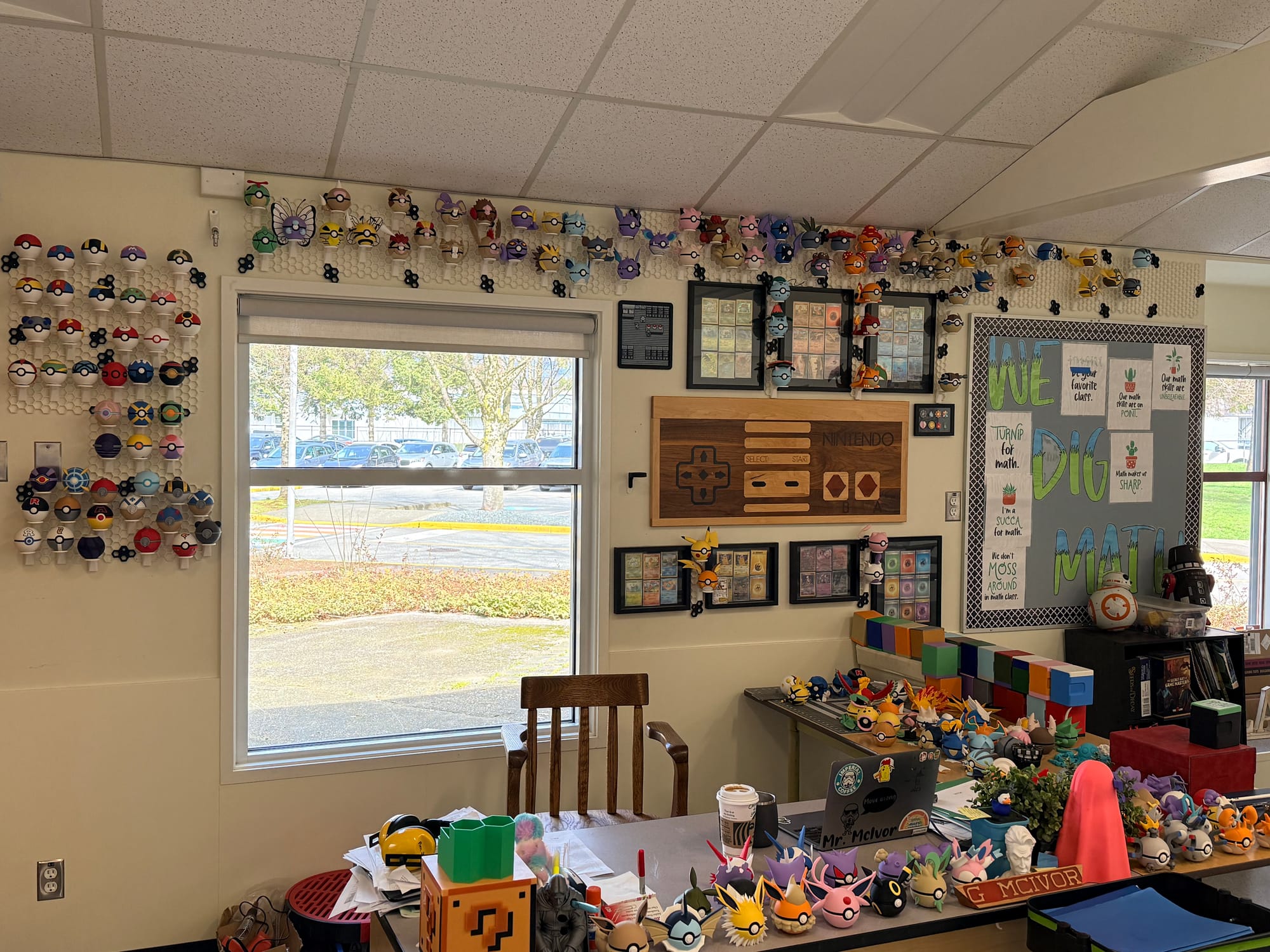
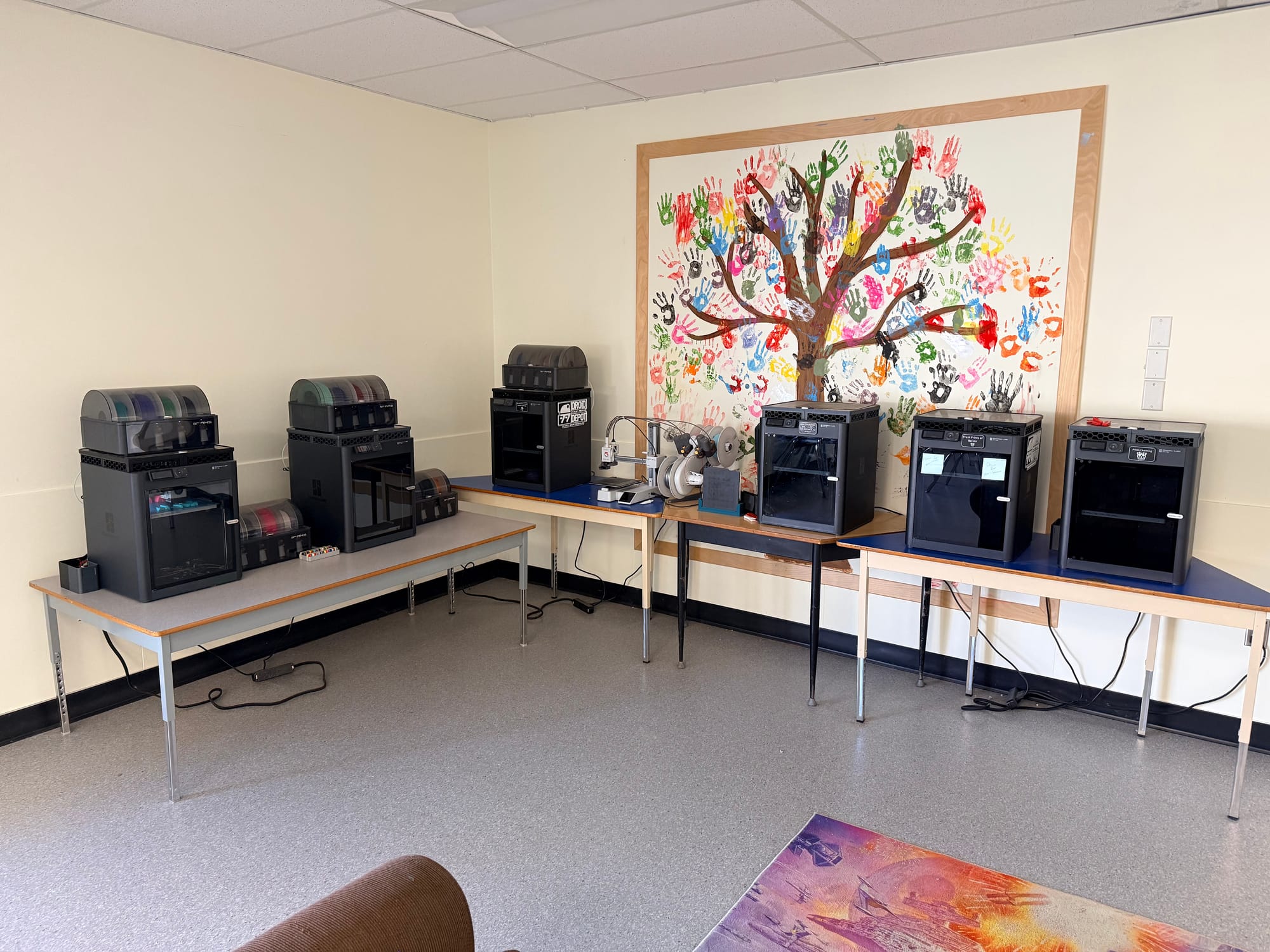
The camaraderie was palpable — these people hang out on weekends, push each other, have each other's backs
When we took a walk around the school, we noticed — well, nothing. The classrooms just hummed. Collaboration here, independent work there, guidance available for whoever needed it. Because projects are long term and students are given real time to dive deep, there wasn't a lot of traditional lecturing happening anywhere.
We mentioned this to Scott and he was glad we noticed. By January, he told us, they've worked through group structures so many times that collaboration just becomes the norm. His advice for getting there: start small. Three minutes of sustained group work in September, then slowly build. In January, those three minutes had turned into thirty.
Spending time with the teachers, it kept feeling like the school worked really well. What took longer to understand was why.
Meeting Sarah 👋
Sarah, the principal, greeted us like old friends and invited us into her office. A calm space organized towards the center, inviting connection. It’s filled with photos of her football playing sons, Simon Sinek books, and comfy chairs. A principal’s office you’d love to be sent to.
As a team that has spent a lot of time in schools, there's an internalized picture of what a principal's job looks like. Administrative. Reactive. Defined by schedules, staffing shortages, and an endless stream of small fires.
And yes, Sarah has all of that on her plate.
But watching her work — and listening to how teachers talked about her — told a different story.
When Sarah received provincial assessment results and they weren't strong, she didn't panic or assign blame. She brought the staff together, put the data on the table, and asked a simple question: what do we want to do about this?
Together, teachers analyzed the results, talked openly about what felt misaligned, and built a plan collectively. Sarah aligned resources behind it, followed through, and made sure progress was visible and celebrated when it came.
Listening and responding comes naturally to Sarah. When staff noticed that long stretches of class time were leaving kids restless — and occasionally, that restlessness was turning into conflict — she rallied her teachers around a simple fix. PHE at the start of every day. Give students a chance to settle their bodies before asking their brains to engage.
This approach shows up everywhere. Creating teacher collaboration blocks took over a year of reworking schedules to align prep times across grades. Not glamorous work. Logistically painful. But it made real collaboration possible.
And because her staff collaborate deeply, they have more ownership over their teaching. Sarah built the Flex Block with them — reworking schedules until every other day, every student could join a class taught by any teacher in the school. Not just the IAT cohort. Classes are passion-based, from robotics to drama to fly fishing to quilting — teachers and students building relationships around shared interests.
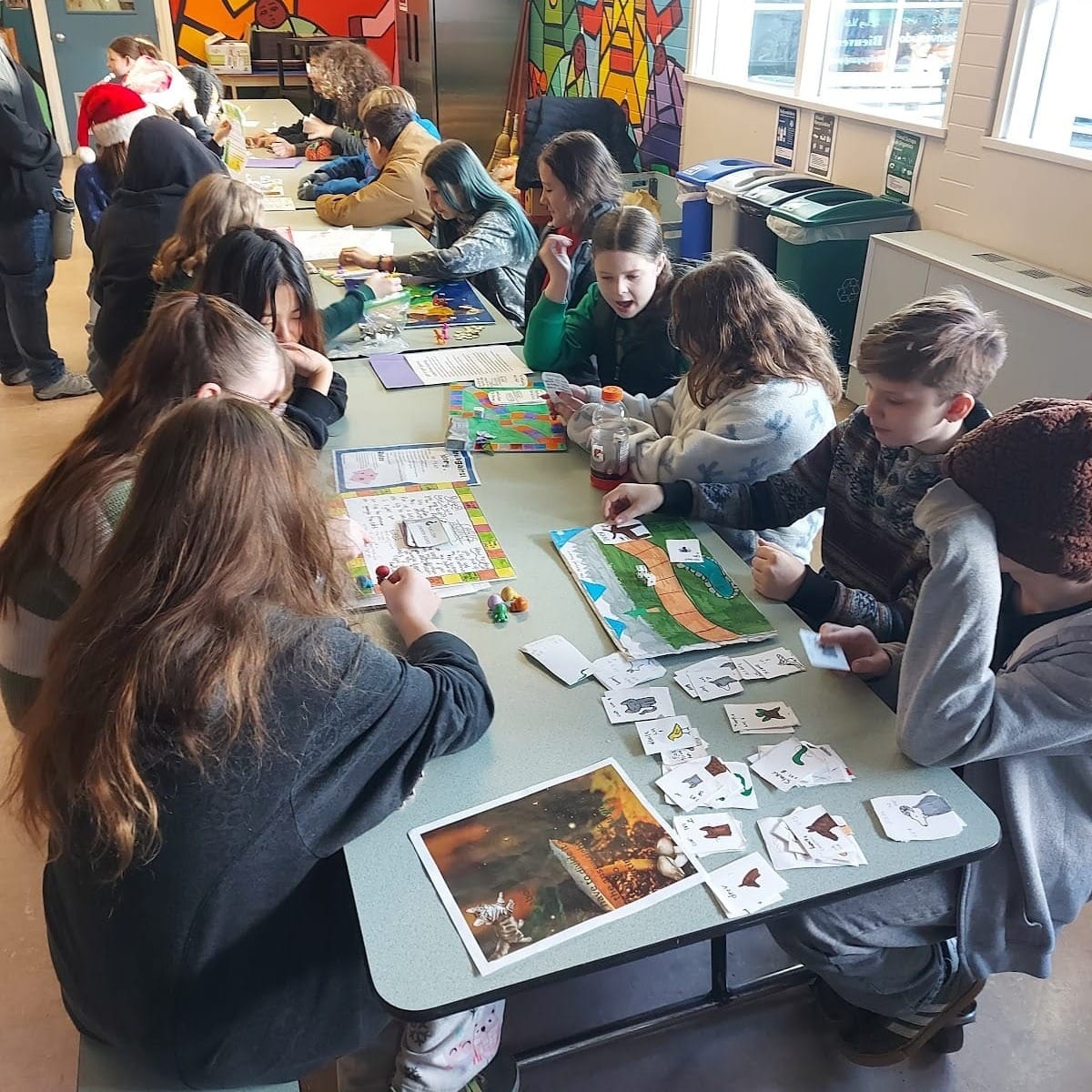
That one scheduling decision led to a 20% increase in students reporting they felt connected to an adult in the building. Think about that for a second. Not a new curriculum. Not an intervention program. A teacher teaching something they love, to kids who chose to be there. That's it! And it moved the needle by twenty percent.
We often think of principals as middle managers — enforcing decisions made elsewhere, managing logistics, keeping the plates spinning. But spending a day at Sarah’s school reframes that pretty quickly.
Someone has to hold the long view while also dealing with Tuesday. Someone has to remember why decisions were made three years ago when the staff who made them have moved on. Someone has to translate between what the school wants to be and what it can actually do right now.
That's the job. And it turns out, when someone does it really well, you almost don't notice — because everything just works.
Connecting the Dots 🔄
Remember that exchange we heard walking in the door?
"I just raised my assessment in Math from No Evidence to Proficient!" "OMG, I'm so proud of you."
By the end of the day, it was clear that was no small moment, it was the culture — led by Sarah, modeled by teachers, and perpetuated by students.
The school has real challenges: students with complex needs, limited support, and the constant tension between vision and capacity. None of that has magically gone away. Sarah would be the first to tell you that this work took years and that it's still ongoing.
But if you're a principal reading this and feeling a twinge of recognition — a sense that this is what you hoped the role could be — don't ignore that feeling. And if you're a teacher recognizing pieces of this leadership in your own school, or aching for it where you work, trust that instinct too.
School culture creates the environment for teaching and learning and it’s the foundation of all experiences. Curating and tending to the culture of a school is a lost art for many principals, but it survives in people like Sarah. The question is whether you’re willing to notice it, foster it, and nurture it.