

Two Grade 7 classes. Six ancient civilizations. And one question that took two months to answer: What would two ancient cultures build together if they met?
Before we even began planning, Ronan, Anna and I talked about how cultural collaboration has always been a part of human history. Some of the artifacts archaeologists have found challenge the assumption that ancient cultures existed in isolation, rising and falling independently of one another. Trade and movement between civilizations were far more common than most people realize, and cultures blended in unexpected, fascinating ways.
The artifact remix project was built on that premise.
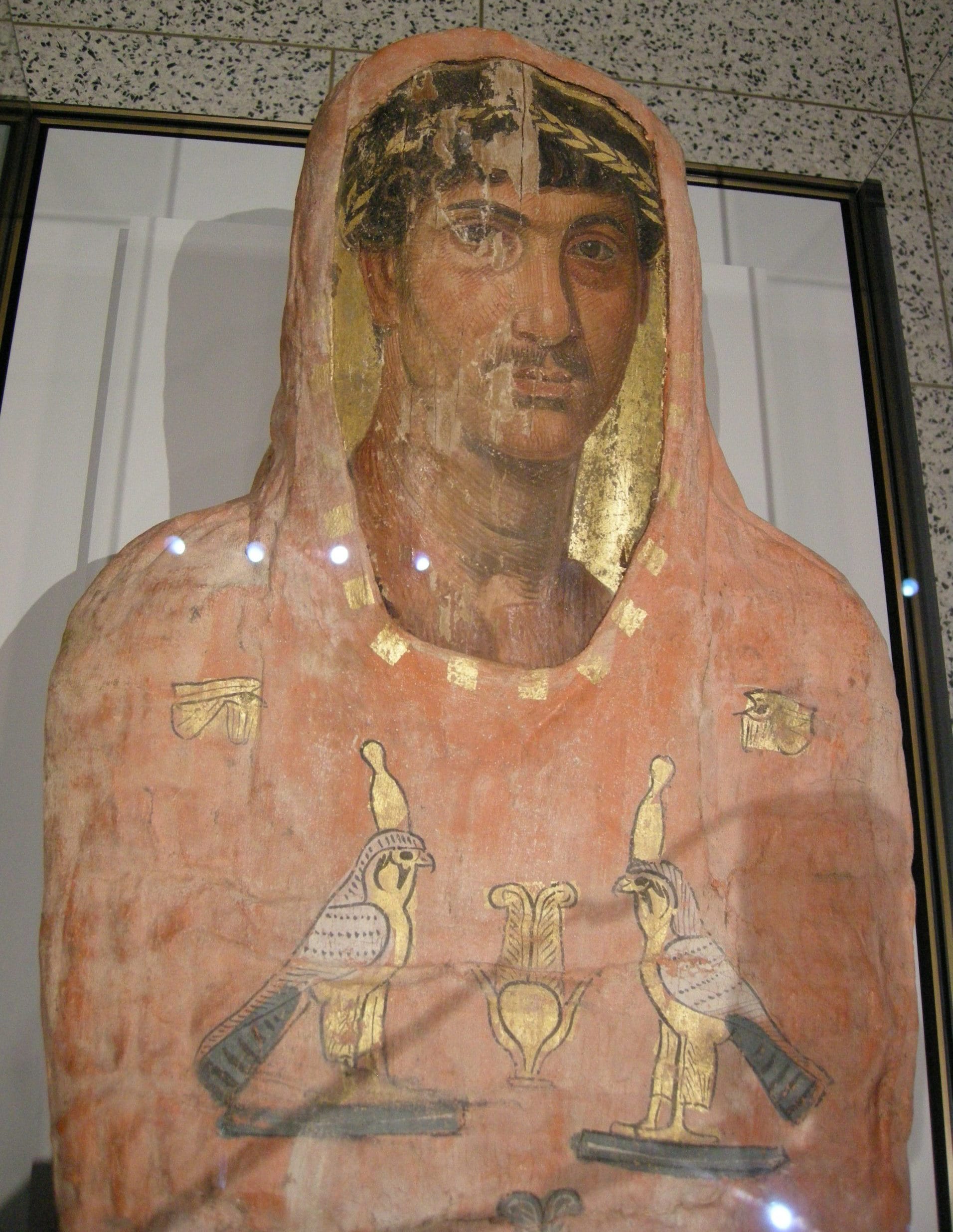
What started as a Social Studies deep dive evolved into one of the richest cross-curricular projects I've been part of. The secret was the sequence of thinking routines that carried students from research all the way to creation, each phase building directly on the last.
Phase 1: Know Your Civilization
Students broke out into even groups and were assigned one of Ancient Egypt, Ancient Greece, Ancient Rome, Ancient China, Ancient India, or Ancient Cree to research. They were responsible for finding information about thirteen separate categories including food, burial customs, tools, jewelry, transportation, and more.
For each category of research, they were asked to Zoom In, then Zoom Out.
Begin by zooming in on one cultural tradition. Look closely at the small details: the materials used, the foods eaten, the symbols chosen, the tools developed, or the spiritual beliefs connected to the tradition. Focus on gathering specific evidence that helps you understand what this tradition looked like and how people practiced it.
Once you understand the details, zoom out. Connect this tradition to the geography and environment of the civilization. Ask yourself how climate, landscape, resources, and challenges shaped this practice. Consider what problems people needed to solve, what values guided them, and why this tradition mattered.
Groups split the topic list to cover more ground, but the important move was synthesizing everything back together so that every student left Phase 1 with a full picture of their civilization. This was intentional. By building a shared knowledge base, the group became a leveling mechanism. Stronger researchers supported others, and everyone arrived at Phase 2 equally prepared.
💭 Between-Phase Reflection Questions:
- What's one tradition from your civilization that surprised you?
- How did your group share the research load?
- What do you feel most confident explaining to someone from another civilization group?
Phase 2: Find the Connections
Once every student was a civilization expert, it was time to mix things up. Students rearranged to pair up with someone who researched a different civilization. They approached this new pair with deep knowledge of cultural traditions but in two very different contexts.
We took inspiration from the Jigsaw method to rearrange students from group to group.
Each pairing started generating a list of key terms from each civilization. These lists came directly from their zoom in/out research. After generating the combined list, they transposed the words to hexagons cut out to create their map and start their discussion. The goal was to arrange them into a web, finding connections, debating intersections, and writing about the links that felt strongest.
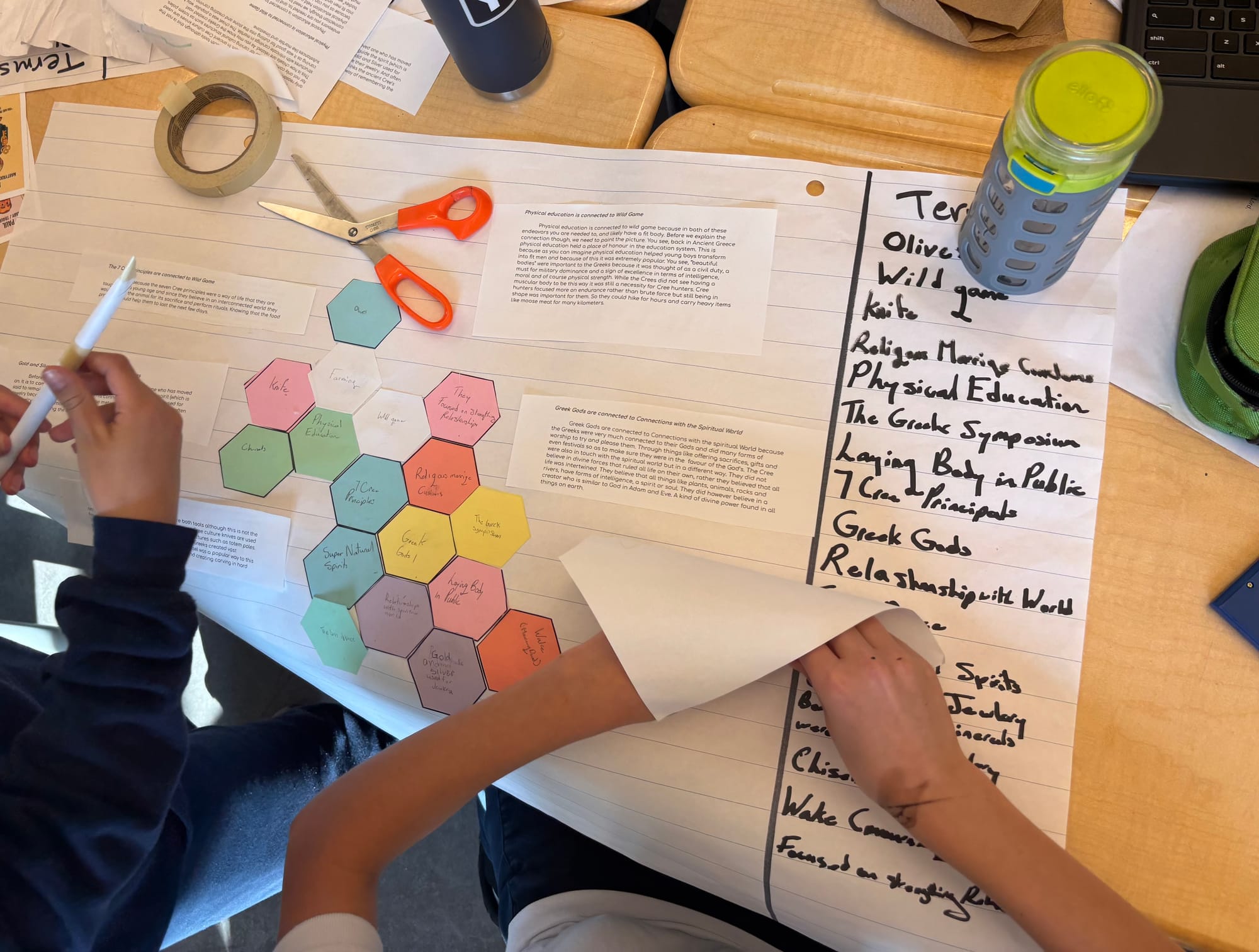
Hexagonal Thinking was the star of this project. Students spent multiple working sessions debating, rearranging, and writing about the connections between cultures. Ronan and Anna, the classroom teachers, told me these were the deepest conversations they'd heard all year. And I know why! Phase 1 had done its job. Every student showed up to this pairing prepared. They understood their civilization well enough to hold their own in the discussion, to push back and ask meaningful questions of each other.
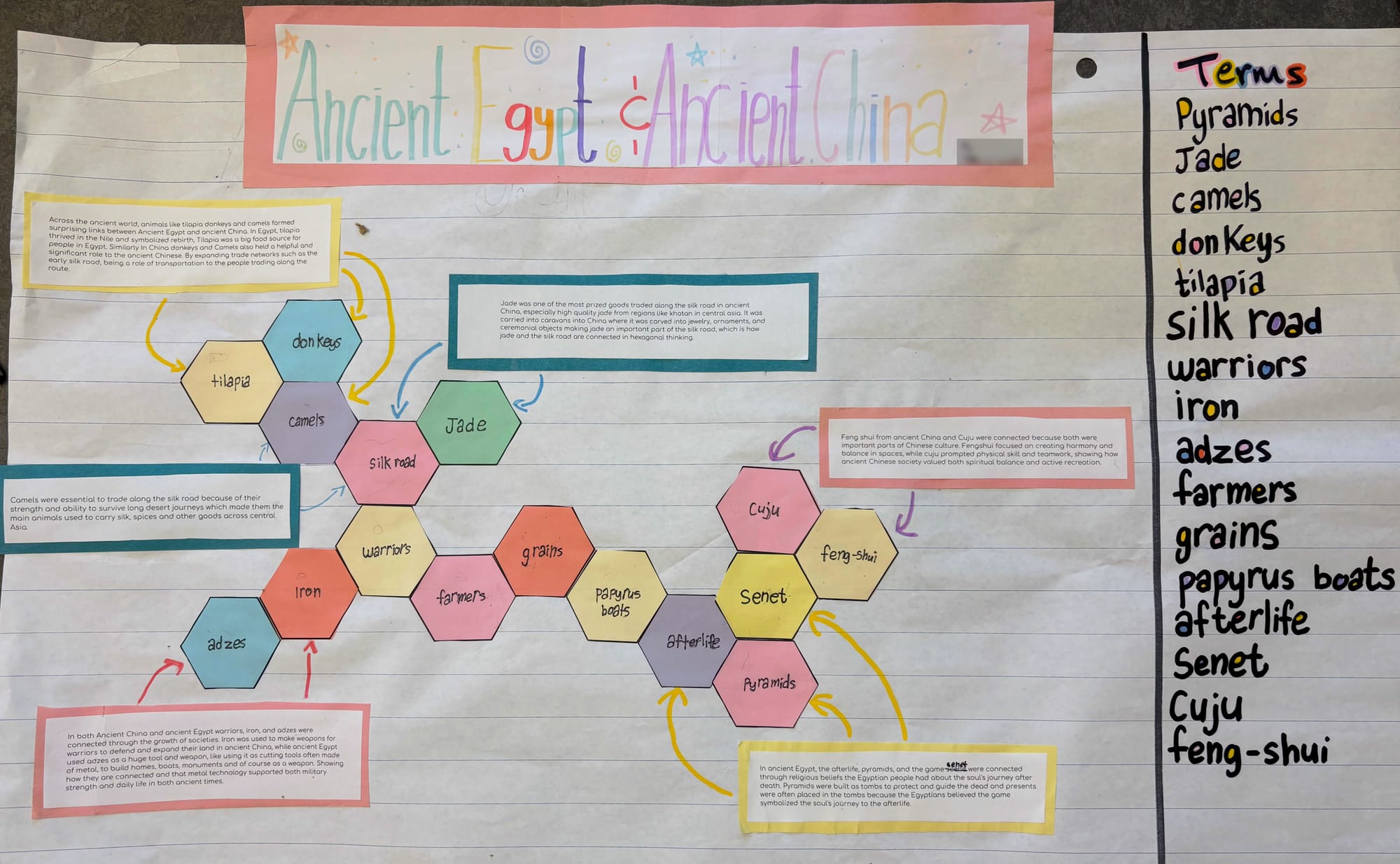
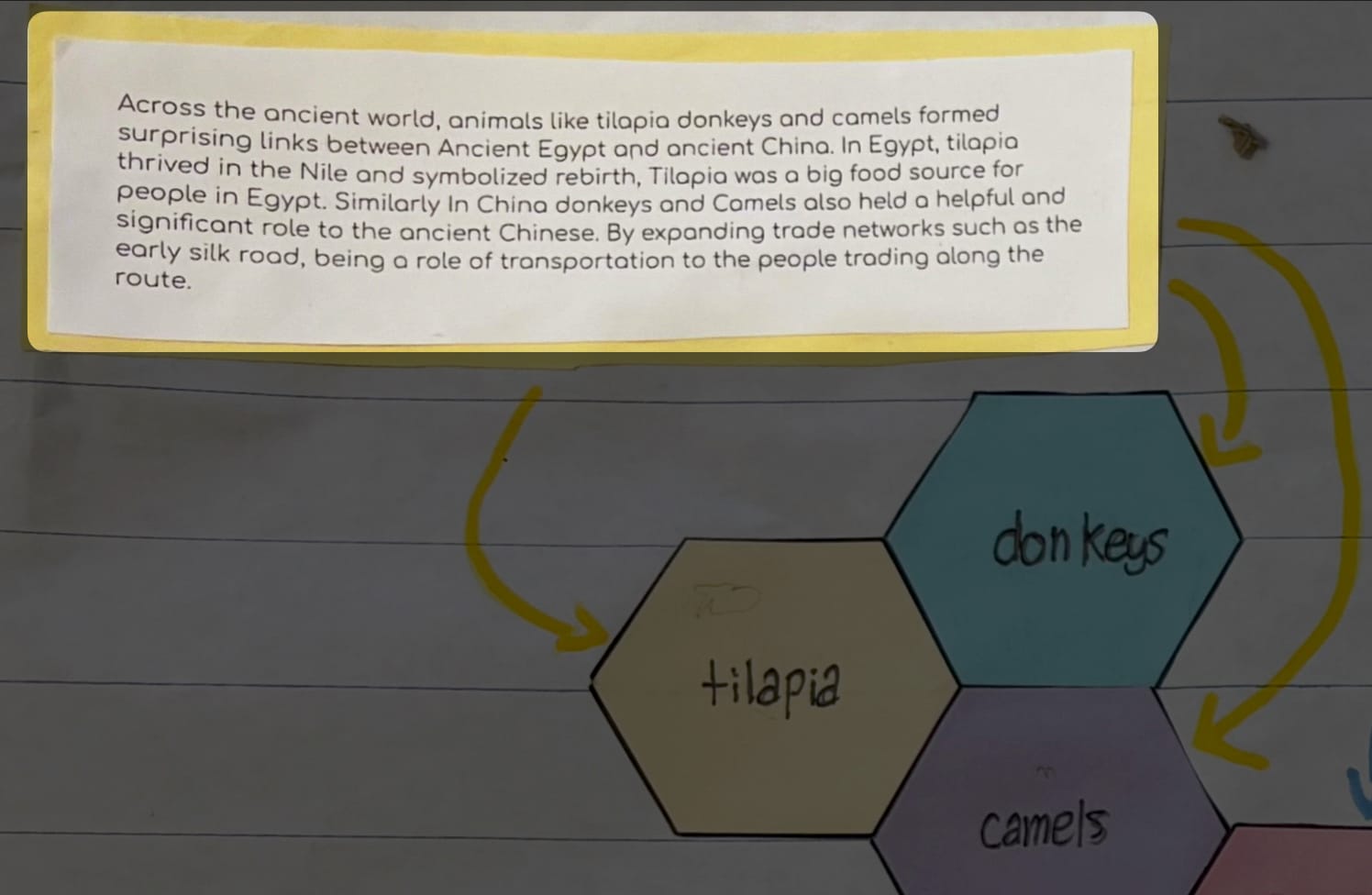
Ancient Egypt meets Ancient China. Connection: Animals used to expand trade networks.
 Dylan
Dylan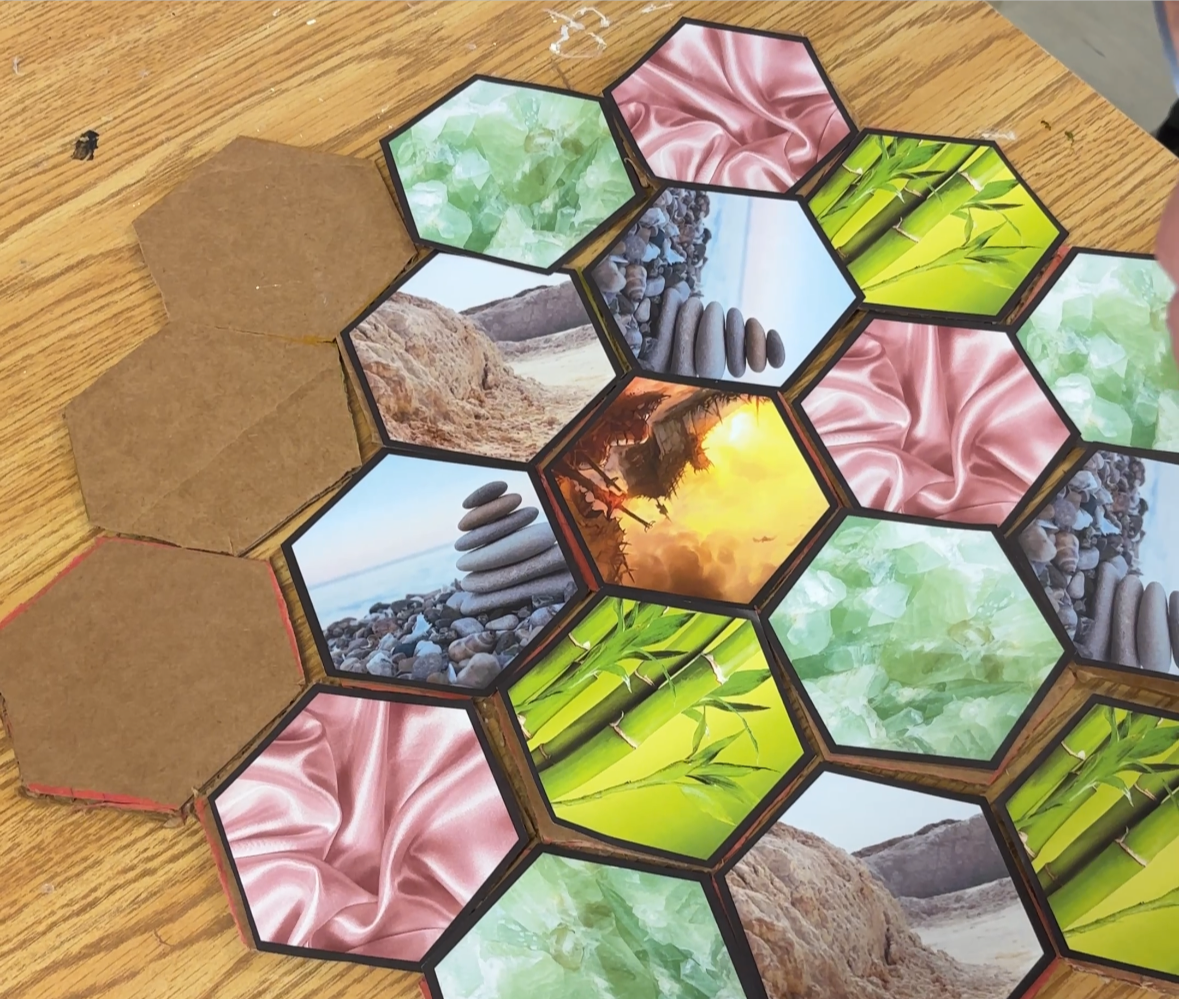
I’ve written about hexagonal thinking before and I truly believe this routine should be a staple in every middle years classroom.
💭 Between-Phase Reflection Questions
- What connection between the two civilizations surprised you most?
- How did you handle disagreements in your group about how to arrange the hexagons?
- Which connection felt most supported by evidence? Why?
Phase 3: Build the Backstory
With their strongest connections identified, groups chose one to build on. The task: imagine a historically plausible scenario where these two cultures met, and design an artifact they might have created together.
Before anyone started sketching, they had to answer some harder questions. How would these two cultures have met in the first place? Where? Why? How did the geography of that meeting place shape what they built? Every design choice had to be grounded in evidence from their research.
One group found that China and Egypt could have met through trade on the Silk Road. They decided that people from both cultures would have collaborated on protective forts along their trade route, improving trade relations between them.
Others found overlap in cultural traditions and discussed how shared traditions would have evolved into something new.
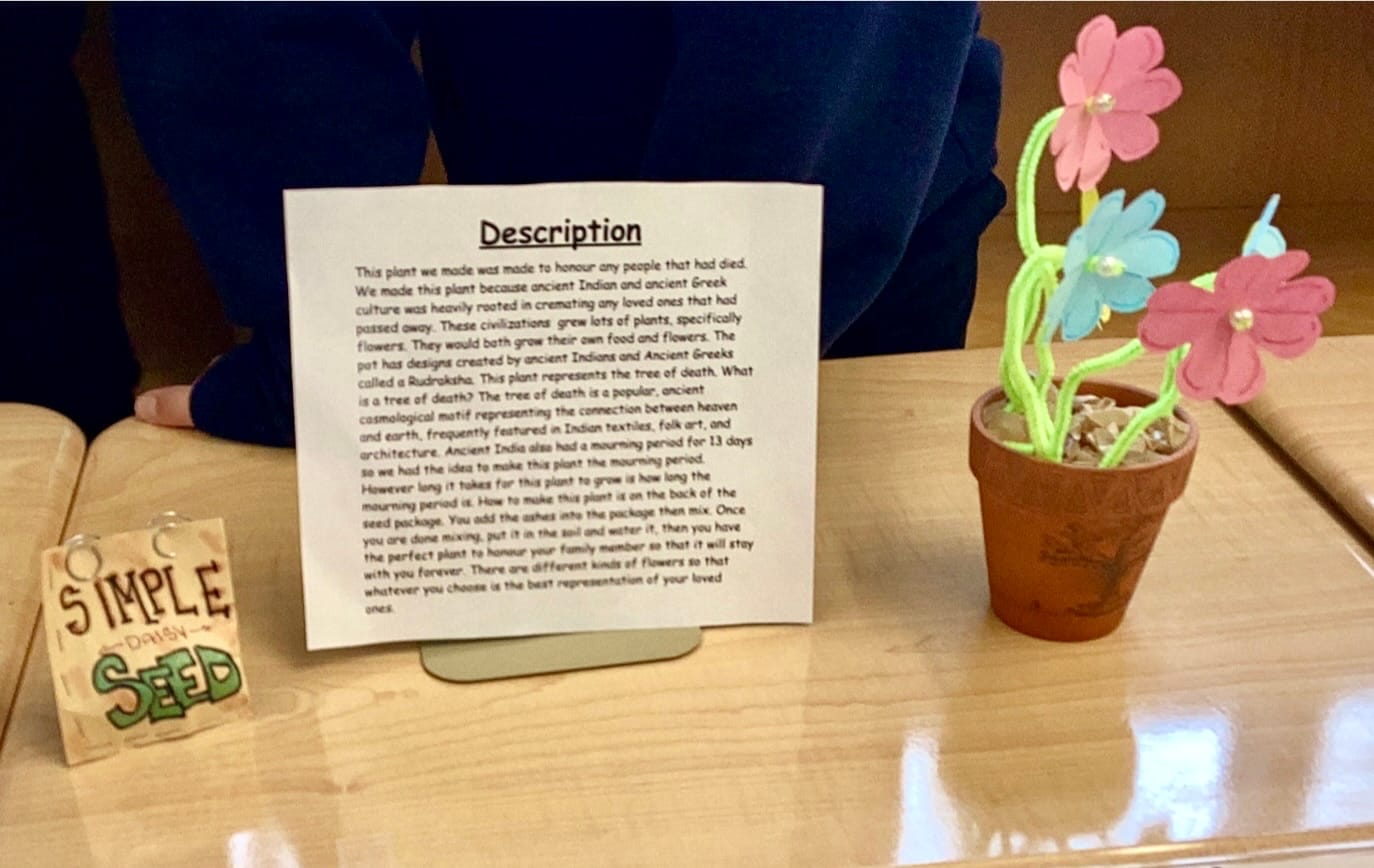
However long it takes for this plant to grow is how long the mourning period it. How to make this plant is on the back of the seed package. You add the ashes into the package then mix. Once you are done mixing, put it in the soil and water it, then you have the perfect plant to honour your family members that it will stay with you forever. There are different kinds of flowers so that whatever you choose is the beat representation of your loved ones.
The Design Process was the framework here, students were being asked to identify a shared context between the civilizations and research a problem. Though I'll be honest: I wish we had made it more explicitly visible to students.
💭 Between-Phase Reflection Questions
- How did your backstory change the way you thought about what to make?
- What evidence from your research most influenced your design direction?
- Did your group agree on the scenario easily, or did you have to negotiate?
Phase 4: Make It
Then came the making. The range of what they created was remarkable. Some made physical artifacts built from a wide variety of materials, others created recipes for snacks and games with entire rulebooks. Some of the artifacts were ceremonial, some practical, but all of them connected specific cultural traditions exchanged by the civilizations.
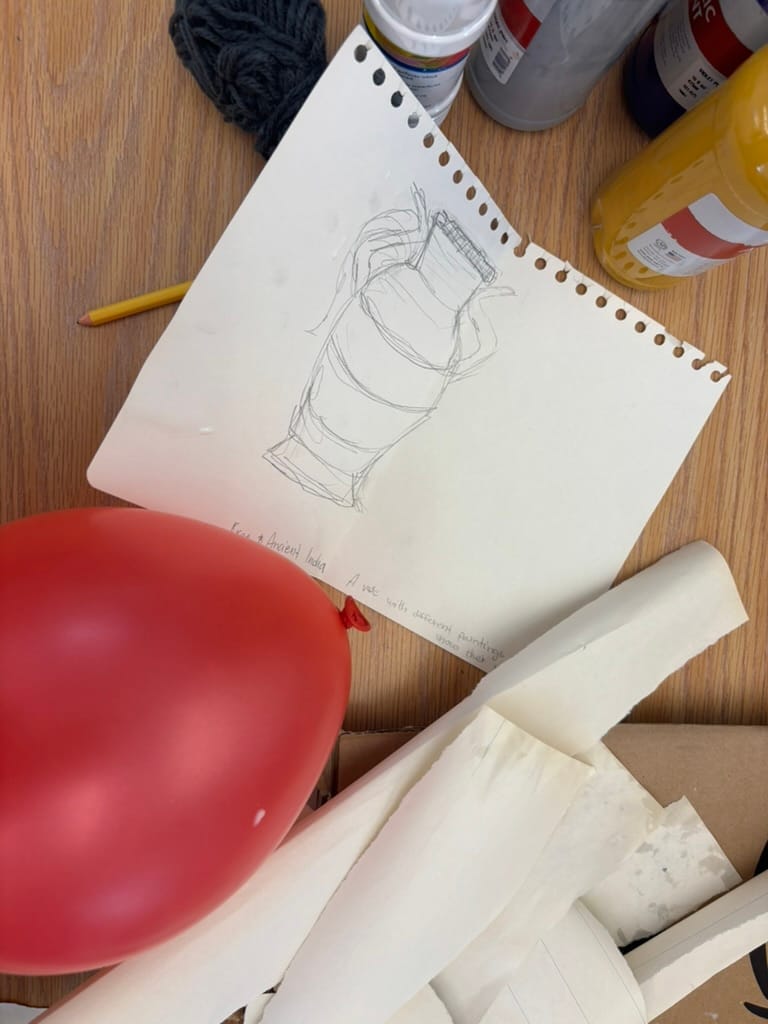
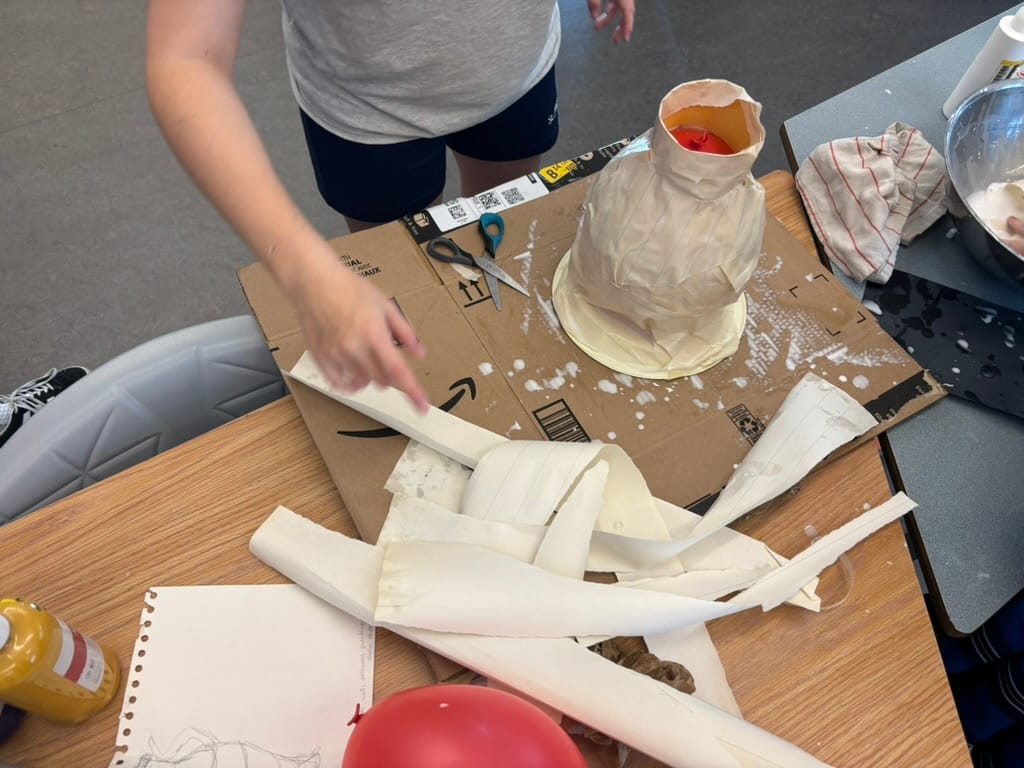
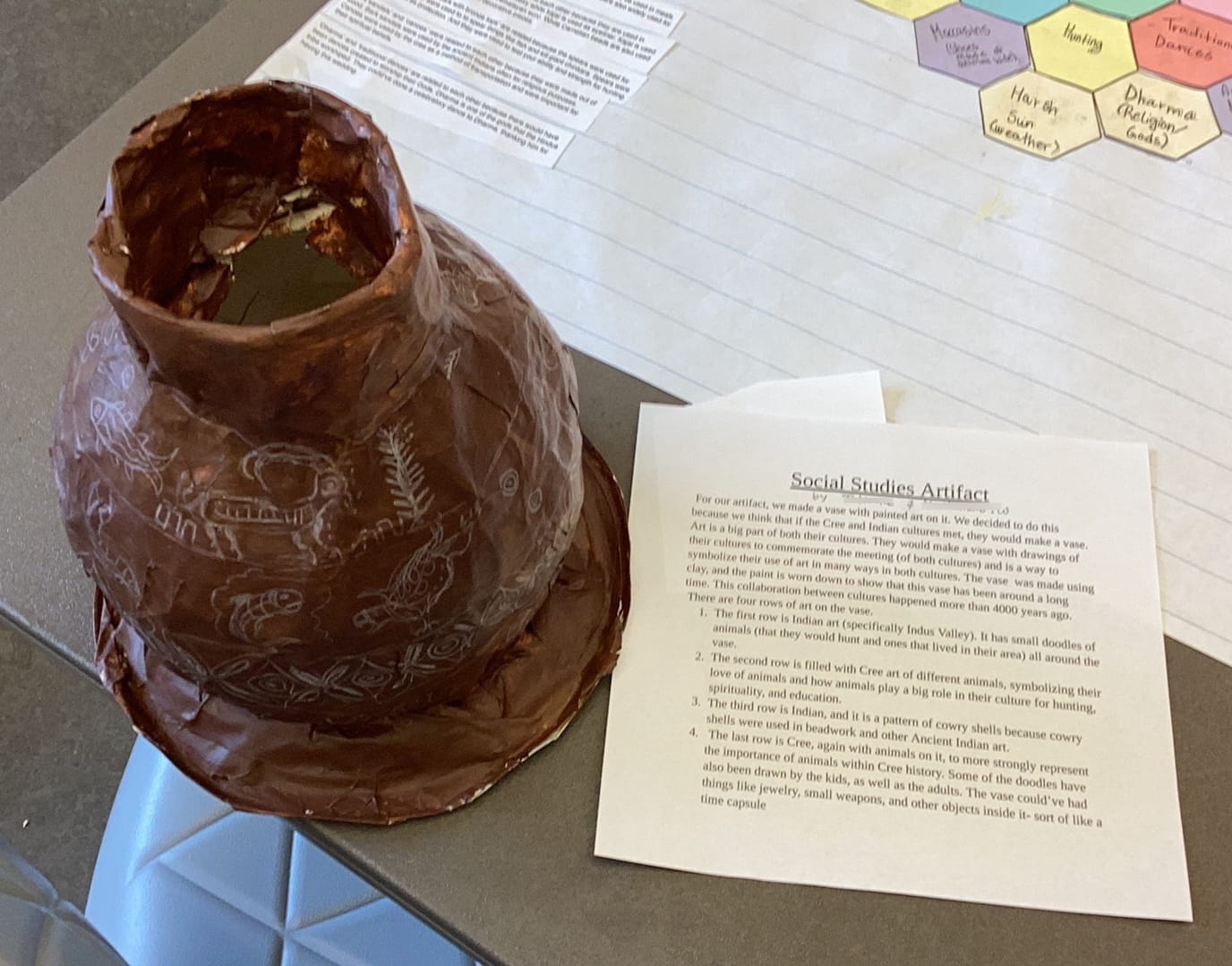
A vase designed by the Ancient Cree and Ancient Indians.
With sixty students working across two classrooms at the same time, the energy was something else. You could feel the momentum.
The Design Process continued through this phase, though making those stages more visible would be a priority next time. A milestone tracker would have helped enormously here. Students who missed a working block often came back unsure of where their group was and what came next. A simple shared checklist or Kanban-style board, something like Research → Comparing → Designing → Making → Done, would have kept everyone oriented.
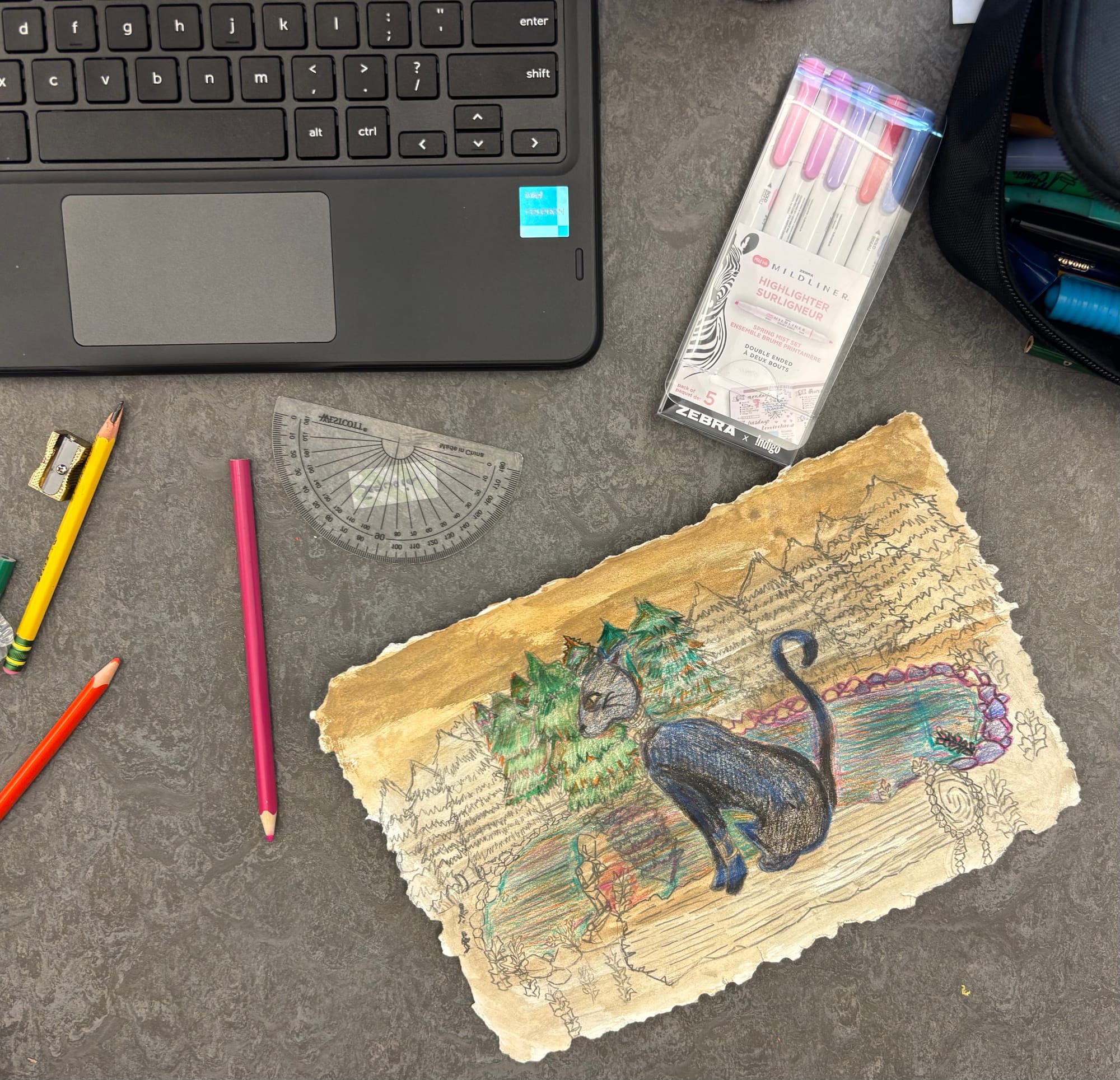
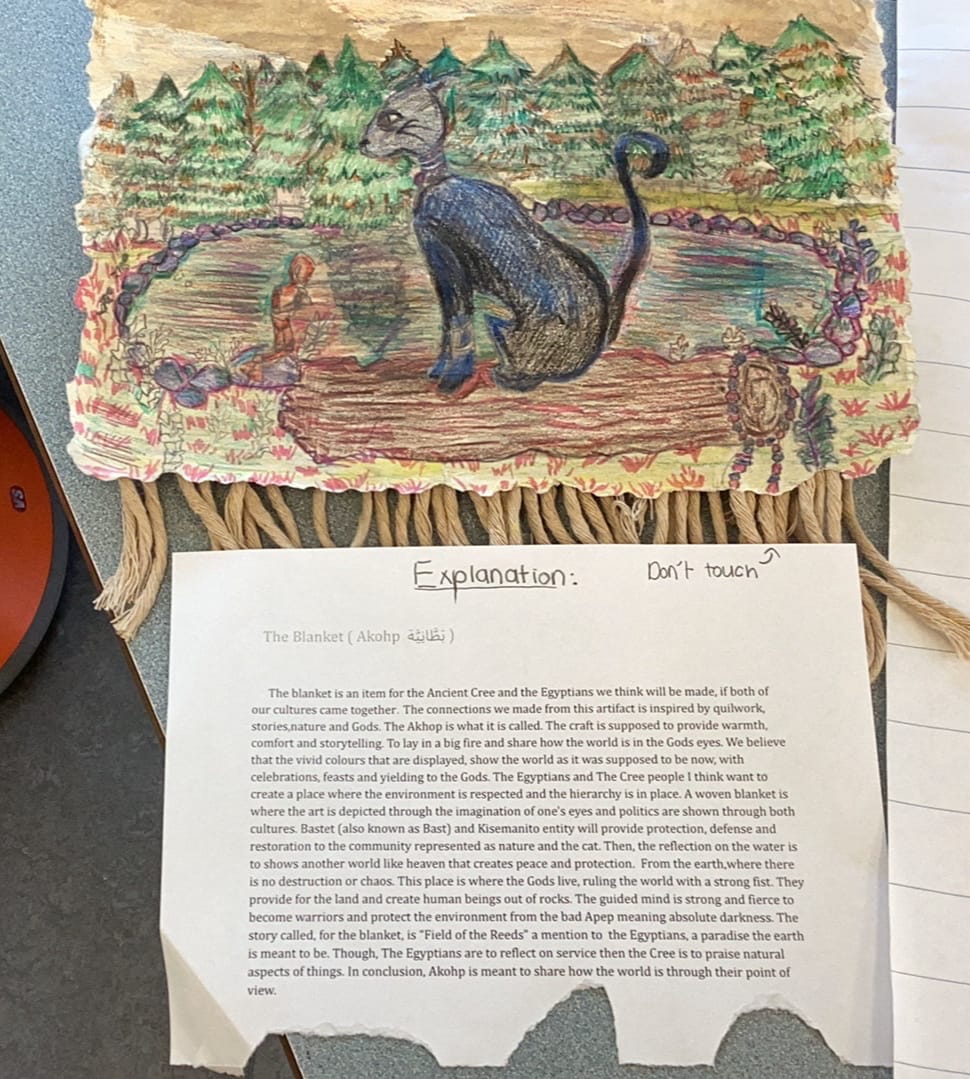
The Blanket (Akoph) made by the Ancient Cree and Ancient Egyptians.
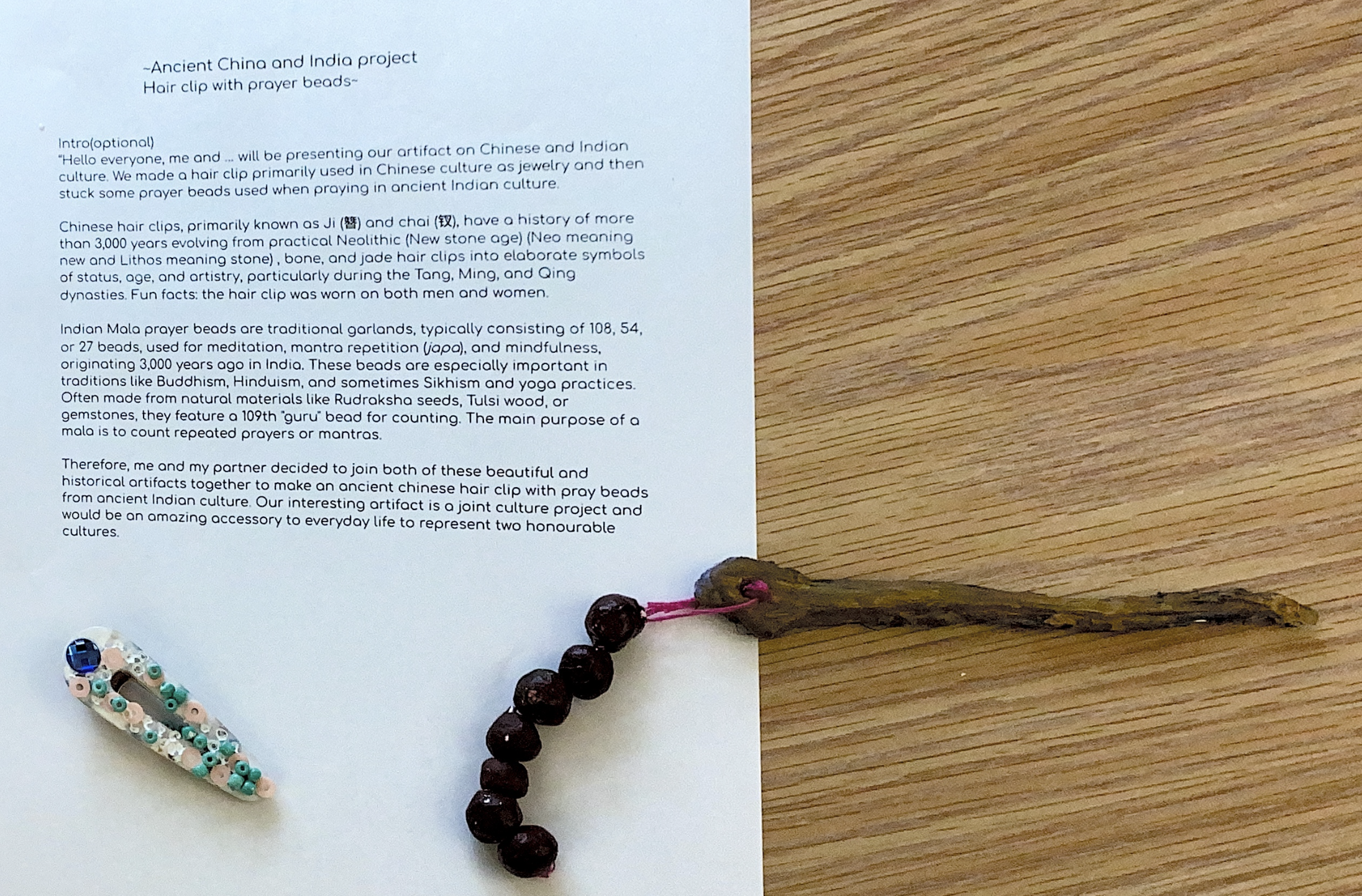
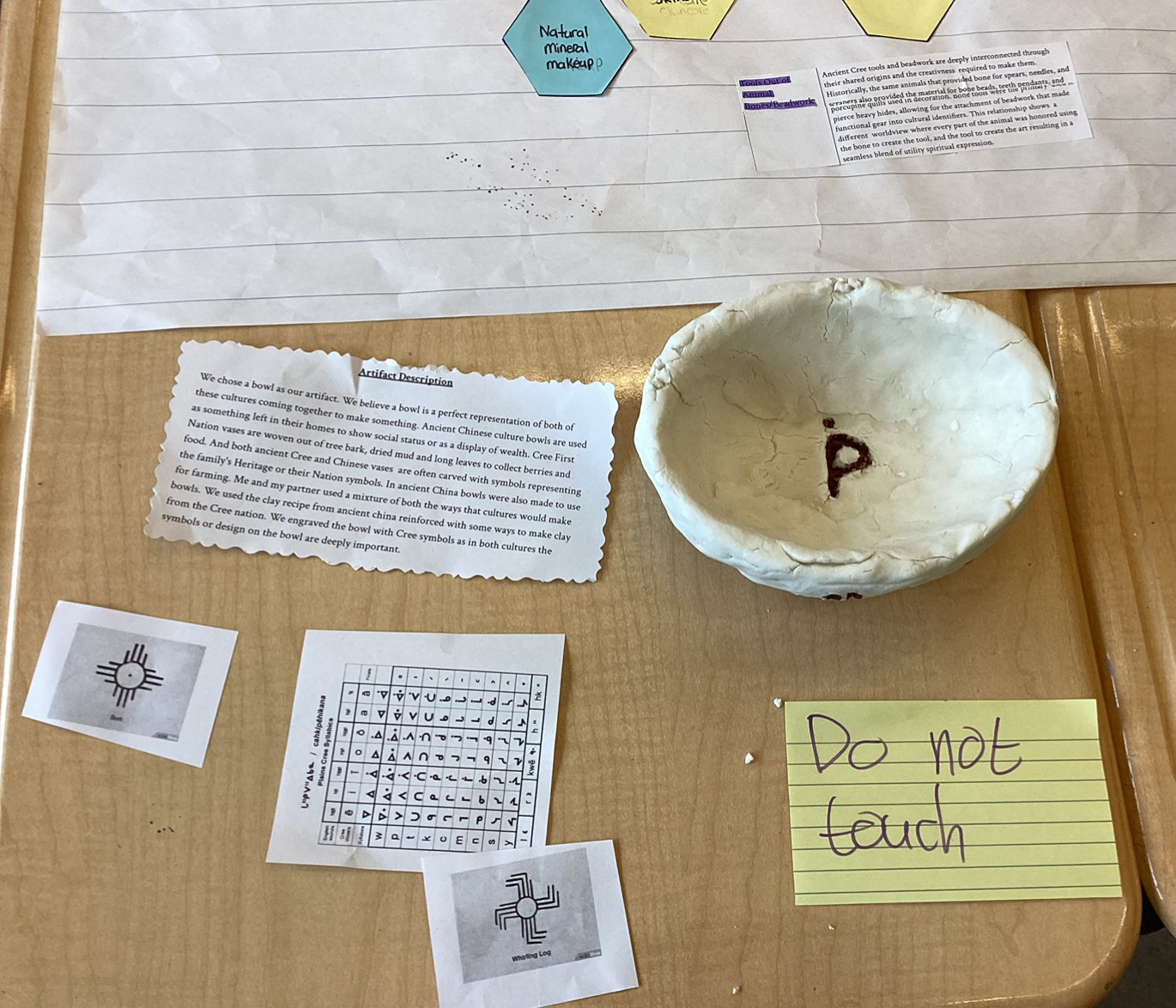
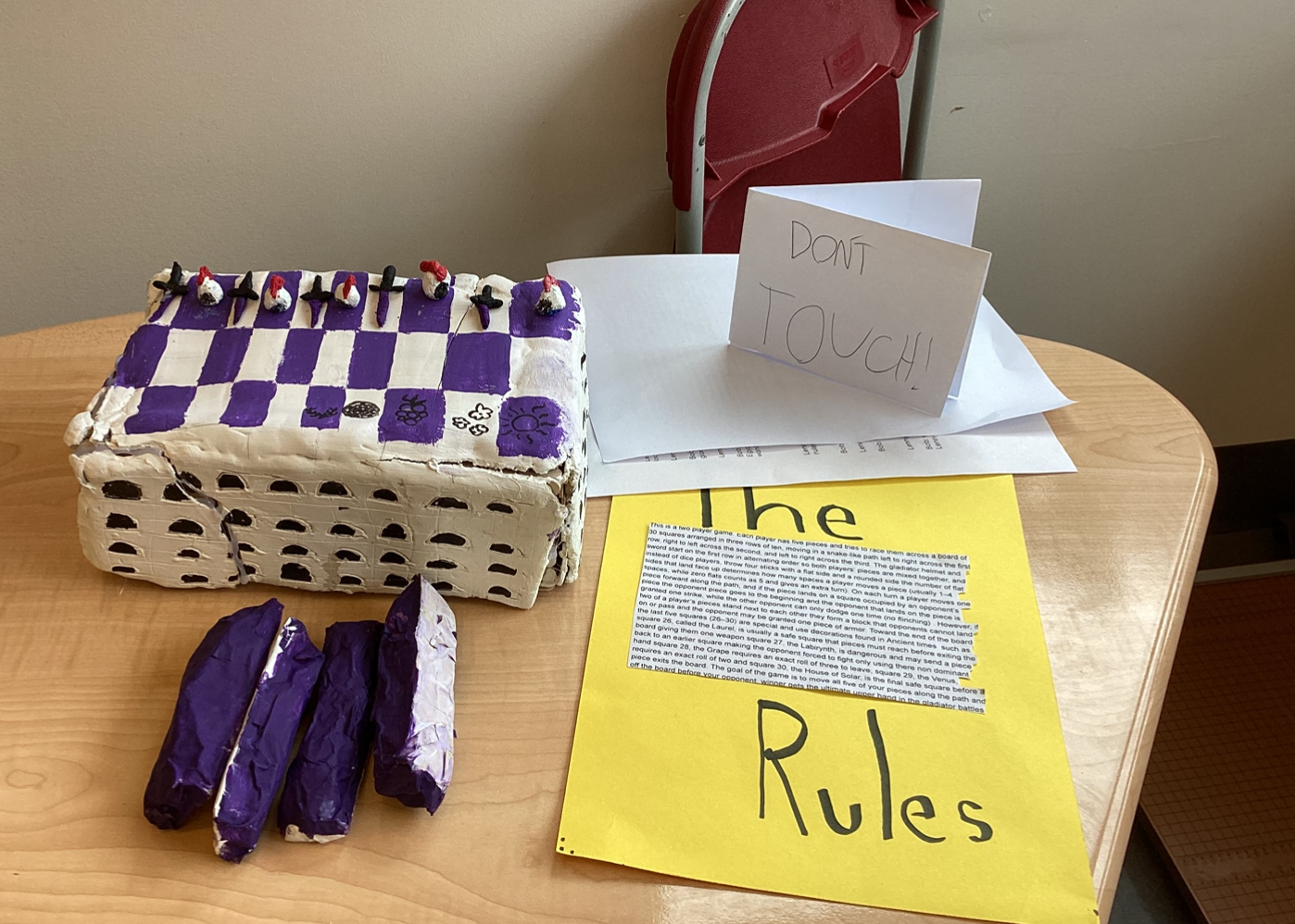
Hairclip, Prayer Beads, Decorative Bowl, Board Game
💭 Between-Phase Reflection Questions
- How did your artifact change from your first sketch to your final version?
- What feedback did you receive and how did you respond to it?
- How does your artifact reflect both civilizations?
What I'd Do Differently Next Time
Reveal the destination earlier. Students didn't know about the artifact remix until Phase 2. For many, Phase 1 probably felt like a standard research assignment. Sharing the full arc upfront would give the deep dive more purpose from day one.
Make the Design Process visible. Posting the stages and having groups actively track themselves through it would make the thinking more conscious and more transferable.
Add a milestone tracker. Whether it's a Kanban board, a shared slide, or a Google Classroom checklist, students need a way to reorient when they miss class time. The project ran over two months, and that's a lot of time for things to get murky.
The Bigger Picture
What made this project work was the sequence of thinking routines that carried students through it. Zoom In / Zoom Out. Jigsawing. Hexagonal Thinking. The Design Process. These are thinking tools, not just Social Studies tools, and students who used them here can use them anywhere. Two months of artifact remixing built a classroom culture where students knew how to research deeply, find connections across difference, and make something meaningful from what they found. The content was the vehicle. The thinking was the destination.