

Sharon and Jacqui, two Grade 1 teachers, came to me with an idea: they wanted their students to experience the properties of sound in a new and engaging way. I've helped teachers design creative sound lessons before, but this was the first time music was brought into it so directly.
When they described their goal, I immediately saw a connection. Rather than just hearing sounds, what if students could watch the waveforms take shape in real time? In our Grade 5 podcasting projects, we use TwistedWave as an editing tool, and part of those lessons always involves analyzing how sound appears as a visual waveform on screen. This felt like the perfect bridge.
 Carlo
Carlo
Sharon, a talented musician, brought in her clarinet and saxophone on the day of the lesson. What better way to demonstrate volume and pitch than with a live woodwind performance? She was excited to play a few simple songs for her students, and we used TwistedWave to watch the soundwaves of each instrument take shape as she played.
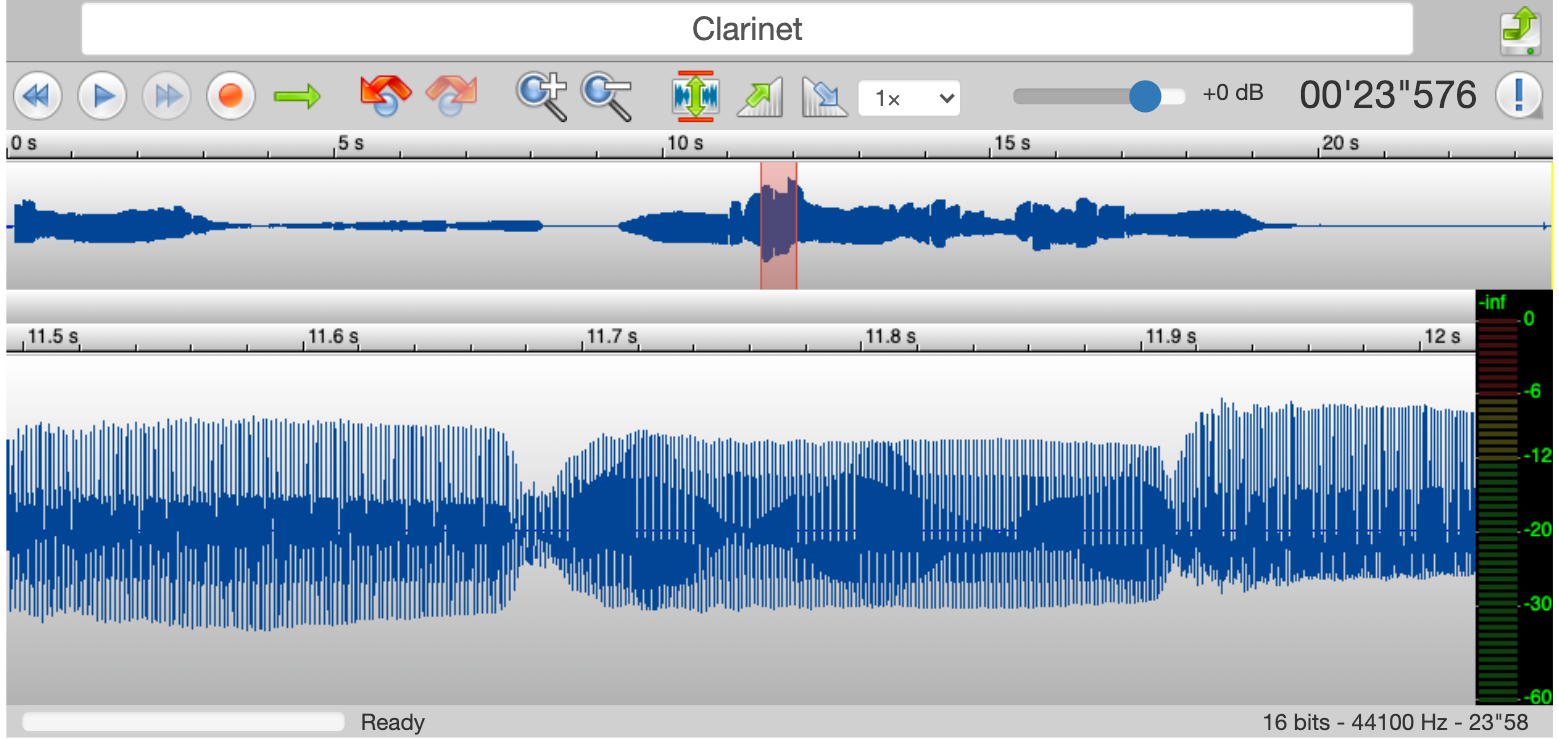
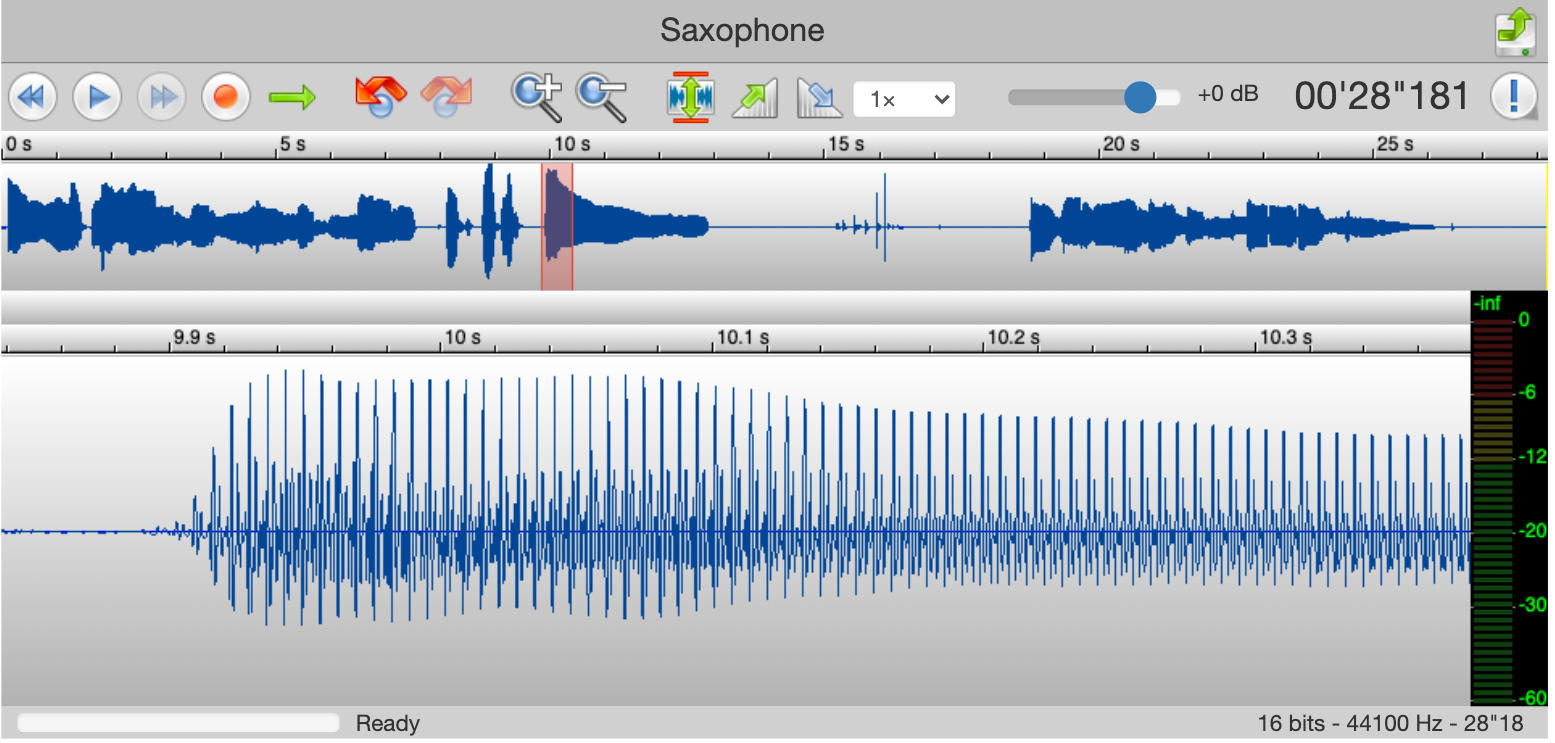
What I loved about this was that students engaged both ears and eyes, making predictions before each sound and observations after. With the waveform visible on screen, they could connect what they'd already learned about vibrations in the air to what they were now hearing and seeing in TwistedWave.
- “The larger wave means louder sound.”
- “Some sounds have large and small waves at the same time”
- “The waves are smooth when sound changes slowly”
Vocabulary like "pitch" and "volume" were grounded in something students could actually see changing on the screen as Sharon played.
Twisting Their Own Wave 🎶
Sharon kept playing short musical riffs, but now instead of watching the soundwaves appear on TwistedWave, the students drew them. We ran multiple rounds, switching instruments along the way. I even borrowed a djembe from the music room, and students quickly noticed how much more suddenly volume could shift with a percussion instrument! 🪘
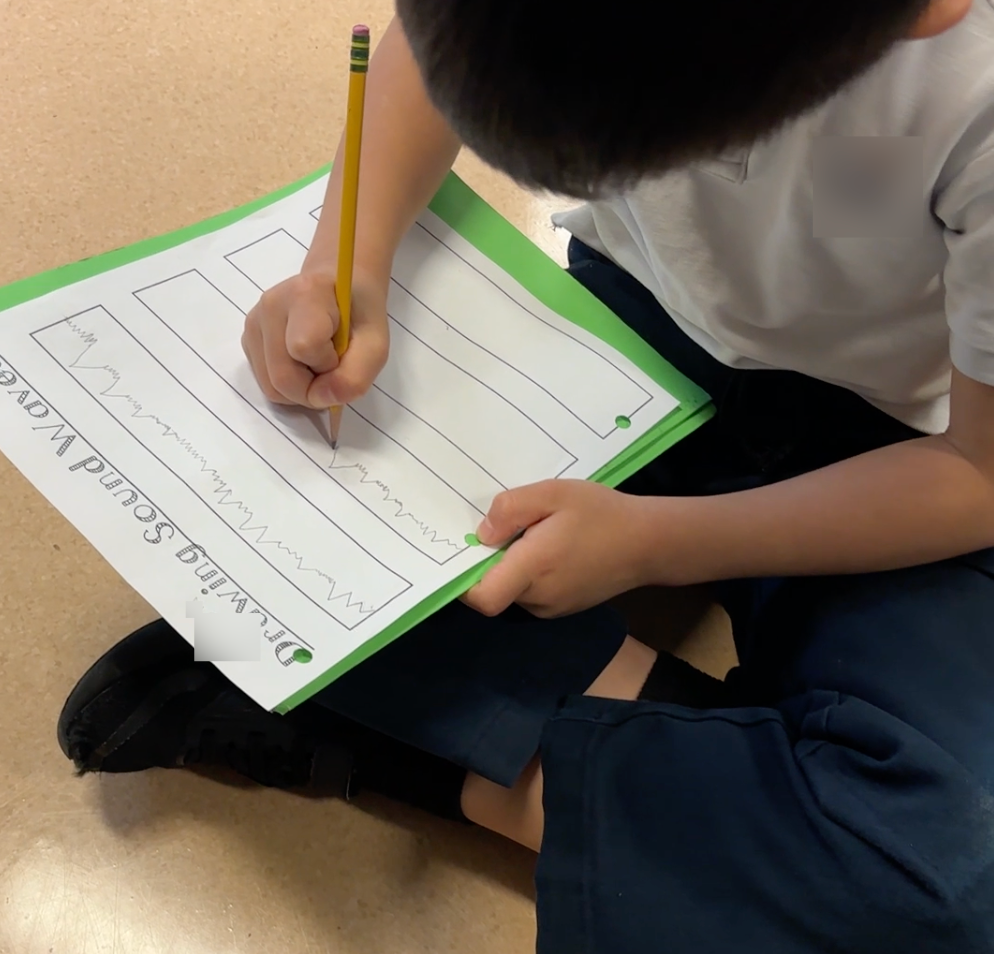
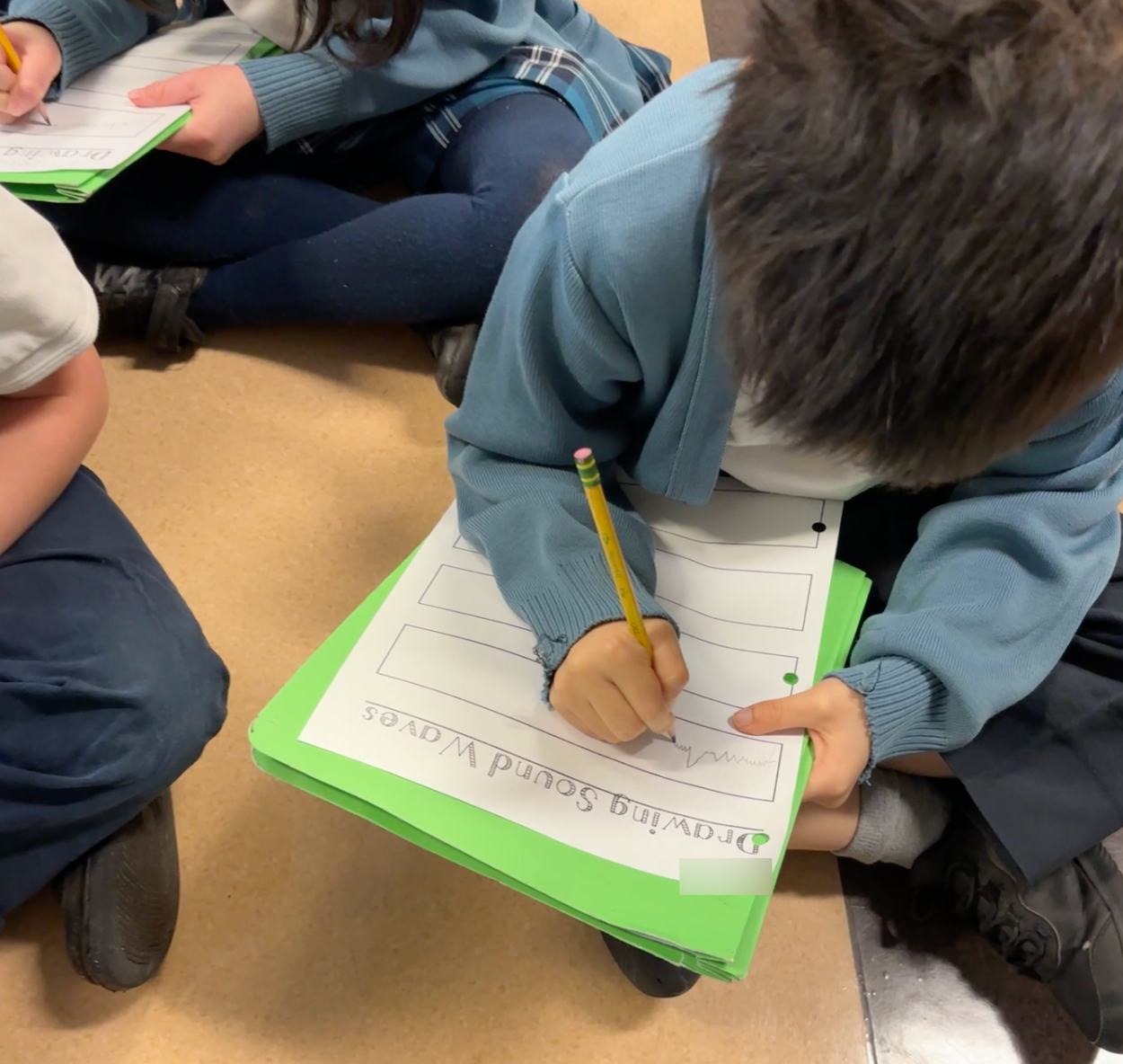
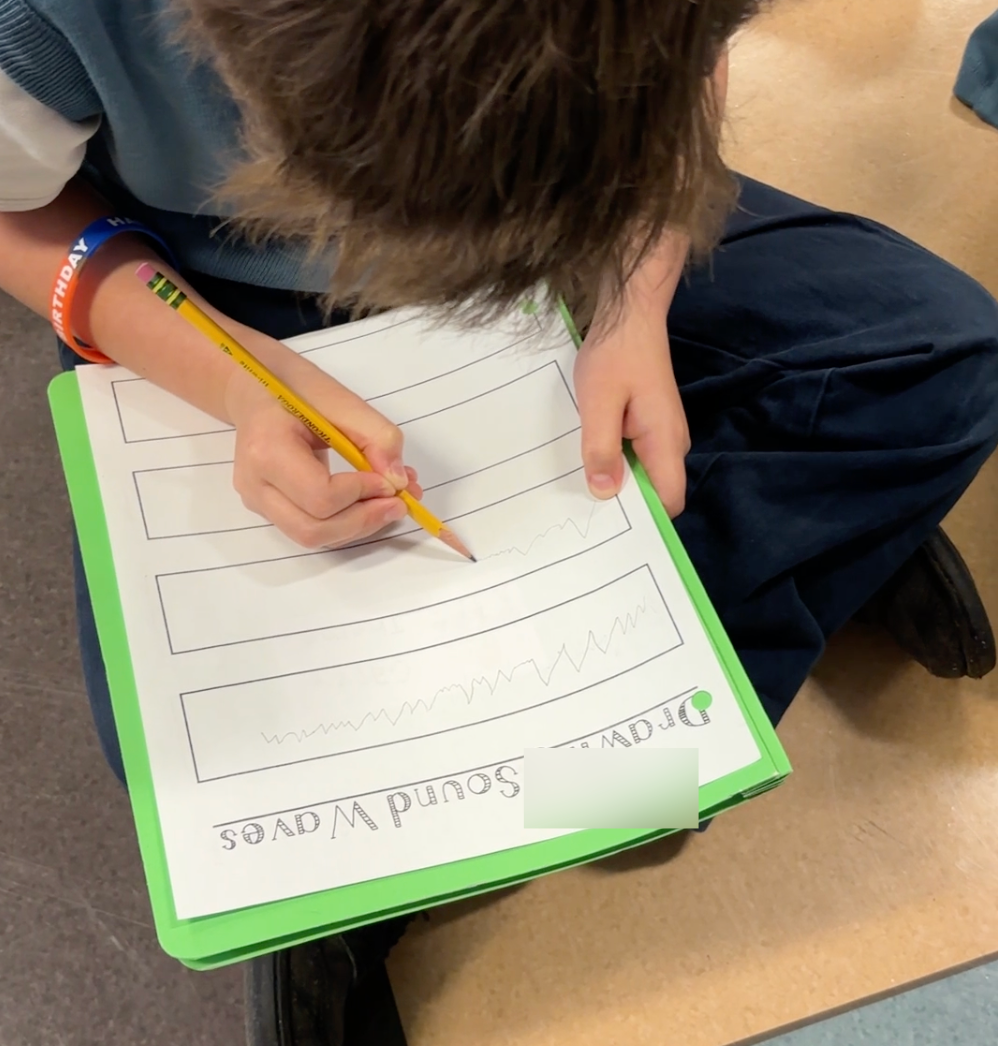
Drawing the sound of a clarinet.
On the final round, we had them close their eyes and draw while we played. Their pencils moved with the music, climbing when the notes rose and dipping when they fell, scrabbling faster during loud passages and going still when it got quiet.
By the end of the lesson, students didn't need the screen anymore. What TwistedWave had shown them visually, they'd started to feel. Sound had gone from something abstract, vibrations in the air, to something they could draw, predict, and move with.
We usually pull out TwistedWave for podcast editing. But Sharon walking in with a clarinet, a saxophone, and a folder of music from her community band was a good reminder that the right tool in the right context can do a lot more than its original job.
Another Way to See Sound ❄️
From voices to heartbeats, every sound has its own unique shape. In this TED Talk, scientists and artists explore how sound can be transformed into something we can see and experience in new ways.