

How can we tell the immigration story of someone else through pictures, words and artifacts in a historically accurate journal?
Nadia and Angel, two Grade 5 teachers, had been inspired by some of our recent field trip projects and wanted to try something similar with their upcoming visit to the Britannia Shipyards National Historic Site in Steveston.
 Carlo
Carlo
 Carlo
Carlo
The Social Studies connection was already there. Their classes were learning about immigration, and Britannia Shipyards offers an educational program centred around the lives of the immigrants who lived and worked in Steveston in the early 1900s.
Our challenge was figuring out what the students would do with that experience.
We went back and forth for a while trying to land on a final product and decide what students could collect while they were there. We knew we'd have access to iPads, which gave us plenty of options, but there was one major constraint shaping the project. Unlike some of the other field trips we've designed around, students wouldn't have much unstructured time.
The teachers had already booked Britannia's How We Lived educational program, meaning a large portion of the day would be facilitated by the heritage site's interpreters. We didn't want to create a separate project that competed for students' attention while they were participating in an already excellent program.
Ideally, the two would become one experience.
Planning Perspective
One idea kept coming up in our planning conversations: perspective.
During the Britannia program, students would learn about the different immigrant communities who lived and worked around the shipyards. Eventually, they would even be assigned characters based on real people who lived there.
What if our in-class project continued that experience?
Instead of learning about immigration and then creating something afterwards, students could take on the perspective of someone immigrating to Canada and working in Steveston in the early 1900s.
At first, we considered video diaries. Students could speak in character about their lives, work and experiences.
But video would require them to spend valuable field trip time recording footage and getting shots right. We'd learned from previous field work projects that technology can very quickly become the activity instead of supporting it.
Then another idea clicked. Why not make an actual diary? Or, more specifically, a junk journal.
What's a Junk Journal? 📓
A friend had recently introduced me to junk journaling through the journals she creates while travelling.
Instead of filling pages with long diary entries, she collects little pieces of her trip along the way: a boarding pass, a receipt from a memorable meal, a train ticket, photographs and other scraps. She sticks them into her journal alongside short pieces of writing about what happened that day. It's part scrapbook, part diary and part collection of evidence. And it felt perfect for this project.
What if students created junk journals from the perspective of someone immigrating to Canada more than 100 years ago?
Their journals could document their journey to Canada, their arrival in Steveston, where they lived, the work they did and what everyday life might have looked like.
Instead of only writing their character's story, they could build it through photographs, diary entries, tickets, receipts, identification documents, immigration papers, sketches and other artifacts. Suddenly, the field trip had a very clear purpose.
Students weren't going to Britannia Shipyards just to take pictures of interesting things. They were gathering evidence for someone else's story.
Preparing to Take on a Perspective 💭
To front-load the project, Nadia and Angel introduced a perspective-writing activity to get students thinking about how an experience might look and feel completely different depending on the person experiencing it.
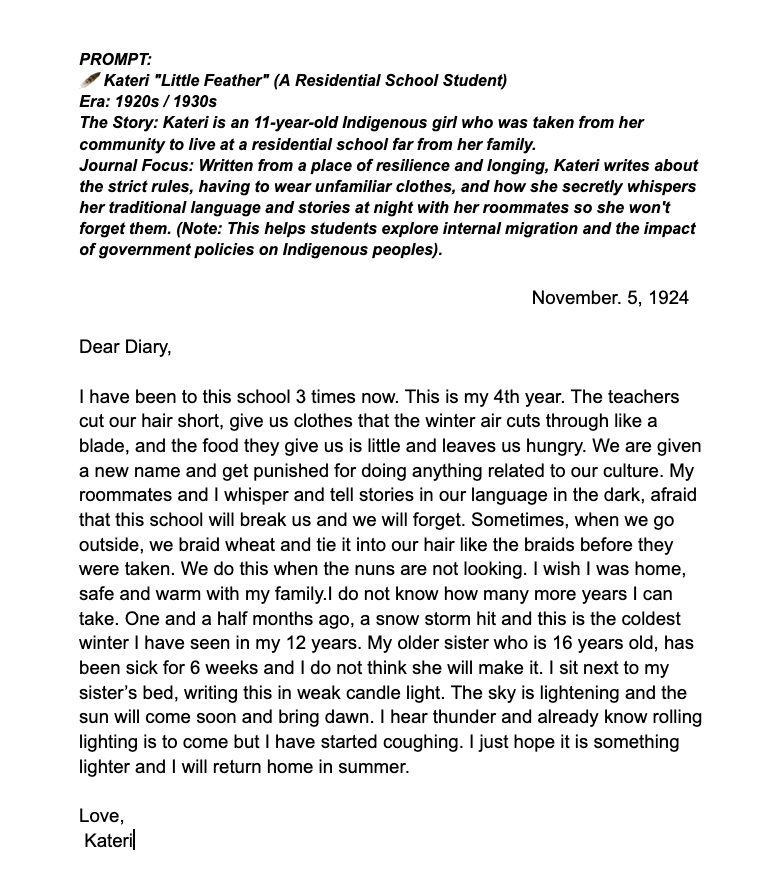
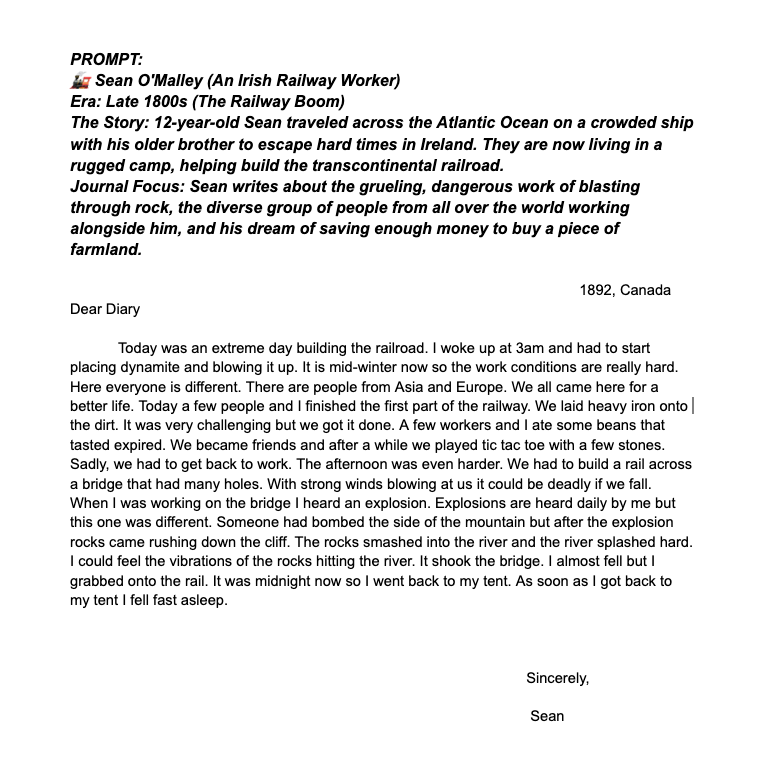
Students were given character prompts for their diary entries.
When the students were writing these journal entries, they weren’t even aware it was tied to their social studies project. I'm glad they did it though, because it gave us something to build on when I arrived to introduce the larger project.
I started by showing students examples from my friend's actual junk journals. I had photographed several of her pages so we could examine what she chose to include.
There were train tickets. Boarding passes. Receipts. Photographs. And short paragraphs scattered throughout explaining little pieces of her adventures. As we flipped through the examples, I asked students to think less about how the pages looked and more about what all those little pieces told us.
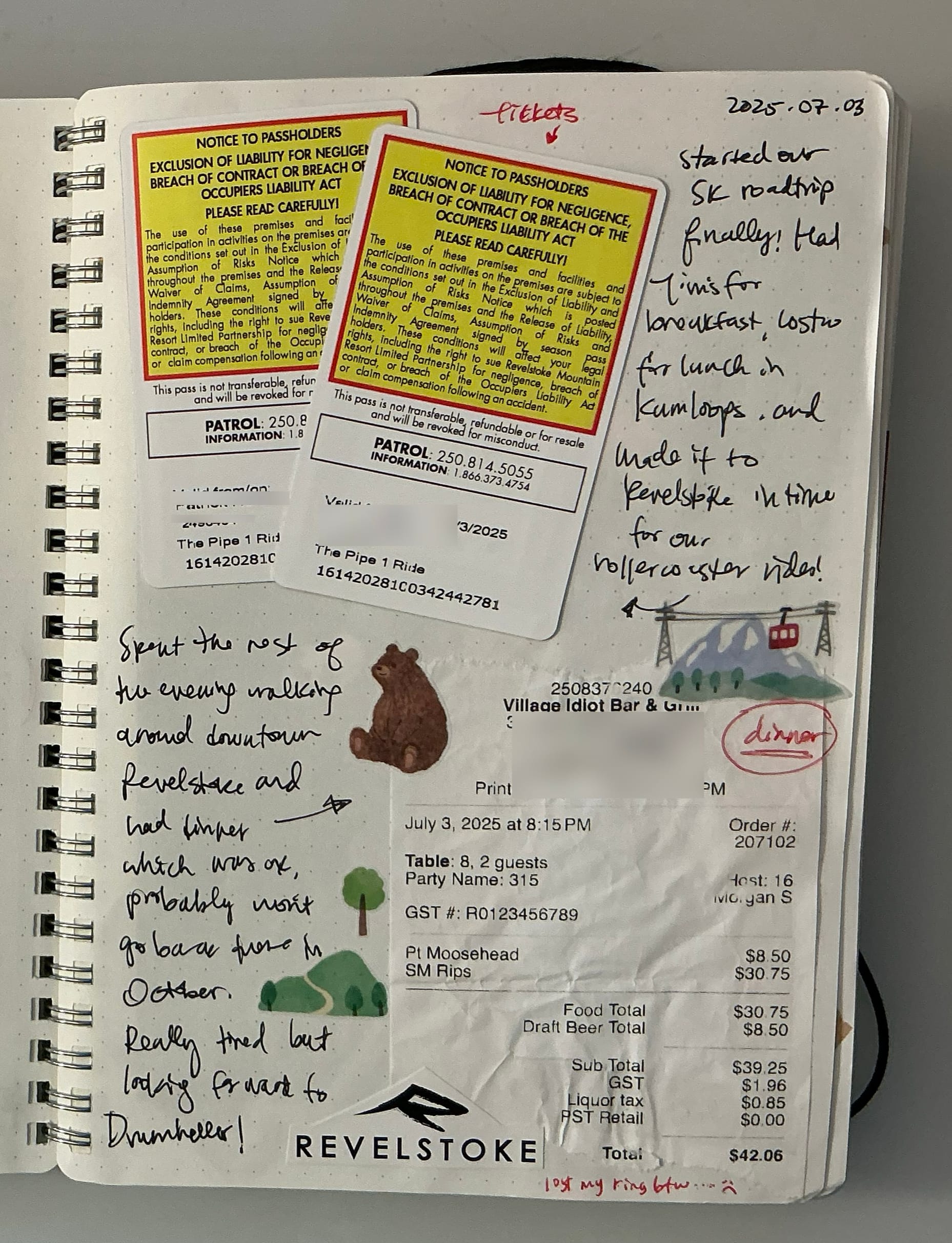
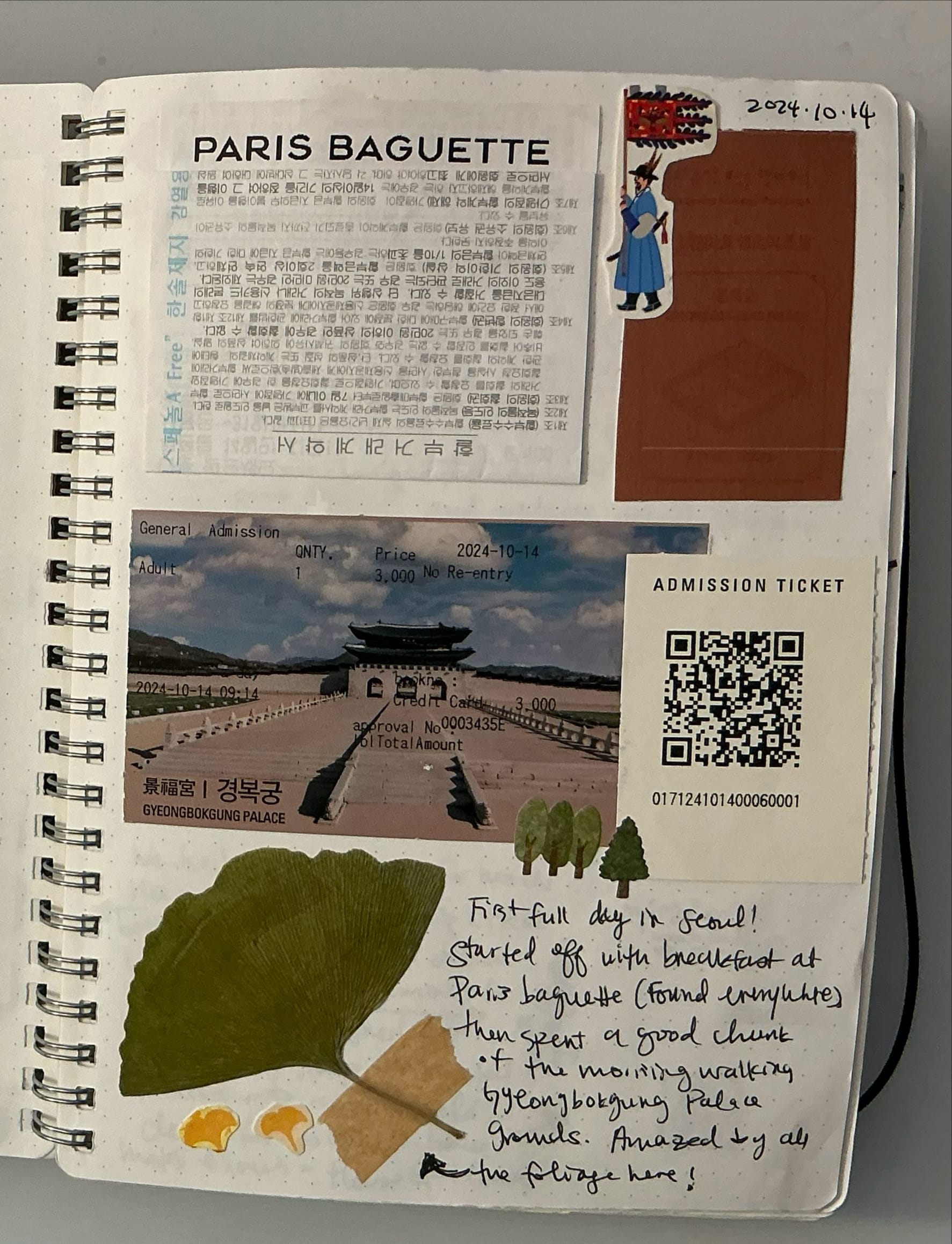
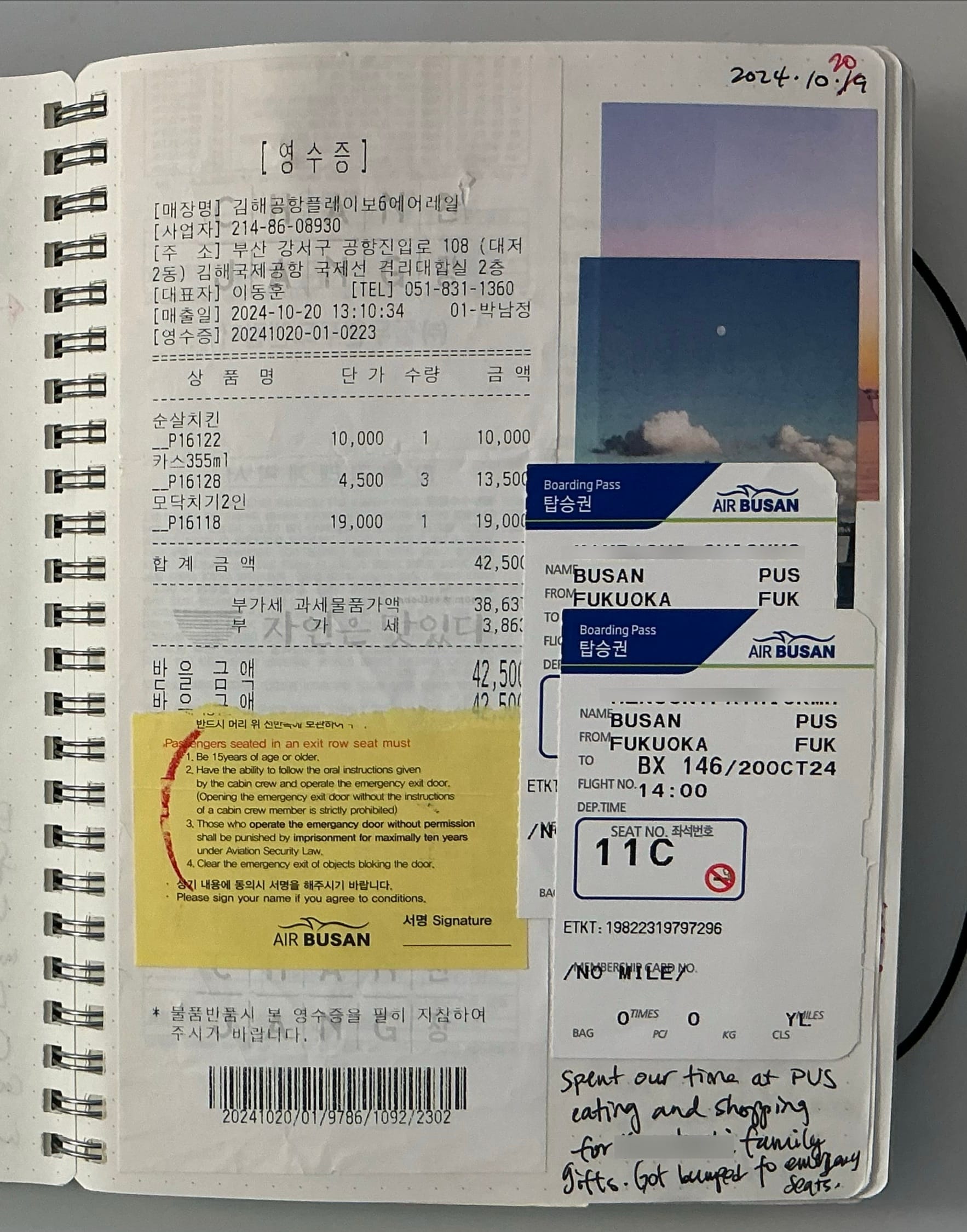
A receipt wasn't just a receipt anymore. It could tell us where someone had been, what they bought, how much something cost or even something about their daily routine. A ticket could tell us how they travelled. A photograph could show us where they lived. Even an ordinary object could become evidence.
That was an important connection to make before visiting a historic site filled with ordinary objects from more than a century ago.
Building a Historical Junk Journal ✂️
Once the concept clicked, the class had plenty of questions:
- Where would they get all of these artifacts?
- Would Britannia give them tickets and immigration papers?
- Did they have to find everything while we were there?
Some of their evidence would come directly from the field trip. Students could photograph objects, rooms and details connected to their character. They could sketch things they noticed or write down information they learned from signs and interpreters.
Other artifacts could be recreated afterwards. If their character would have travelled by ship, what might their ticket have looked like? If they were paid for their work, what kind of receipt or document might they have kept? What immigration papers might they have carried?
Students could research and design those pieces themselves, either by hand or digitally in Canva, before printing and physically adding them to their journals.
The important part wasn't whether the artifact was real. It was whether they had enough historical evidence to justify all the artifacts in their journal.
Our Guiding Question
As we worked through the examples together, the purpose of the project eventually came together in one question:
How can we tell the immigration story of someone else through pictures, words and artifacts in a historically accurate journal?
That question opened this project up much further than I initially expected. Students would need to understand immigration as a lived experience: work, family, culture, community, discrimination, belonging and the challenges of building a life somewhere new.
They'd need to write from another person's point of view. They'd need to interpret historical evidence. They'd need to decide which details were important enough to include. And eventually, they'd need to synthesize all of that through writing and design.
Most importantly, the project gave them a reason to pay attention once we arrived at Britannia Shipyards. Every student would be responsible for telling someone's immigration story.
Next stop: Steveston. 🧳