

Last school year, we published a three-part Board Game Series. Back then, Patricia's Grade 7s designed games based on ancient civilizations. She’s running the project again this year, and I changed one thing about how I showed up for her and her class.
 Jen
Jen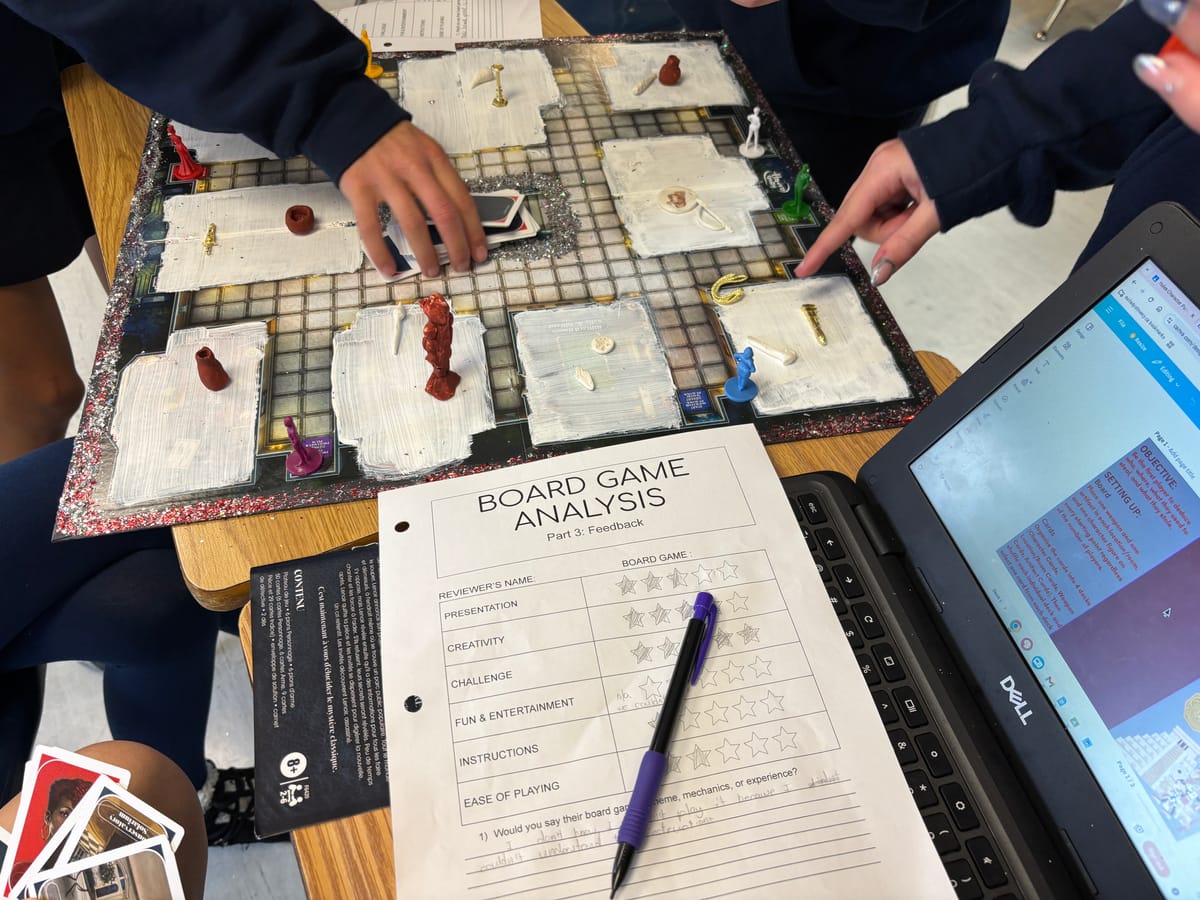
The games last year looked fantastic. But looking fantastic was part of the problem. Some groups got so pulled into the physical build, the painted boards, the 3D centrepieces, the custom pieces, that the game stopped showing what they actually understood about their civilization. The craft outran the content.
So this time, I came in before anyone started building. The whole point of the visit was to check in on the plans while they were still just plans.
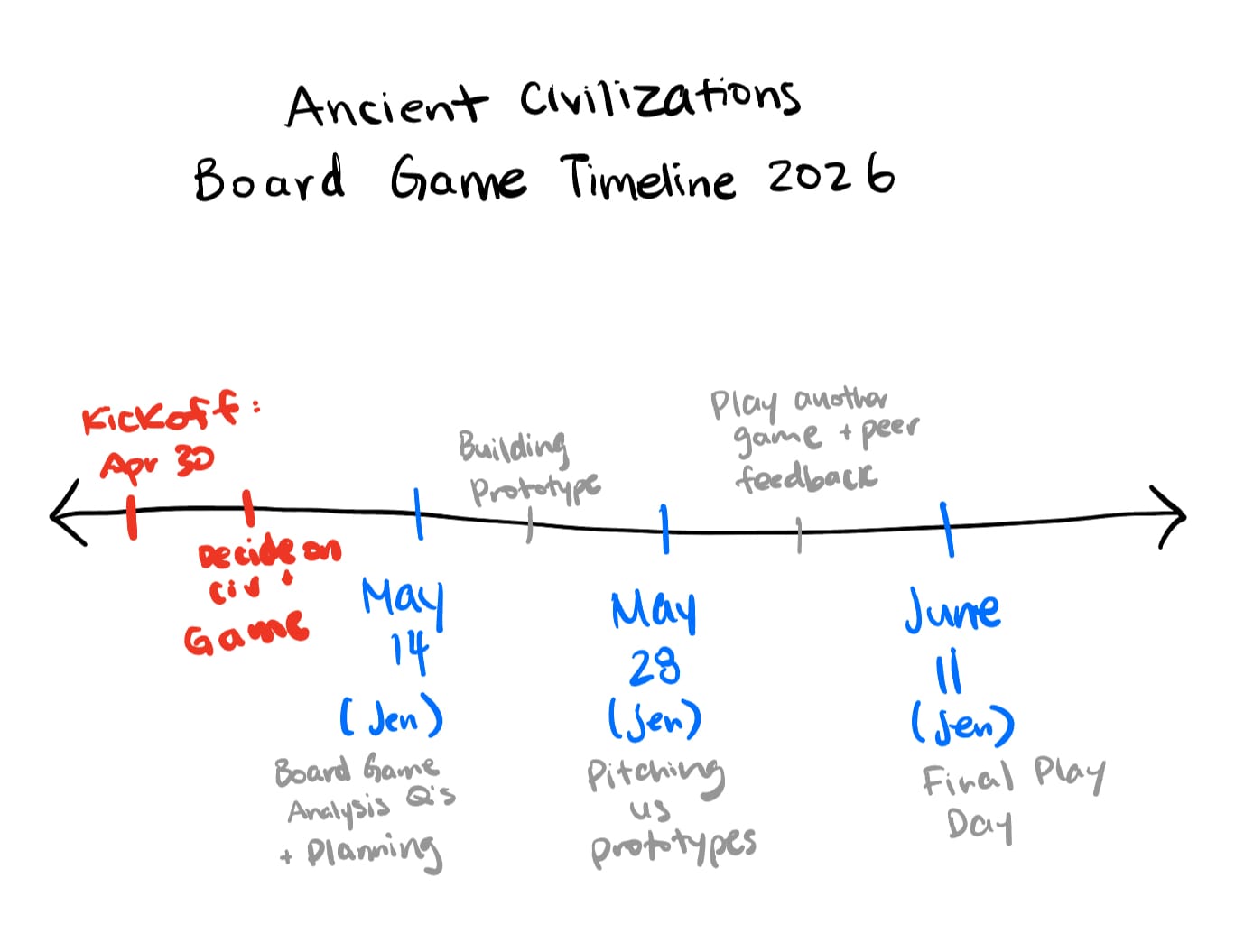
Check in before they build, not after 💭
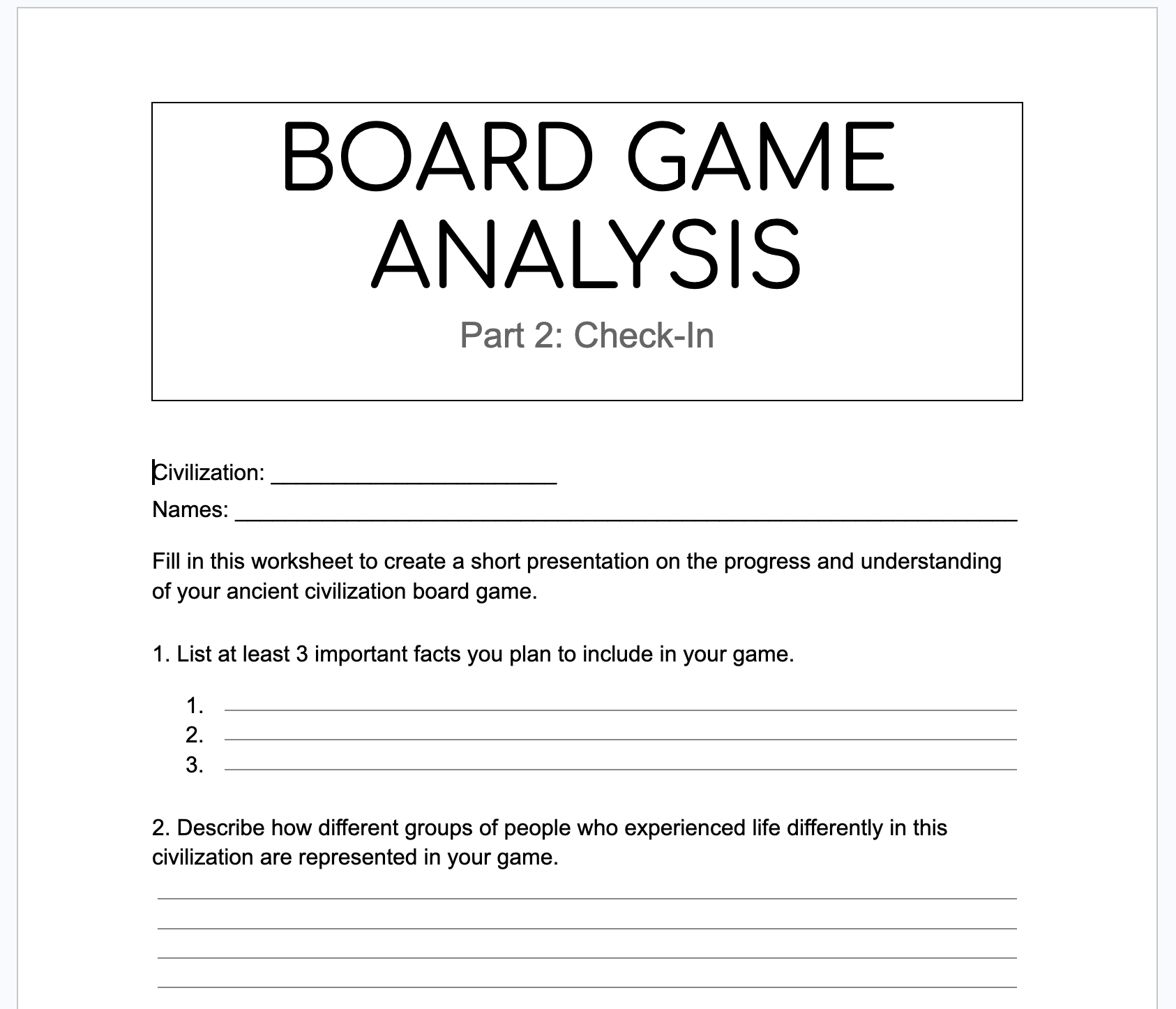
Patricia had the groups work through an analysis of their own games and then come up to the front for a quick update on their development phase. Short and to the point was the idea.
That's not quite what happened. Groups got up, and instead of rattling off answers, they pulled up their planning boards on Canva and walked the class through their process. The quick update turned into a real share. And I loved it.
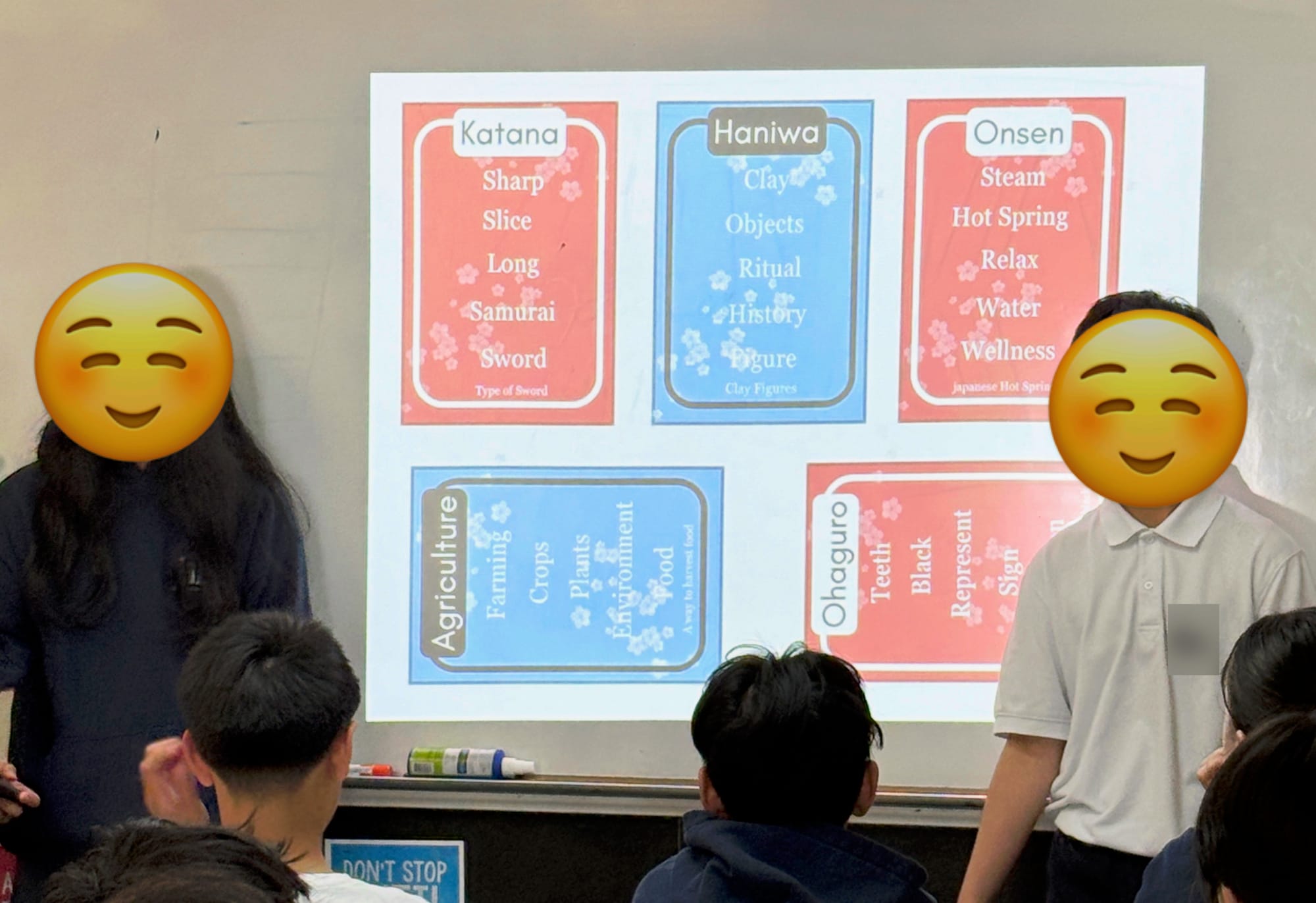
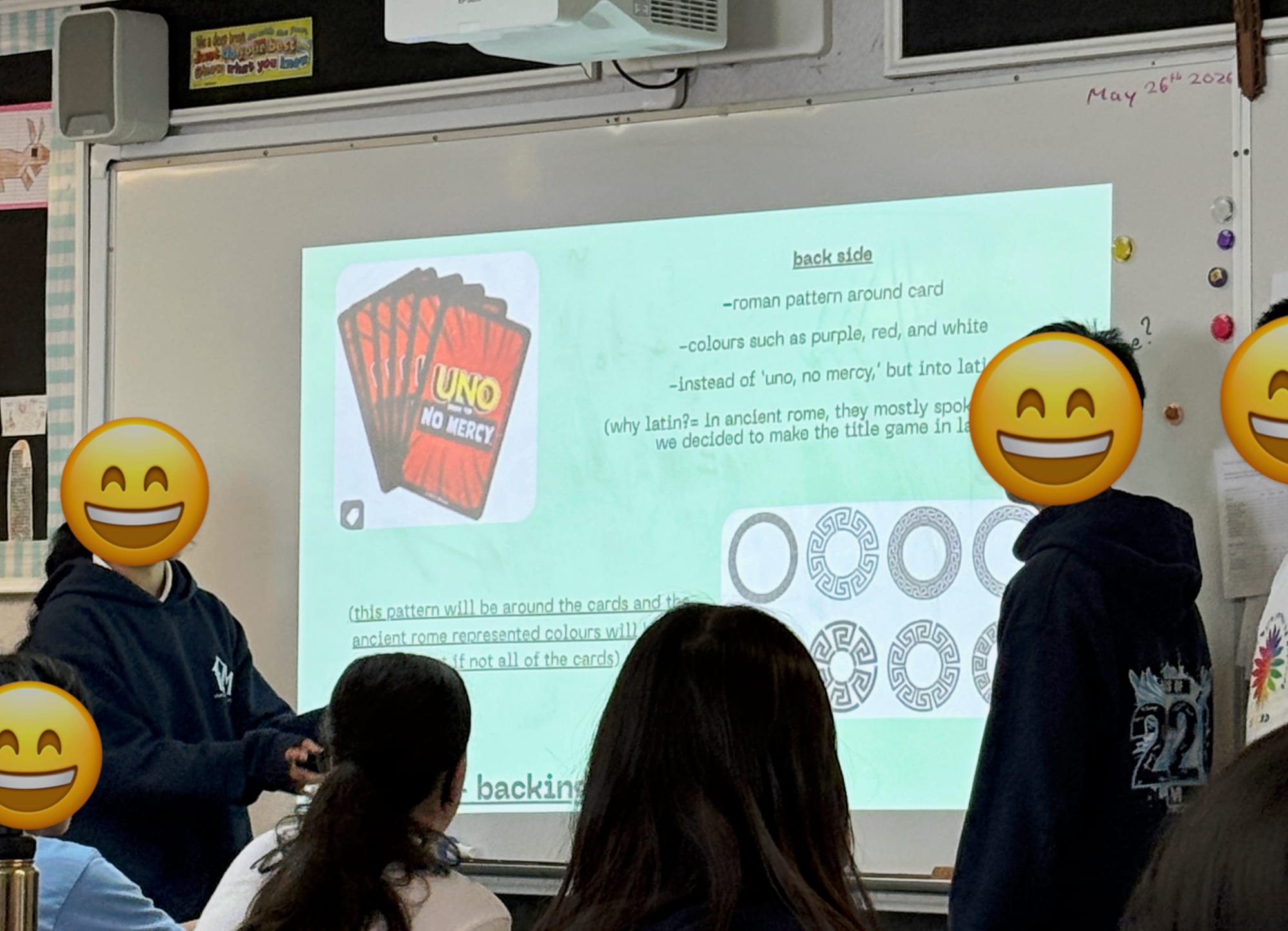
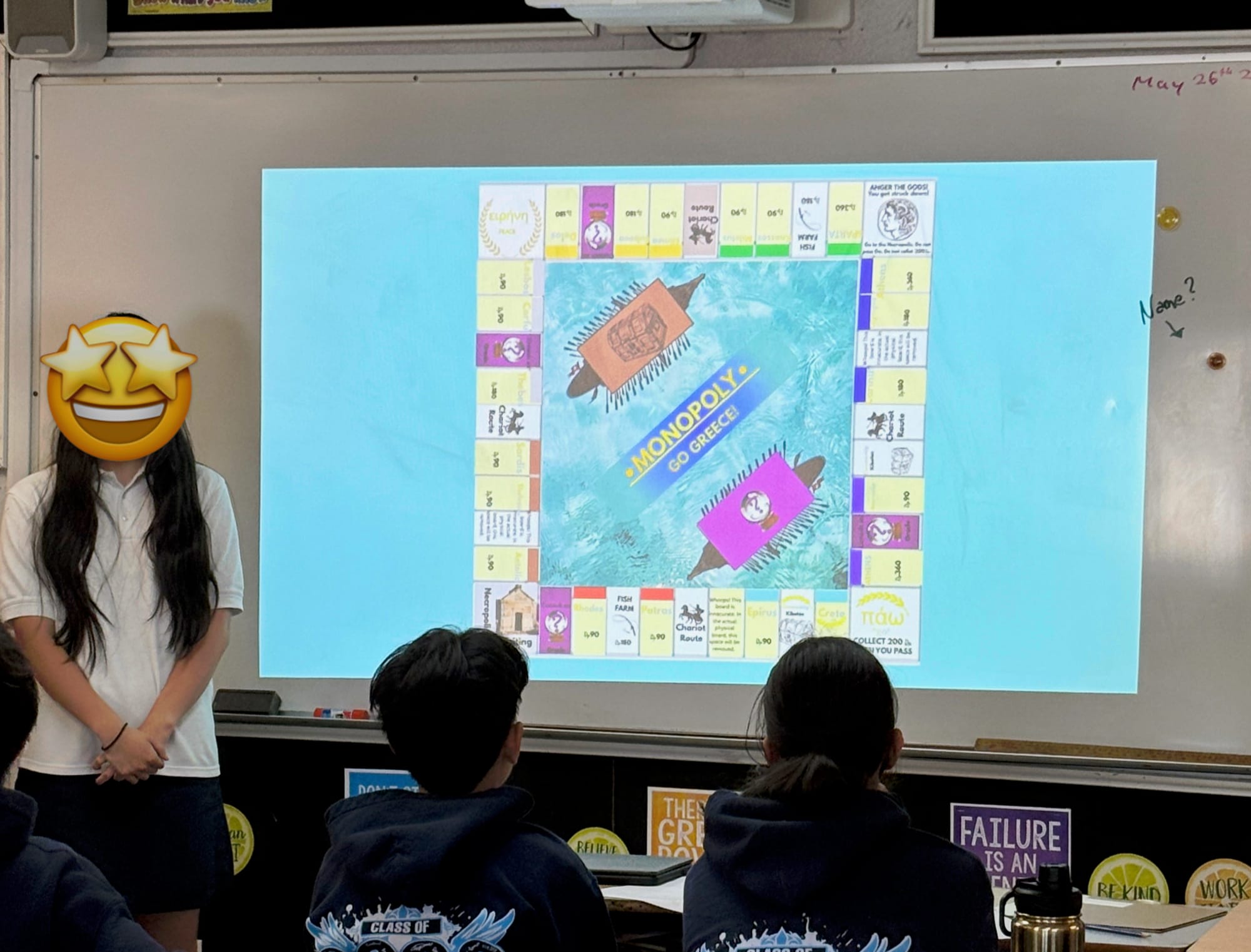
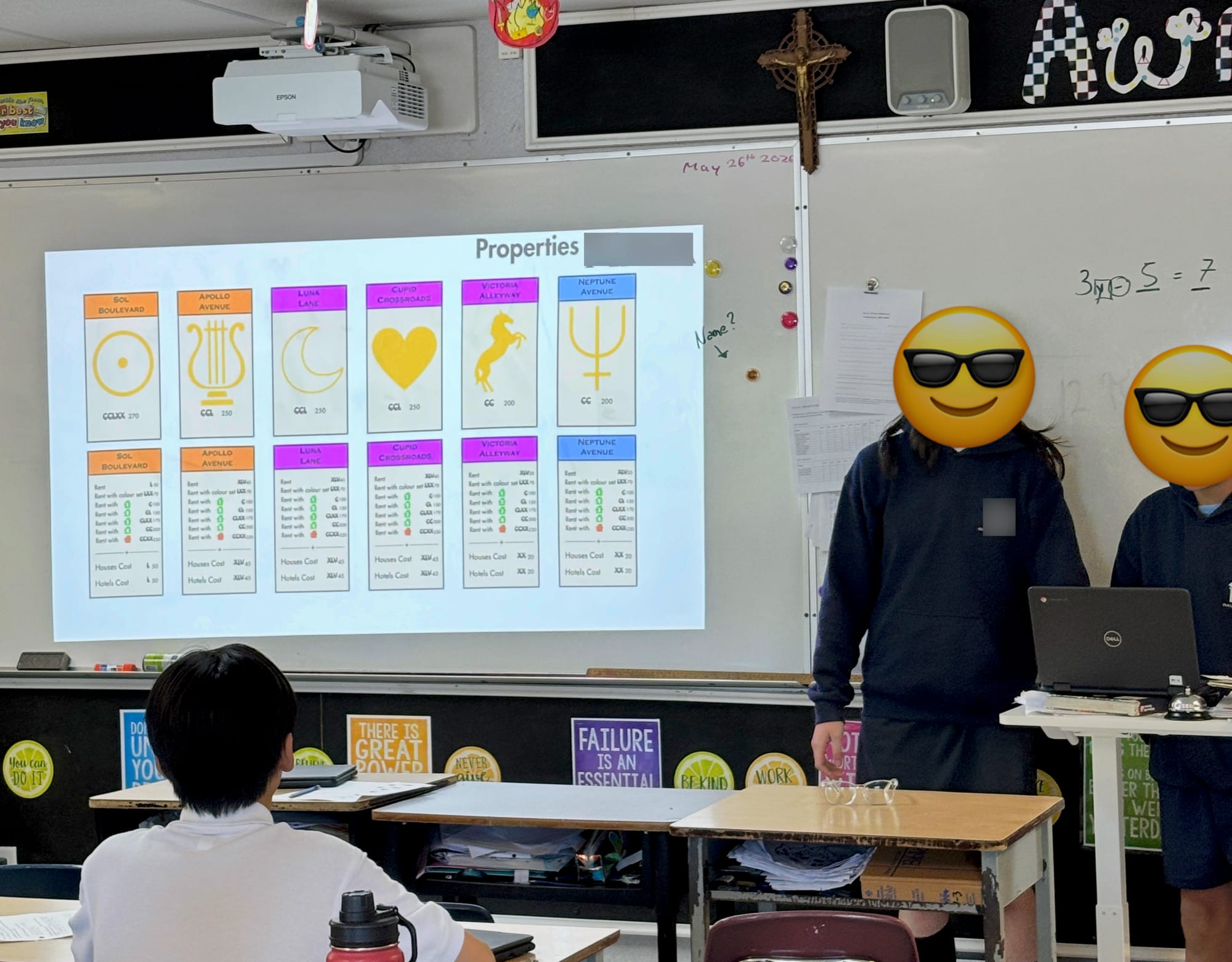
Some games were remakes of classics, others were original designs.
That only happens because of the month of scaffolding Patricia put in beforehand. You don't get learners confidently presenting their own half-built ideas unless the ground has been prepared for it.
Learner created Planning Boards 📍
Watching these mini check-ins, I saw a lot of good things stacked into one Canva deck:
The research was visible. Groups had split the work across different areas and then pooled everything into a shared slide deck, so every member could see and pull from it. The proof was right there on the page.
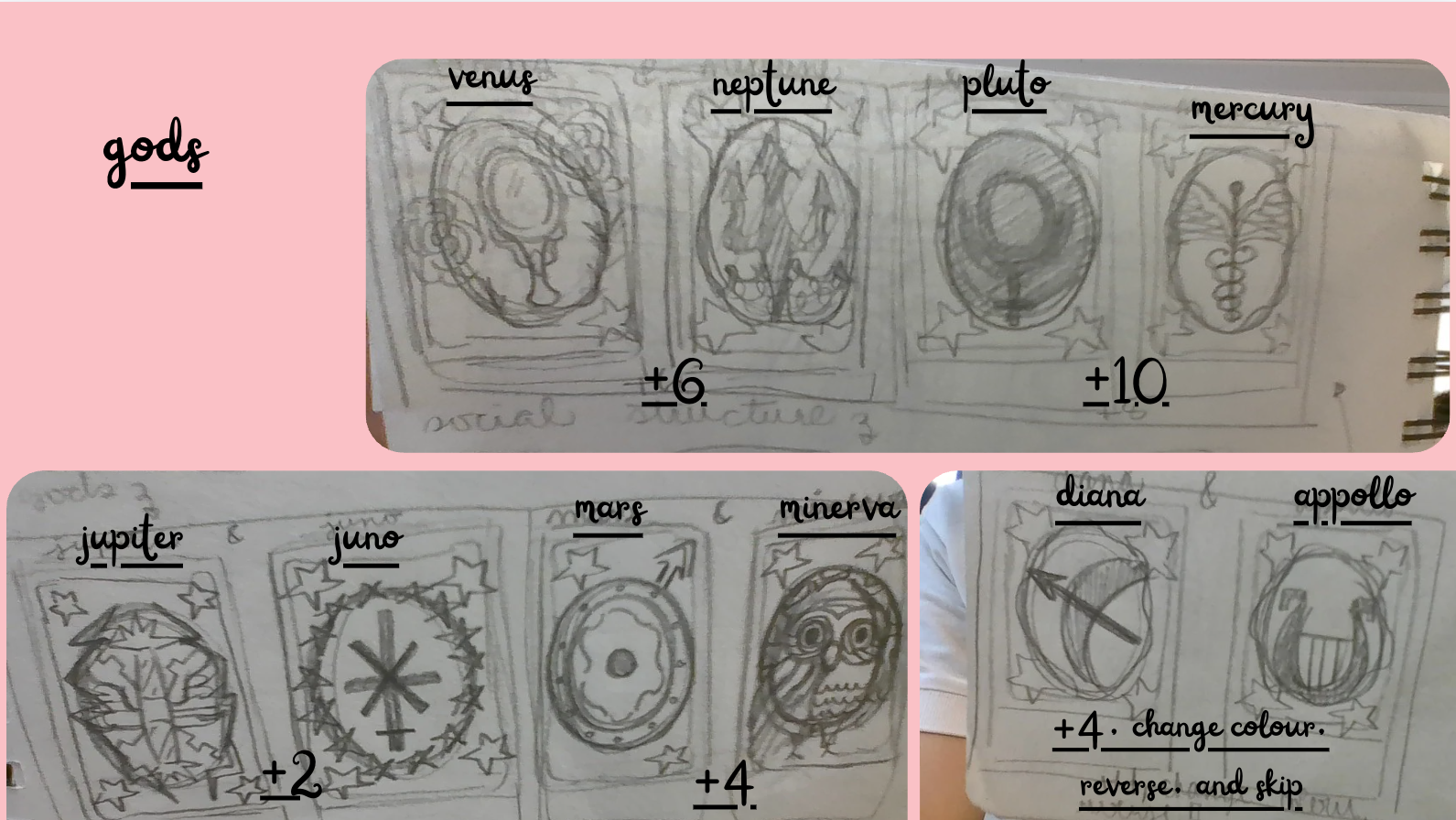
Rough designs of game elements. There were mock-ups of the board, property cards, and game pieces. Some were first sketched by hand, then recreated or photographed and uploaded into Canva. The tech they're already fluent in (Canva, Google Docs, taking photos) was doing exactly what it should: showing their thinking, not replacing it.
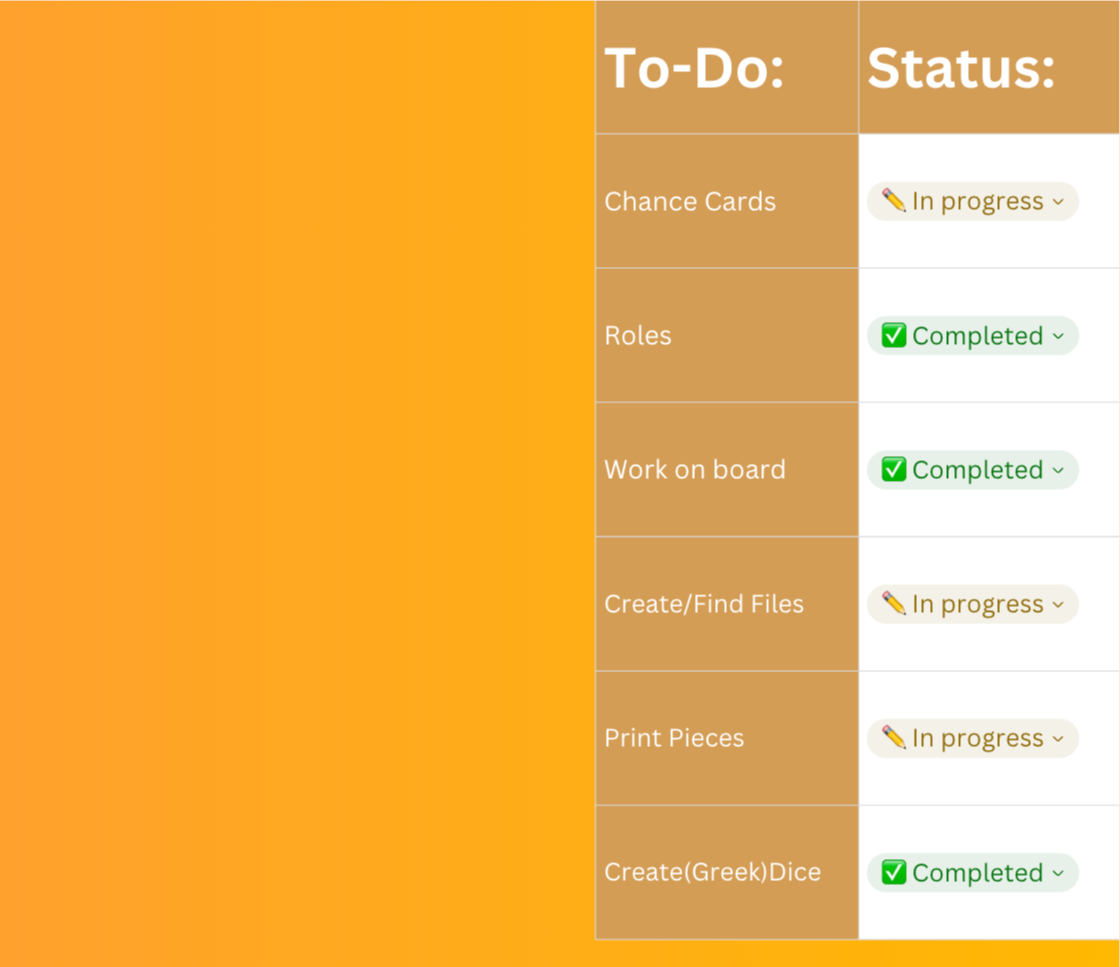
And my favourite: one group had built a task management system inside Canva. Each member had their own page, a to-do list, and a status marker. No one suggested they do this! They set it up themselves! That system was the reason they were as organized and on track as they were.
As each group presented, Patricia took notes — things she liked, questions she had, suggestions for an idea worth pushing further. I started doing the same.
Feedback works better as a question 🙋
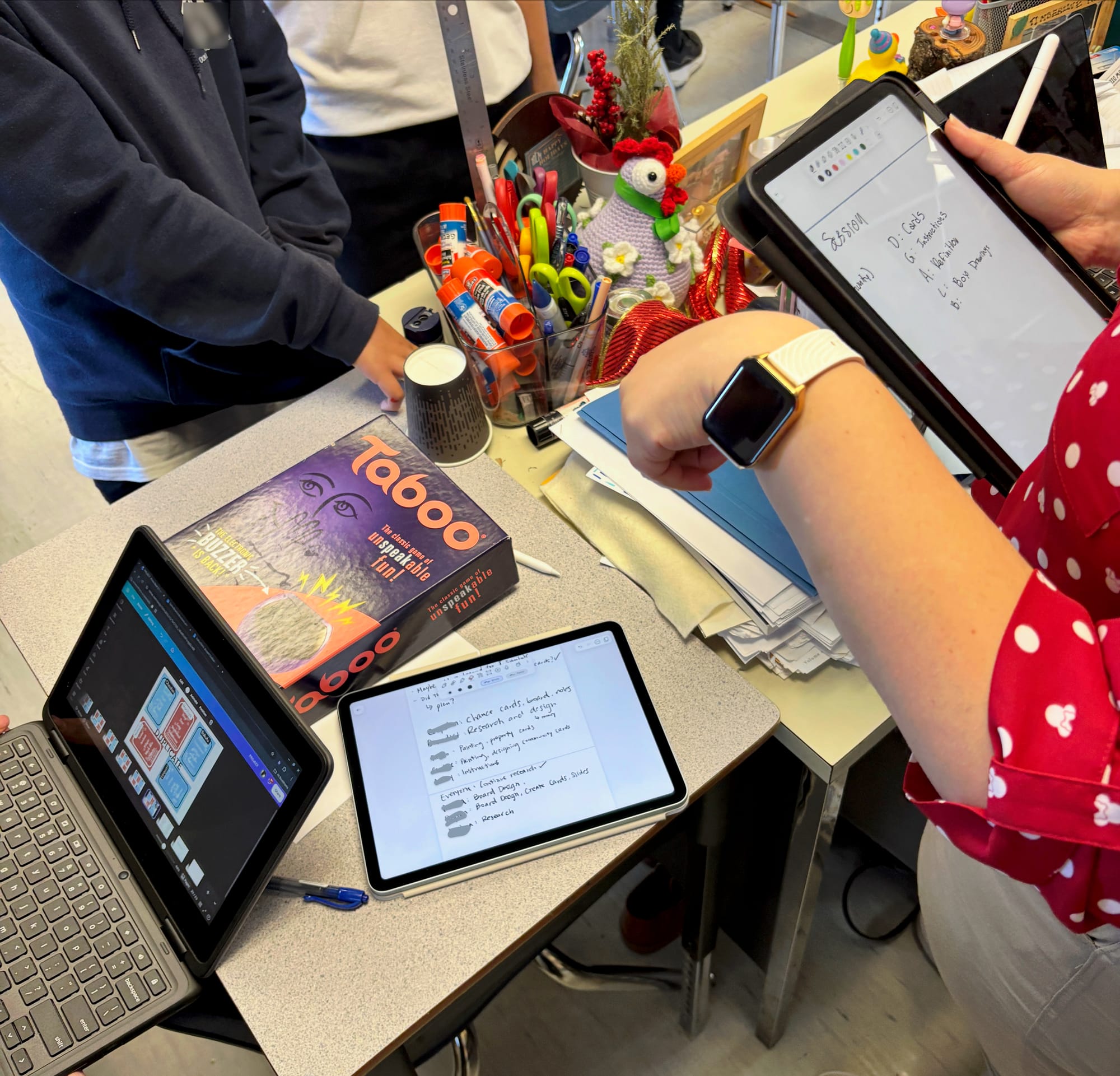
In the afternoon, we brought each group up for a one-on-one check-in. This is the part that fits a project like this so well — it's built to be iterative, so the feedback has to be iterative too.
We led with what was working, then asked about the parts that felt unclear to us. Most of the questions had one job: to get them to clarify things for the players of their games.
- Where could more historic detail go on the cards?
- How might a stuck group actually build their physical pieces?
- How are you including digital elements?
- What font could improve readability?
- What colour choices could better communicate actions in the game?
Do you want Jen to help bring your project to life?
Tell us what you're working on and what you want to improve and let's work together!
Name the roles for learners, not just the task 👷
Then came the part Patricia really wanted to land: roles.
Roles technically got assigned back at the start of the project, but she'd been noticing the usual drift — some people carrying far more than their share, others coasting. So she asked each group to say out loud what each person was in charge of and what their next step was. She wrote it down. She had the learners write it down too.
It's a small move that does two things at once. It gives the learners who've been quiet a concrete next step that they can act on, and it takes the burden off those who've been juggling all the incomplete tasks.
What's Next 🔄
It's pretty clear the prototyping phase is in full swing. From here, the class moves into building and testing their games on each other. When I come back, the games should be done. The plan is an afternoon of game testing and feedback. If last year's board game swap taught us anything, that is where it all comes together — the moment a game leaves the hands of its designers and gets play-tested by real players.
But here's what I keep coming back to. This visit, we barely talked about the boards or the pieces. We talked about research, roles, readability, and the players who'd eventually sit down to play. That's what I'm excited about: a room full of Grade 7s who can show you their plan, point to their research, name their next step, and tell you why what their making is important.
The games aren't even finished, and they're already further along than where we landed last year.
I can't wait to play them!
 Jen
Jen
More advice on how to design projects students want to run with.