

What if a paper owl you made could suddenly move?
That was the surprise waiting for Liera’s Kindergarten students as we looked for a way to build something new for their native owls science class.
The class had already been exploring different kinds of owls found in British Columbia: where they live, what they eat, how they hunt, and some of the adaptations that help them survive. Rather than introducing “coding” as something separate from that learning, we wanted to see if we could use technology to help students bring some of those ideas to life.
And so began our plan to build a parliament of robotic owls.
Building Our Owls
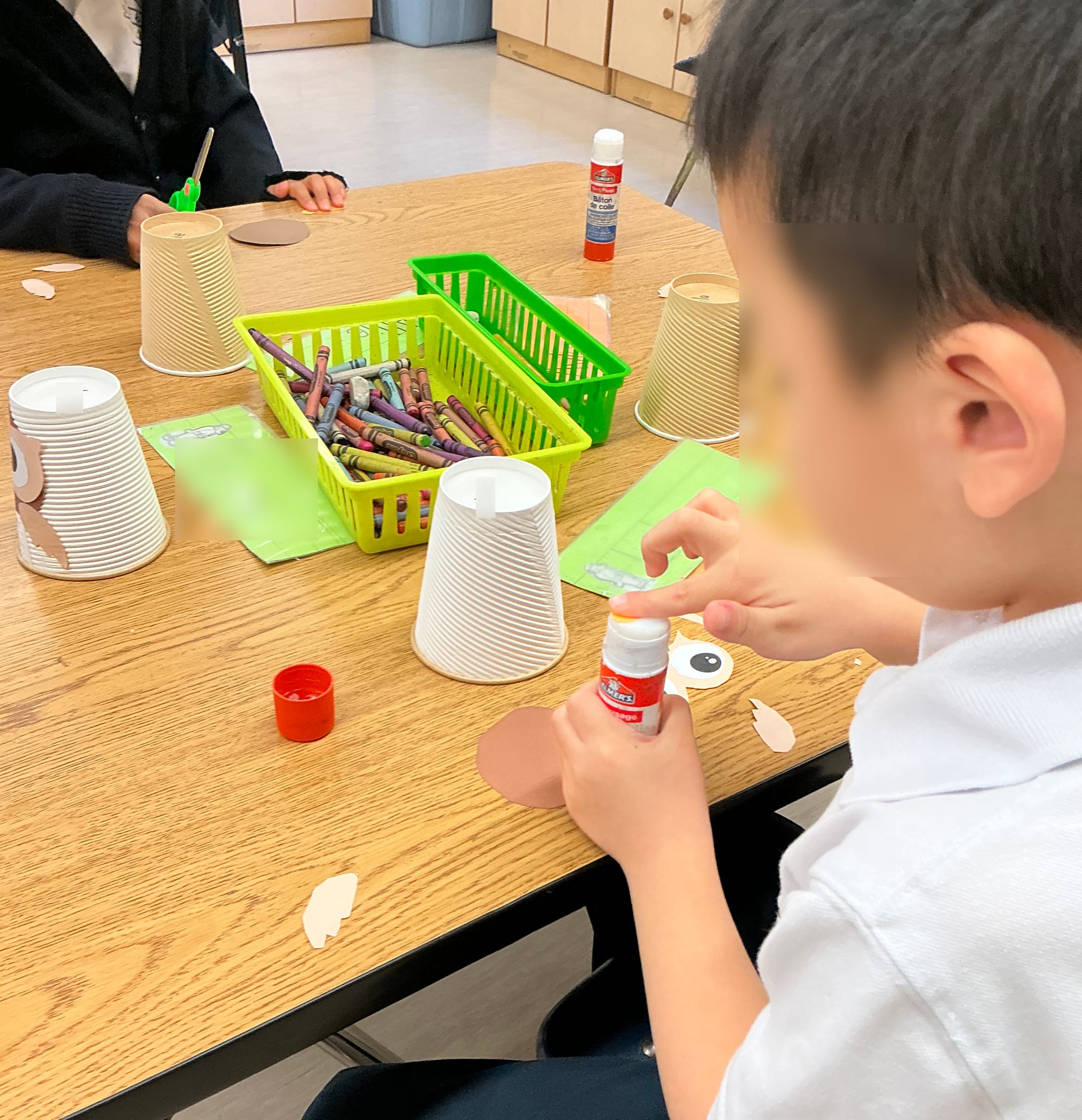
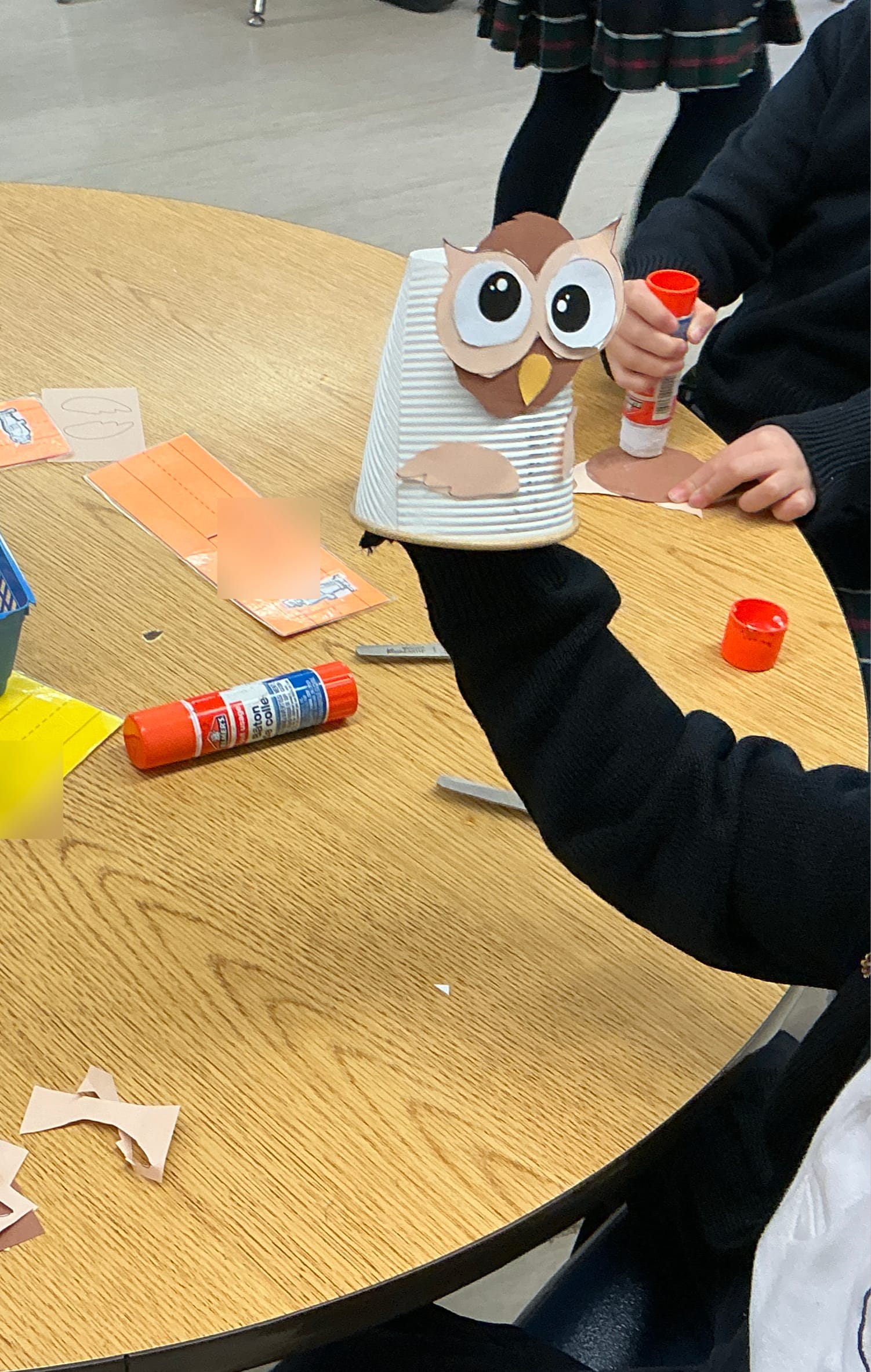
We started in a decidedly low-tech direction. Each student created their own owl using a paper cup, an owl template, construction paper, scissors, glue, and crayons. Students cut and assembled features like wings, eyes, beaks, and feathers, giving them a chance to practise using classroom tools while thinking about the characteristics of the owls they had been studying.
By the end of a 1-hour session, kids had cut and glued a parliament of owls. We could have left it at that, but we still had a robot surprise waiting for the next class session.
Days later, students helped create the world their owls would eventually move through. They drew places where owls might live, such as forests, barns, trees, and nesting spaces. On separate pieces of paper, they drew prey an owl might hunt: mice, rabbits, squirrels, and other small animals. These drawings would eventually become the pieces of our giant floor maps.
Before the Robots
There was one important step before we could bring out the Spheros.
For many of the students, this was their first time using school iPads in class. So before asking them to control a robot, we spent time learning how to take care of the device controlling it.
Students discussed what respectful iPad use looks like: how to carry one safely, where to place it, how to share with a partner, and what to do when it was time to stop.
 Jen
Jen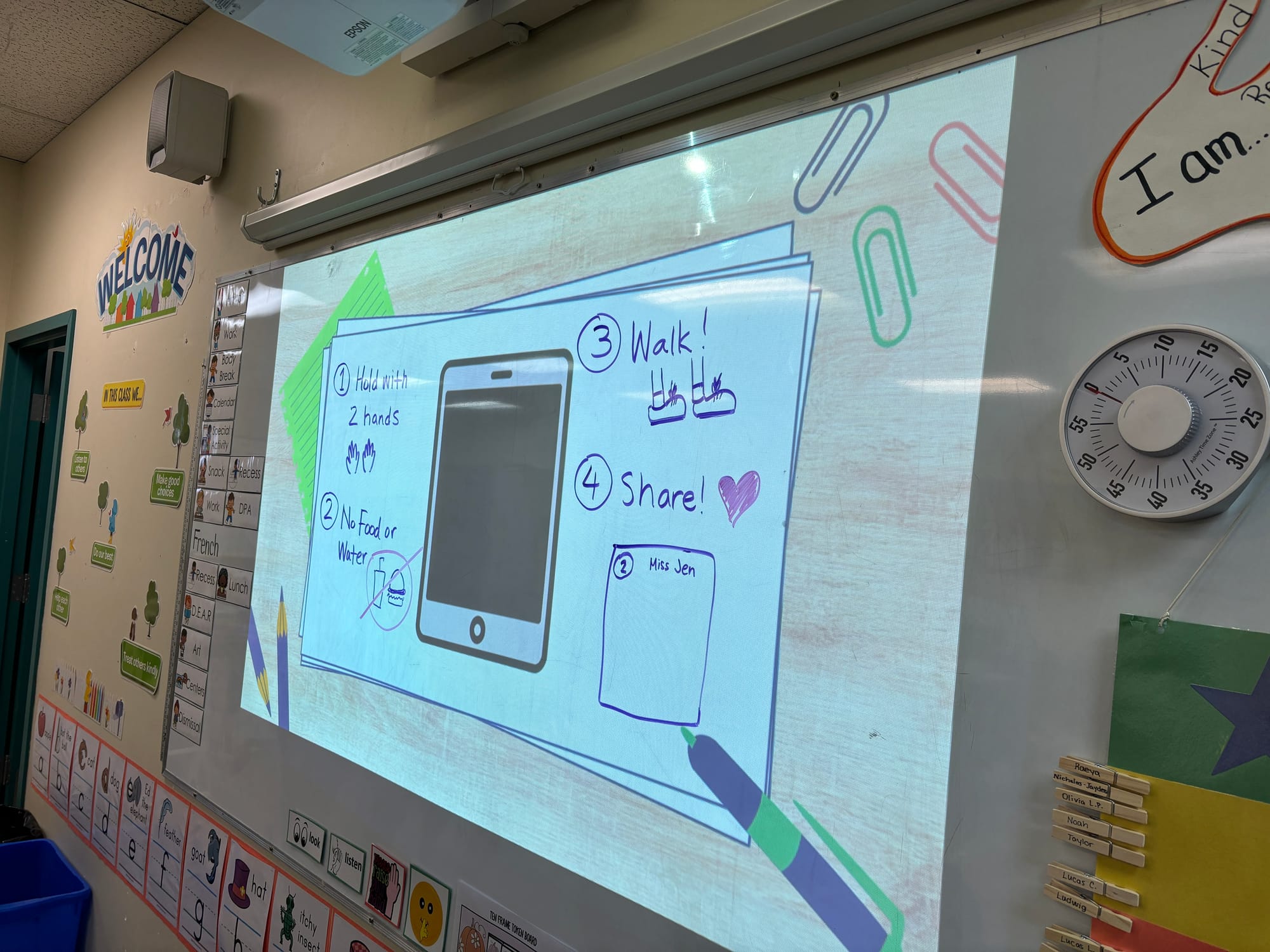
It wasn’t the flashy part of the project, but it was an important one. Using technology in Kindergarten isn’t only about learning what the technology can do. It’s also about developing the habits that allow students to use shared tools responsibly and independently.
And with those routines in place, we were finally ready for the surprise.
Making the Owls Move
On my next visit, I brought out four Sphero robots. The paper cups suddenly made a lot more sense because they fit perfectly over the spherical bots. Of course they did!
We placed the students’ owls over the Spheros and divided the class into four groups. Each group had a large paper pathway surrounded by the habitats and prey the students had drawn.
After a quick introduction to controlling the Spheros with an iPad, students began taking turns moving their owls through the environment. The students had fun attempting to drive their robot owls, but the challenge wasn’t simply to drive around.
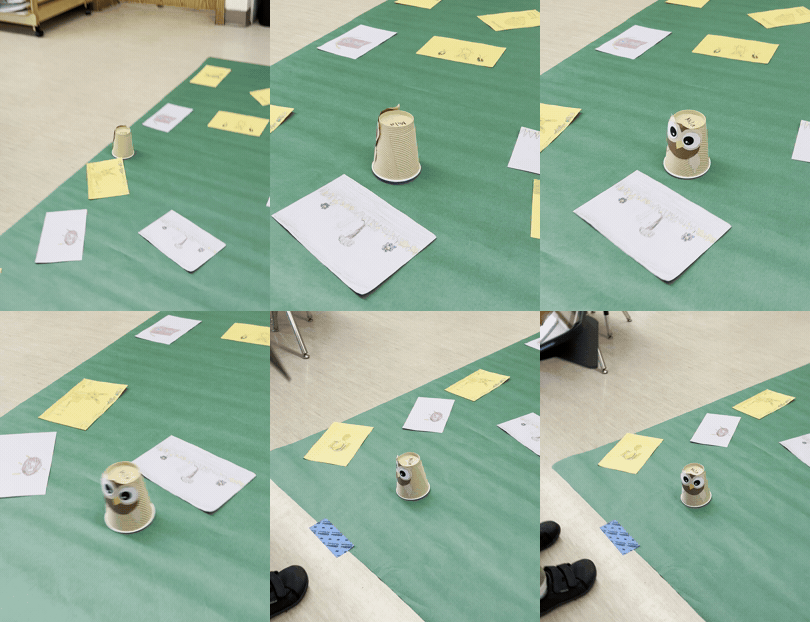
Students had to think about where their owl was going and why. We asked them: could you move from a habitat to something your owl might eat? Could you return to another habitat? Could you continue that movement as a repeating pattern?
Conveniently, the students had used different coloured paper for their habitat and prey drawings. That gave us an unexpected Math connection. Students could practise an ABAB pattern as they navigated between habitat, prey, back to a habitat, another prey, and so forth.
Connecting the Learning
What started as a Science inquiry had now stretched across several different areas of learning.
Students were drawing on what they knew about owls and their habitats, practising patterns from Math, developing fine-motor and making skills through Arts Education and ADST, and beginning to build some of the routines needed to use digital tools responsibly.
The Spheros gave us a way to bring those pieces together. Instead of learning each skill in isolation, students had a reason to use them: they were trying to make their owls behave like owls.
Making Learning Visible
Seeing the students navigate their owls also revealed another possibility for the project, using Seesaw to capture some of the decision making behind the owls movement.
In a future version, students could take a photo or short video of their owl in action and record themselves explaining its journey.
Where does your owl live?
What is it hunting?
Why is it moving there?
What pattern did you create?
For Kindergarten students, those short explanations can tell us a lot. They don’t need to write a paragraph or complete a worksheet to demonstrate their understanding. Their drawings, their robot’s movement, and their own voice can become evidence of what they know and how they know it.
Adding that documentation piece would extend the project beyond making the owls move. It would give students another way to make their thinking visible—and give teachers a small but meaningful piece of evidence to revisit over time.
In the end, the most exciting part wasn’t turning paper owls into robots. It was watching the students’ learning take on a new form. The Spheros added movement, challenge, and plenty of excitement, but they were never really the point.
They were simply another tool for bringing learning to life.
True Facts: Owls
We cannot be held responsible for the validity of the facts in this video 😂.