

In Part 1, Nadia and Angel's Grade 5 students prepared to turn their upcoming visit to Britannia Shipyards into something more than a field trip.
 Jen
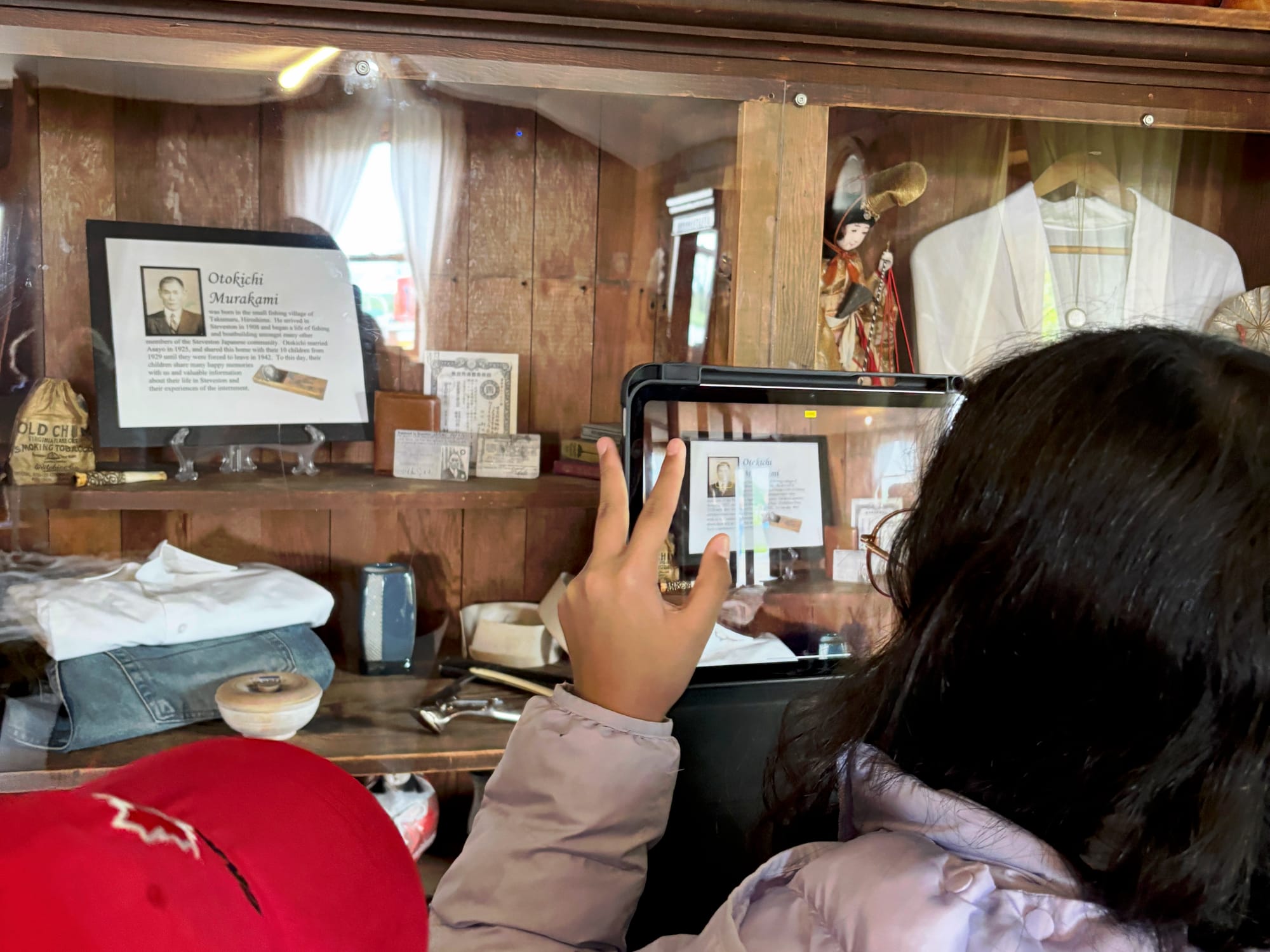
They were creating historical junk journals from the perspective of immigrants who lived and worked in Steveston more than 100 years ago. We'd analyzed real junk journals, practiced perspective-taking and talked about the kinds of photographs, observations and historical evidence they might need.
Now it was time to actually go collect it.
How We Lived 🏠
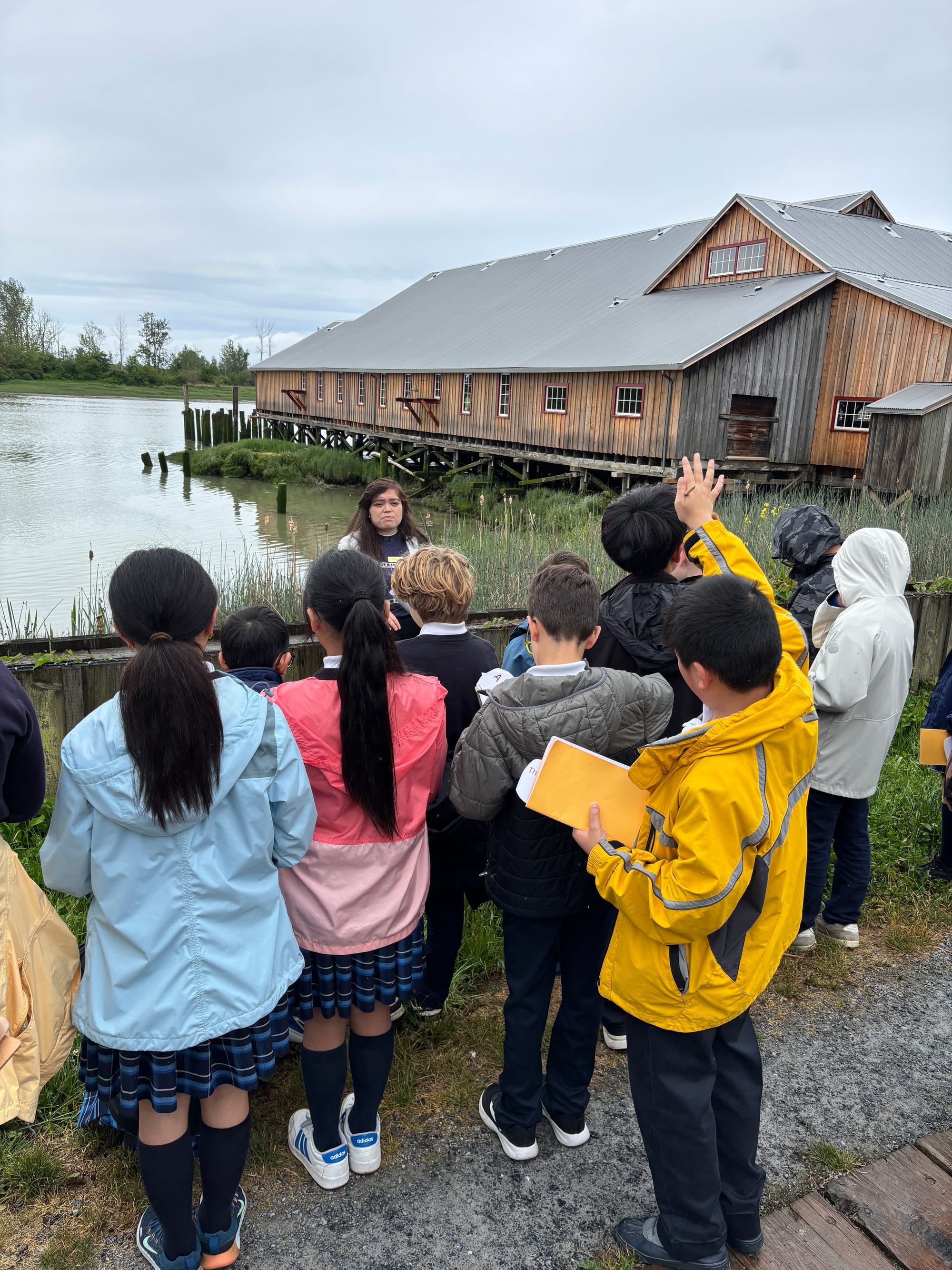
The morning began with Britannia Shipyards' How We Lived educational program. Students toured several of the historic homes and bunkhouses around the site, including the Chinese Bunkhouse, the Murakami House, the Manager's House and the Men's Bunkhouse.
Groups of five were given different prompts to investigate as they moved through the buildings.
- Was this home used all year, or only seasonally?
- Can you find a personal object that might have belonged to someone?
- Can you find something from someone's home country?
- Did the workers live here alone or with their families?
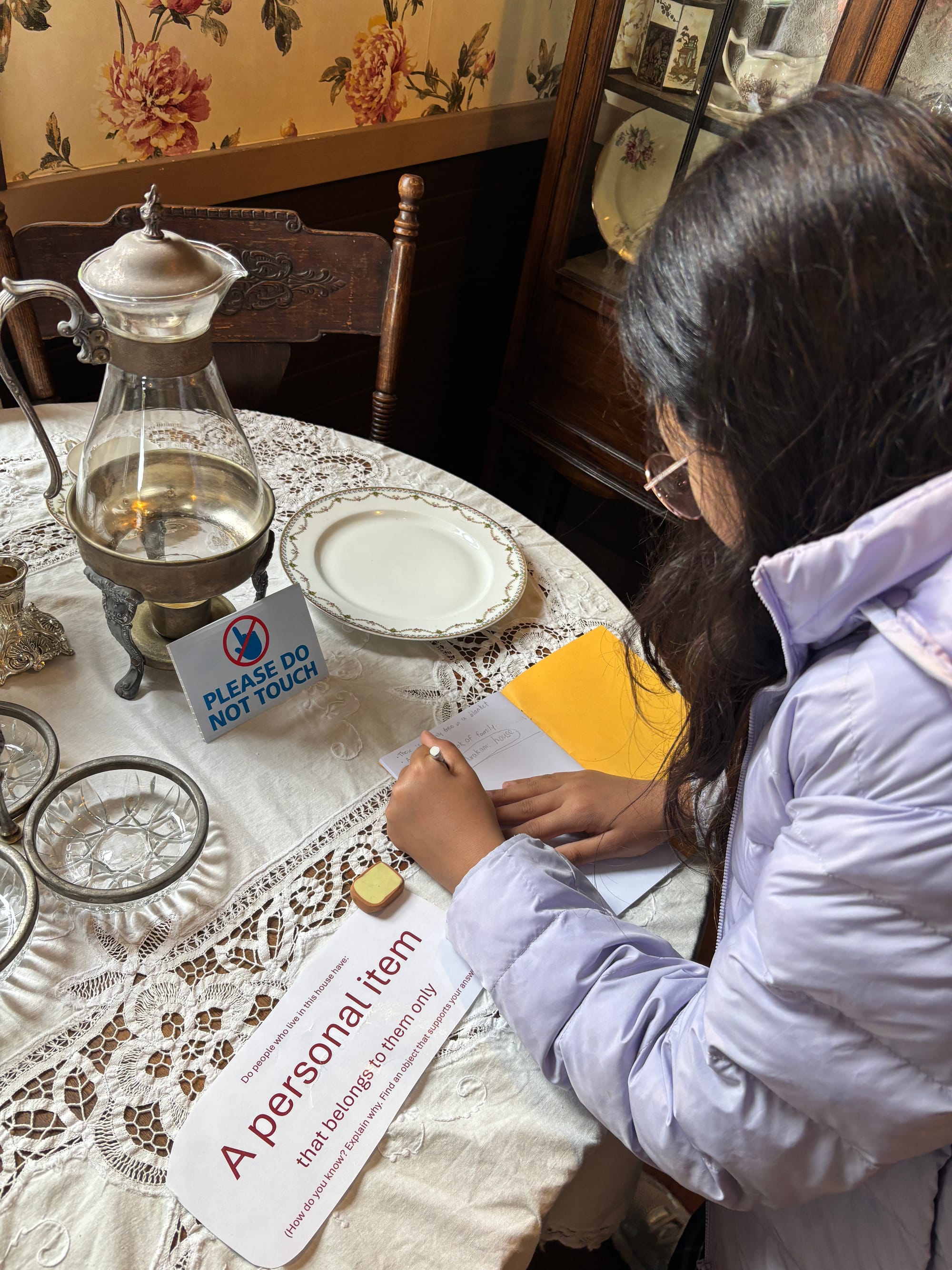
After leaving each building, the facilitator brought everyone together to compare what they'd discovered. The differences were hard to miss. A Japanese family's home didn't look like the Chinese Bunkhouse. The European manager's living conditions were very different from those of the workers.
Even people who had all immigrated to the same place and worked within the same industry could experience life in Steveston very differently.
Meet Your Character 👤
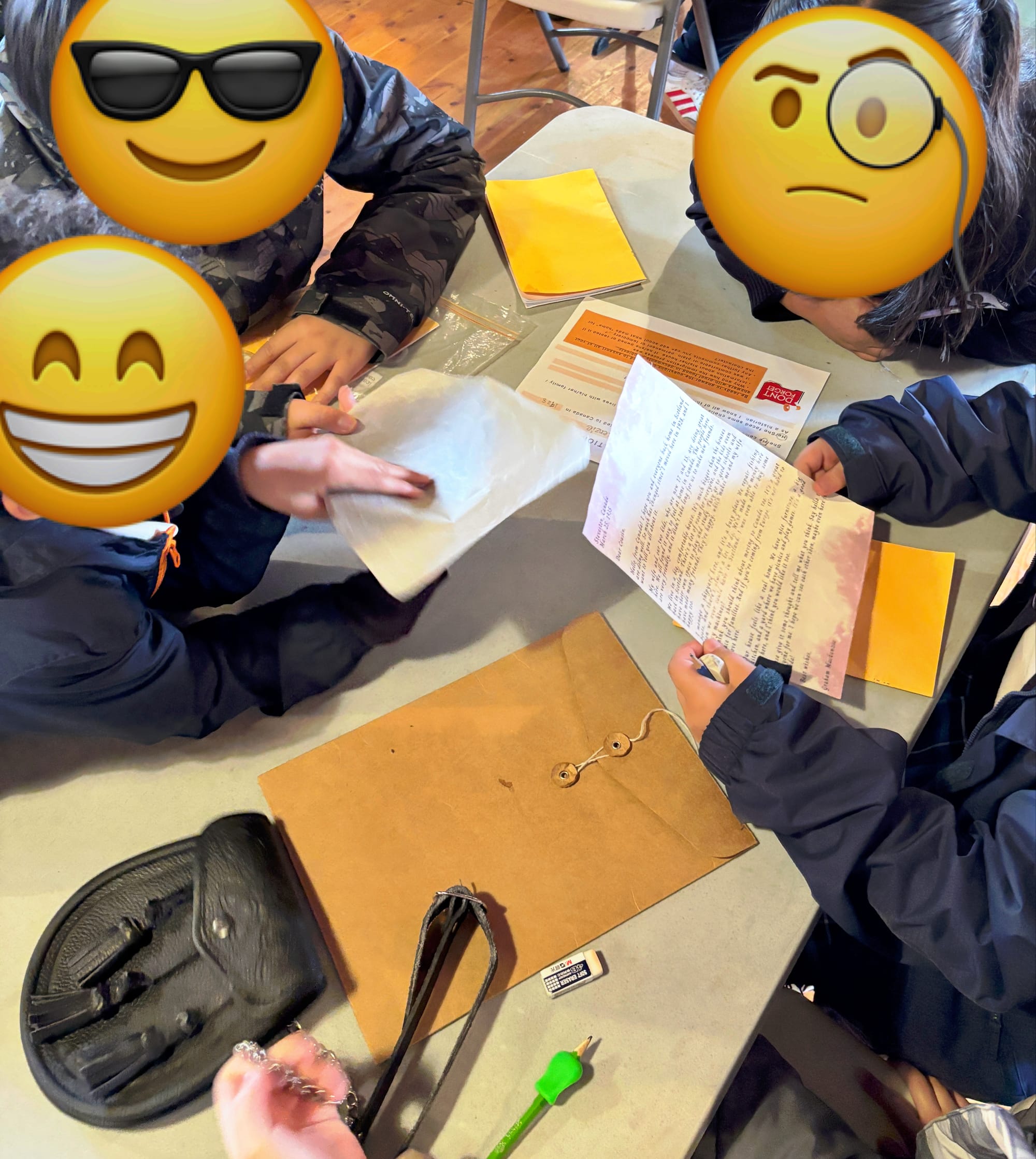
The second half of the program brought the project together even further. Students sat in groups at tables, each with an envelope and a physical artifact. Inside the envelopes were profiles of characters based on real immigrants who would have lived and worked around the shipyards.
The physical objects offered another clue into their lives. One group might examine a leather bag belonging to a Scottish worker. Another might investigate a Chinese calligraphy set that could have belonged to a manager at a time when many workers wouldn't have been able to read or write.
Students used the information and artifacts to learn about their person before giving a short presentation to the class. These profiles became the people whose stories they would tell in their junk journals.
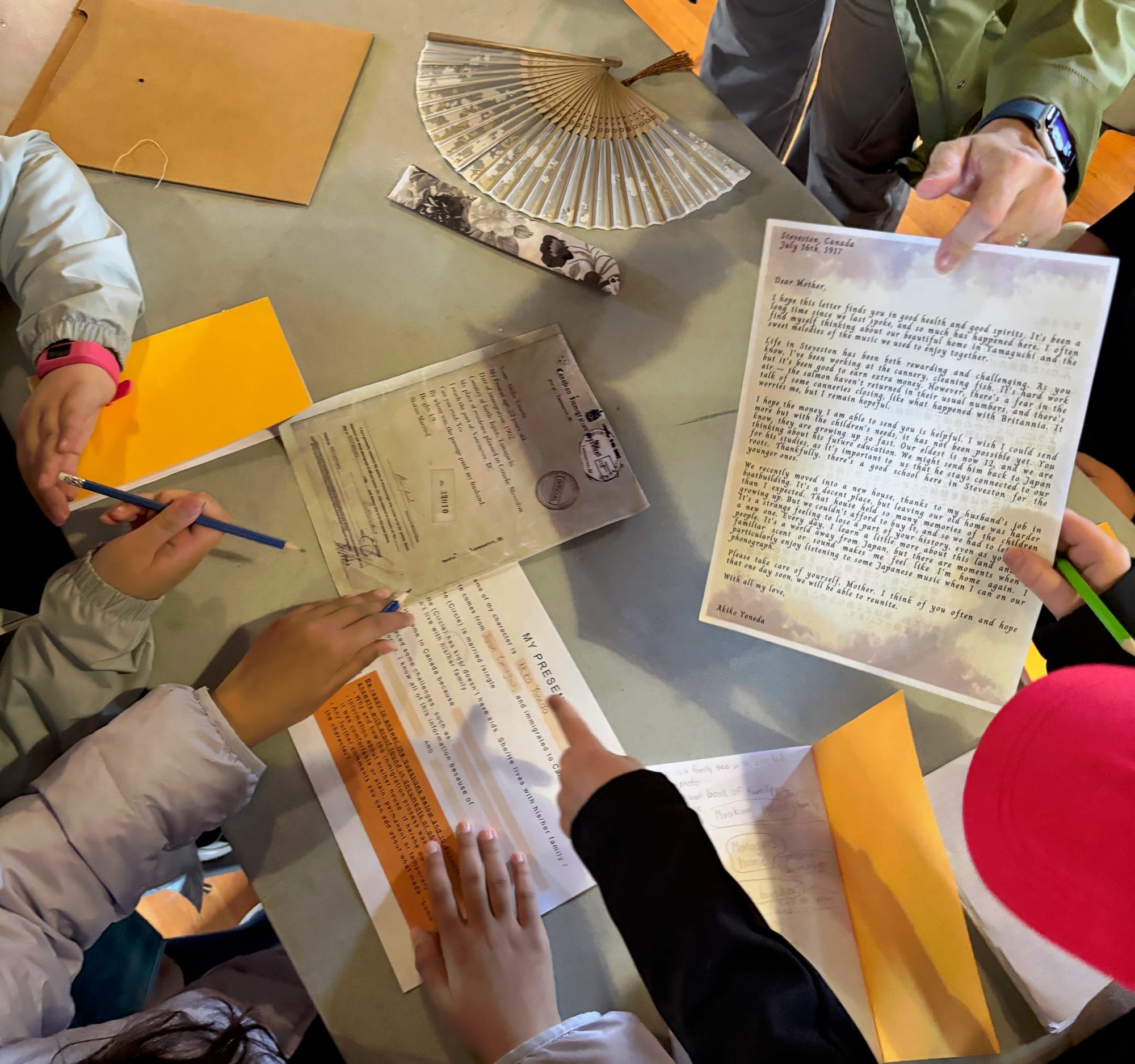
One group, for example, met Xiang Li, a Chinese immigrant who came to Canada from Guangdong in 1899 at 41 years old. With explicit details like this, the class started asking specific questions.
- Which building would Xiang Li spend his time in?
- What might he have owned?
- What would his daily life have looked like?
Their field work now had a direction.
Turning a Field Trip Into Field Work 🔎
Carlo and I had actually spent a day at Britannia Shipyards during Spring Break doing some reconnaissance before this trip.
 Carlo
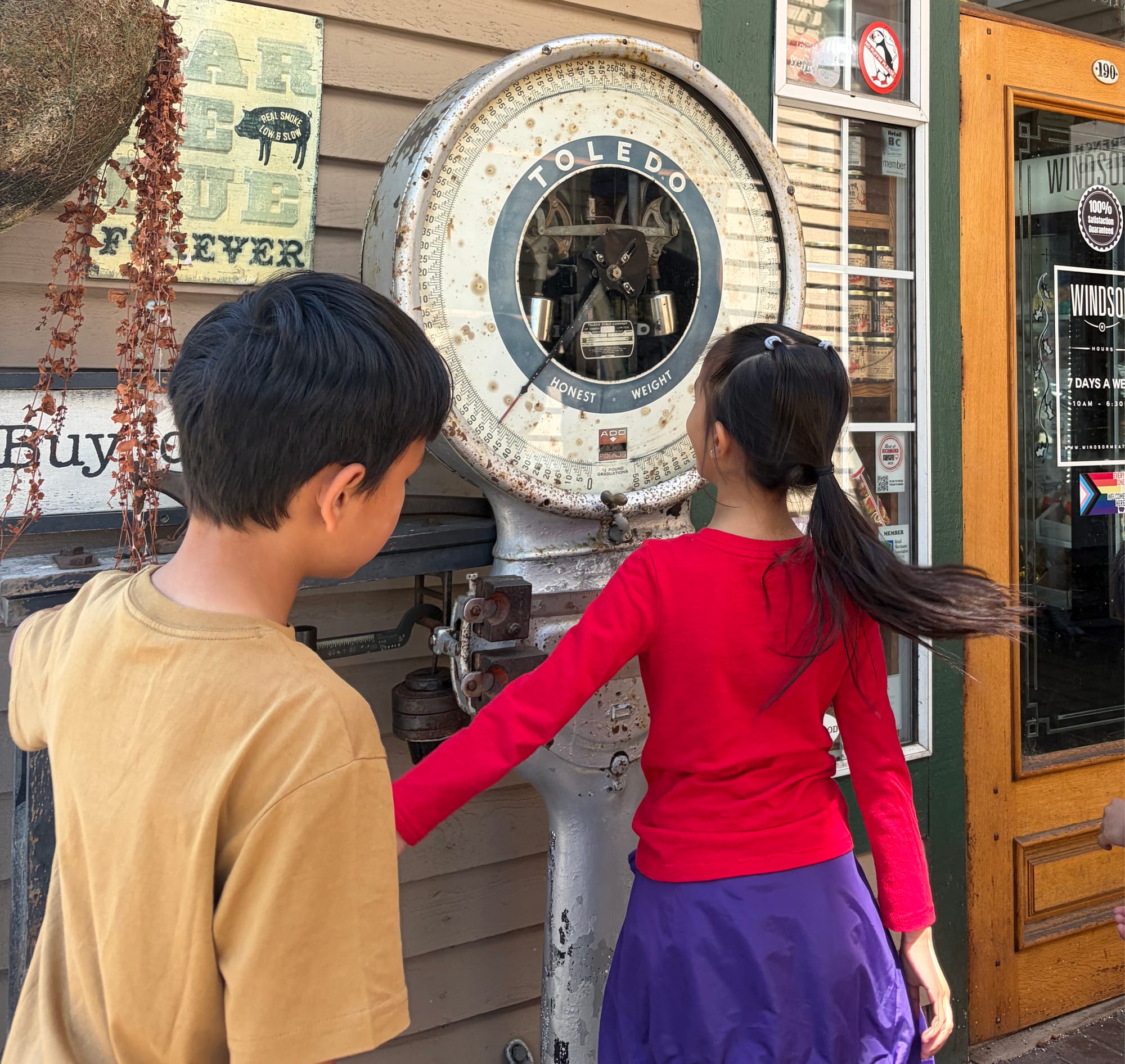
That visit turned out to be incredibly useful. It allowed us to understand how Britannia's existing educational program worked before designing our own project around it. We didn't want students to spend the morning participating in one learning experience and then suddenly switch gears into an unrelated assignment we'd brought along.
The junk journal needed to feel like a natural extension of what Britannia was already doing well.
After lunch, students had about 45 minutes to return to the buildings most relevant to their characters.
Before sending everyone out, I reminded them of the Evidence Checklist we'd looked at before the trip. They were looking for photographs of objects their character might have used. Anything that might help them reconstruct a believable life afterwards.
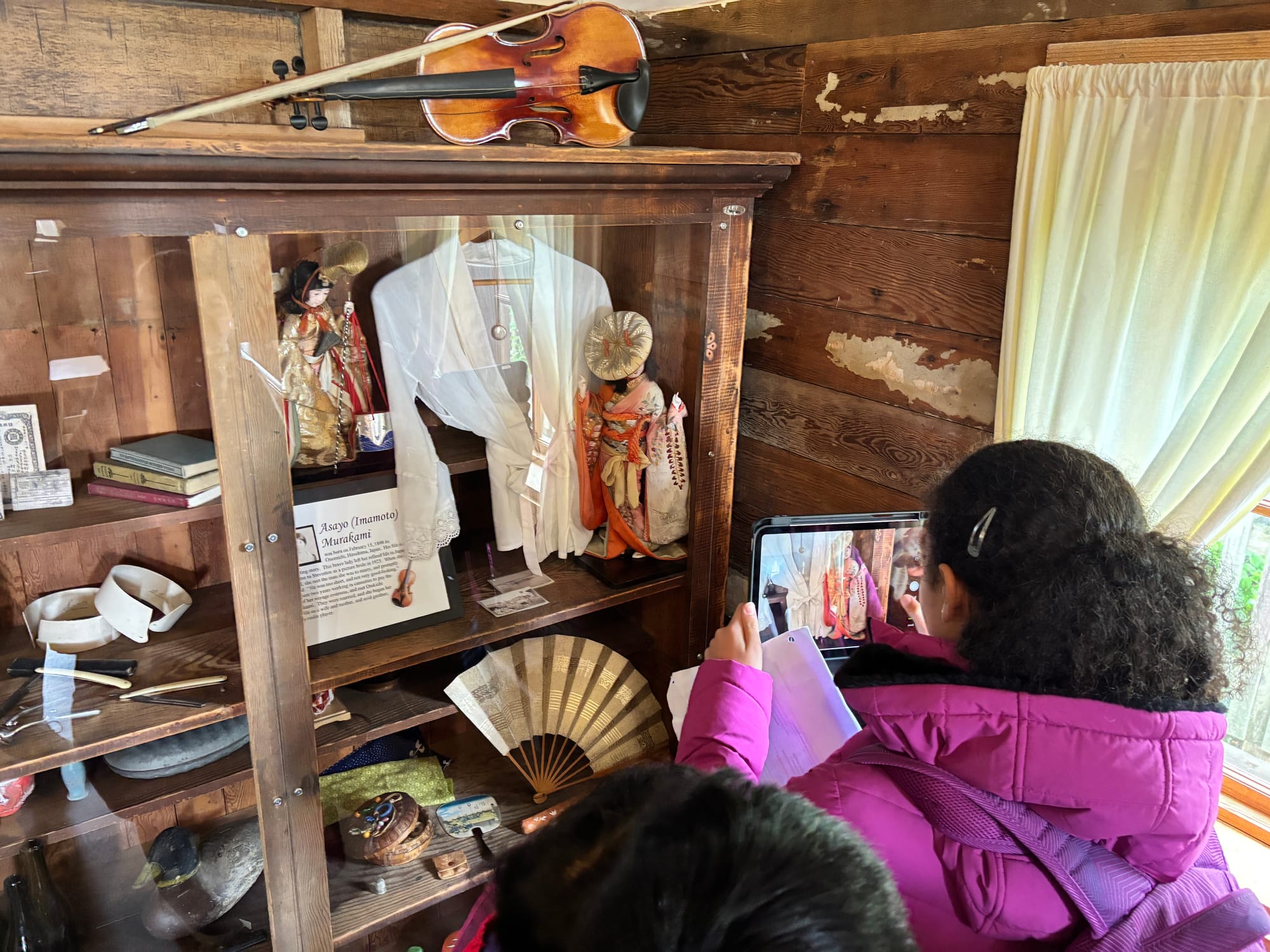
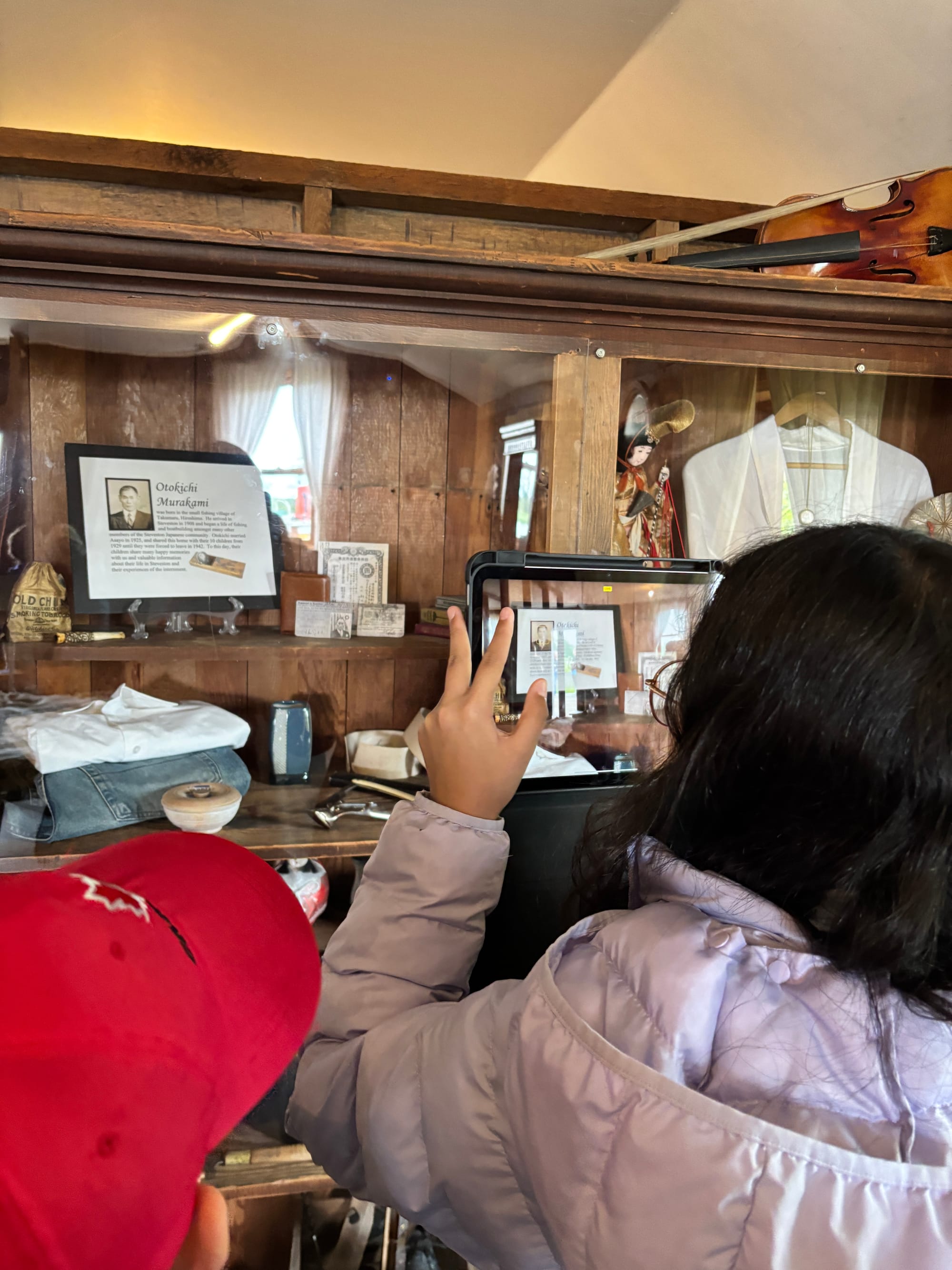
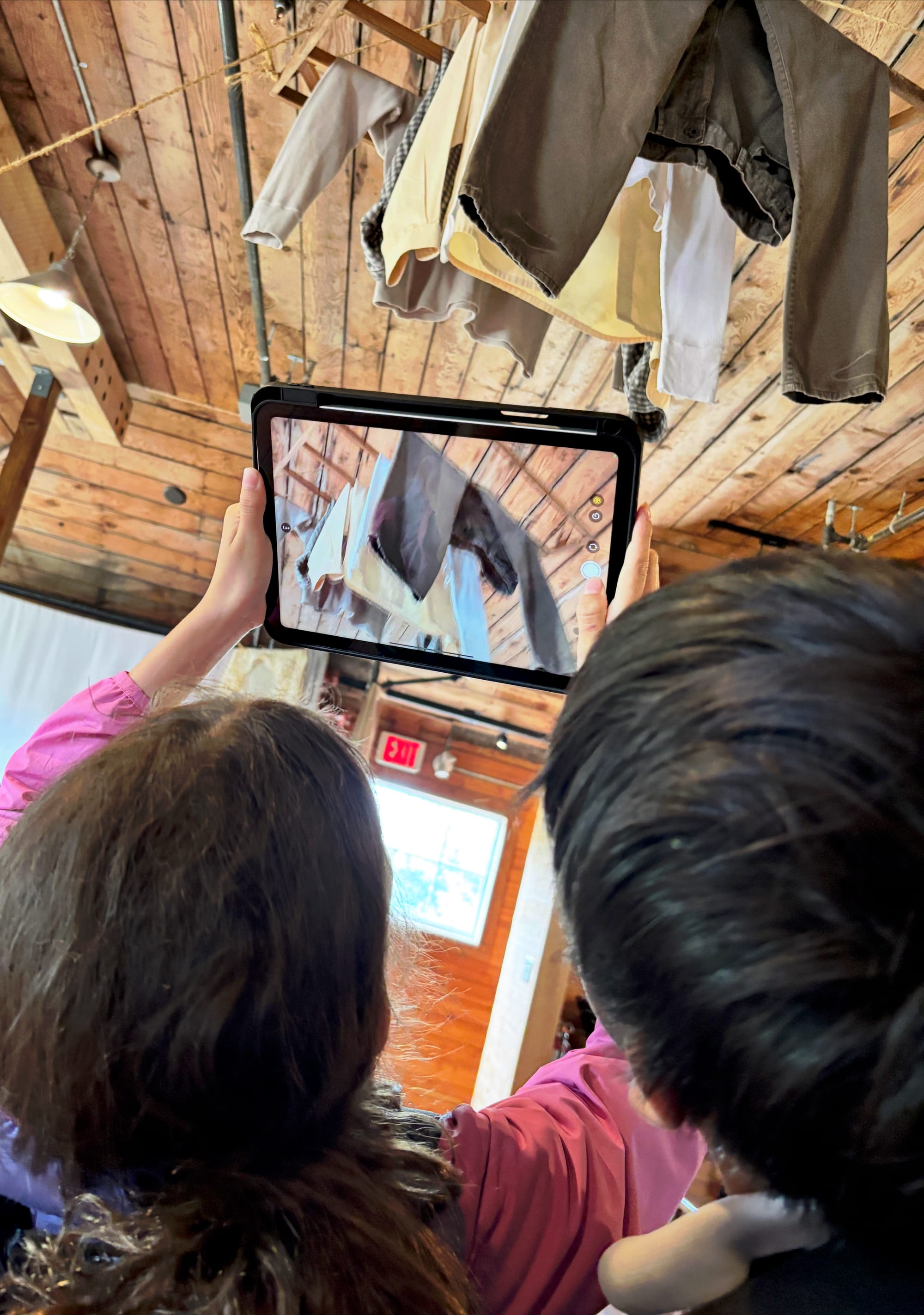
The iPads weren't there just because we could bring iPads on a field trip. They were tools for collecting evidence.
From Evidence to Artifacts 🎟️
During the field trip, students had learned details that could now become artifacts in their journals. Back in class, it was time to start assembling the junk journals. For this, we turned to Canva to create tickets, receipts, identification cards and other paper artifacts from scratch.
As students created artifacts, we discussed the need for historical accuracy. More questions came up.
- How much did things cost?
- What terminology would have been used?
- What information was included in the documents?
- What language might it have been written in?
Creating the artifact became another form of historical thinking.
Building From Scratch 🖥️
This ended up being one of my favourite parts of the project to watch.
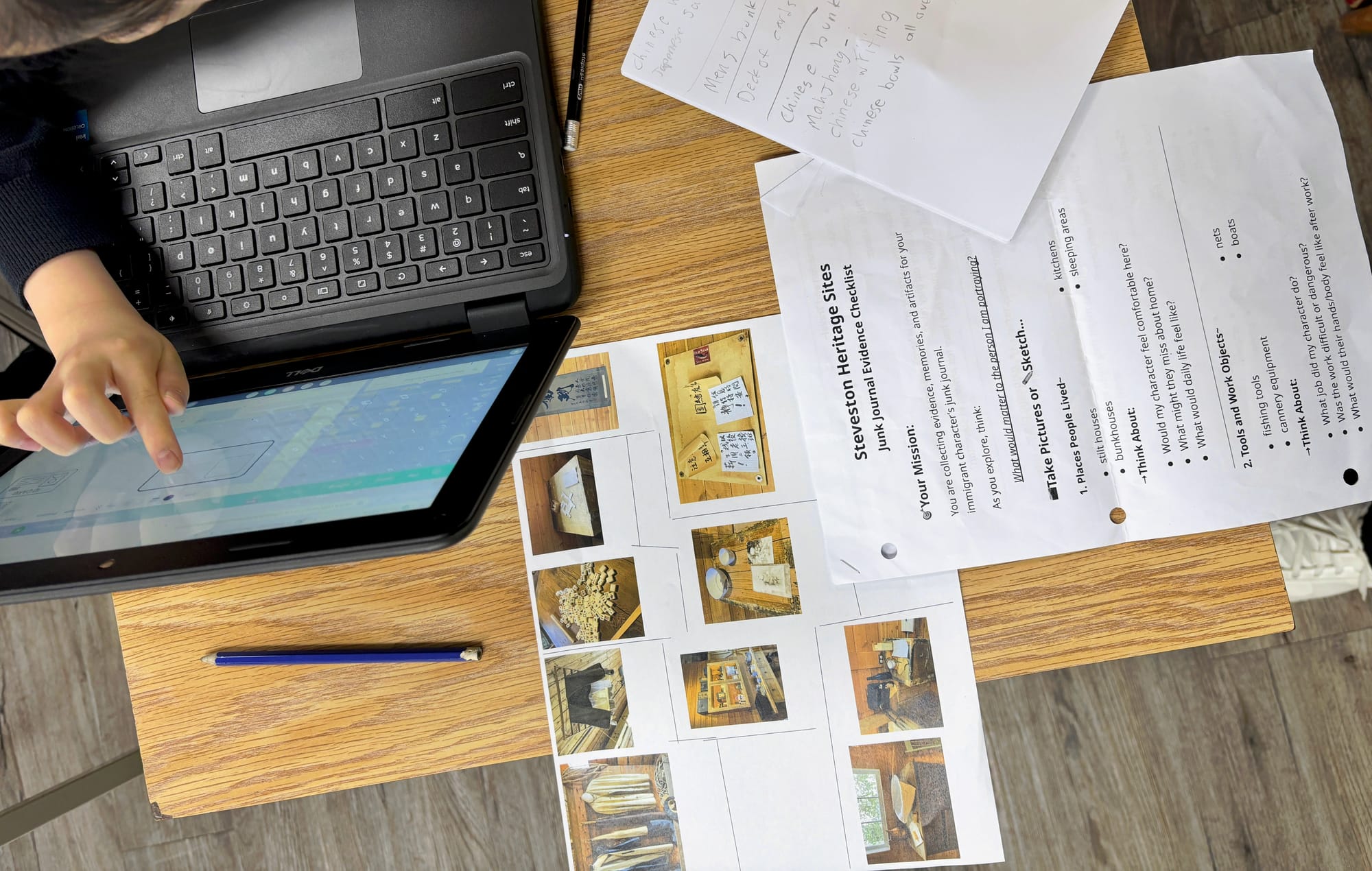
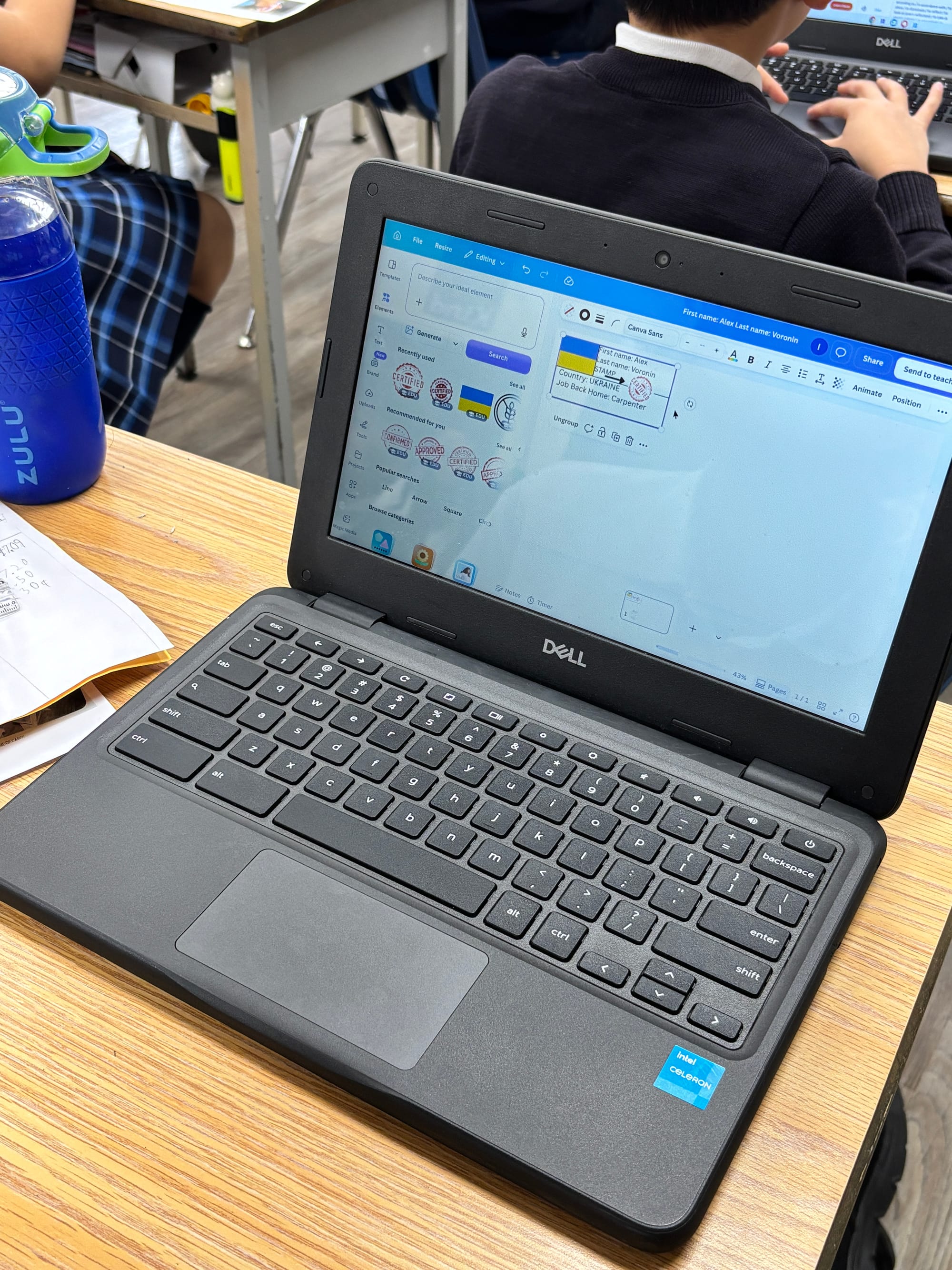
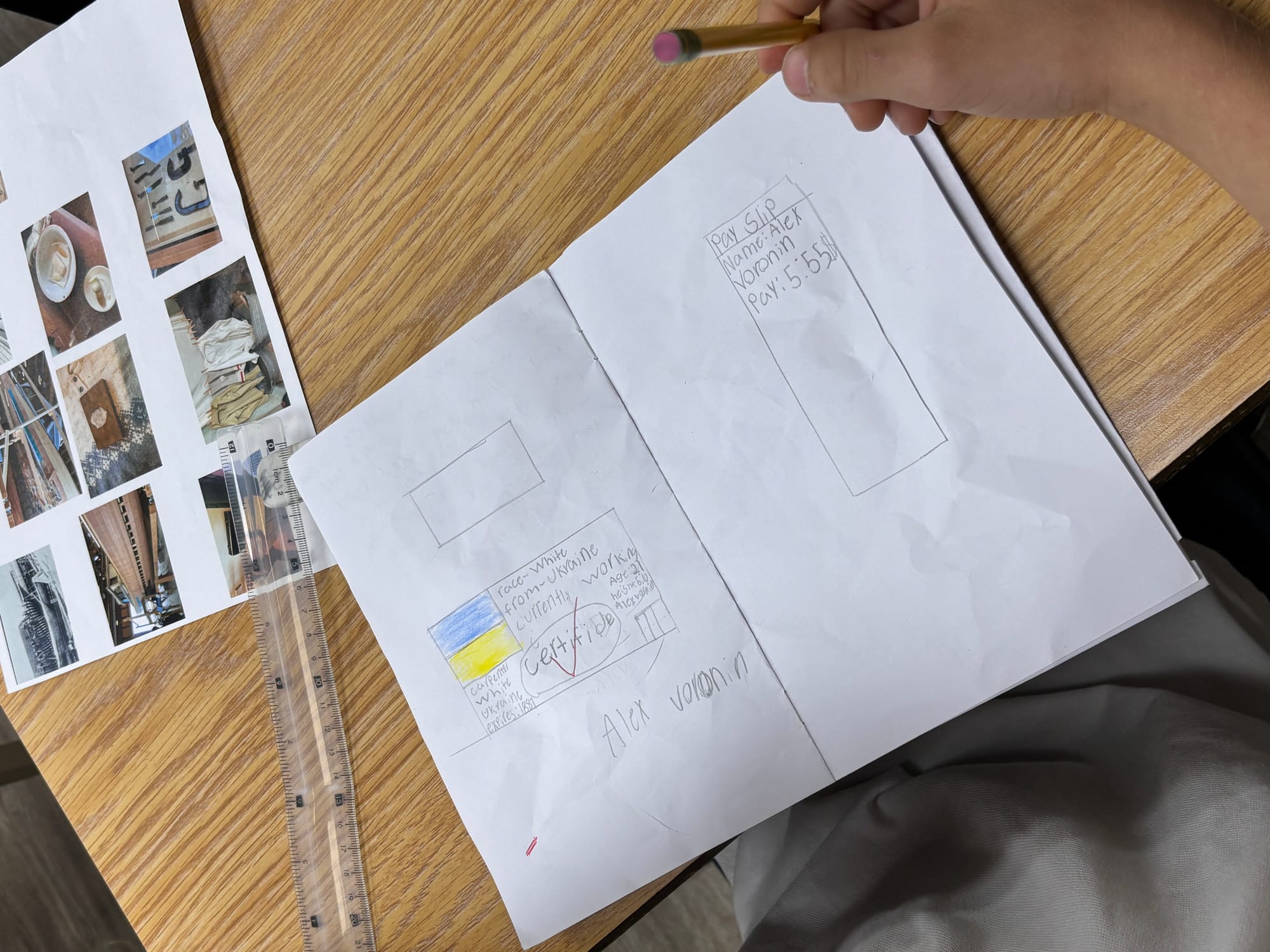
Some students had already hand-drawn versions of the tickets and identification documents they imagined their characters carrying. Now they were taking those ideas and rebuilding them digitally.
For projects that use Canva heavily, I try to encourage students to build rather than simply search for the right template. This project lent itself beautifully to that. Almost everything they made was constructed one element at a time: shapes, lines, text, borders, stamps and little details layered together until a new artifact emerged.
Though not everything needed to be digital. Some students drew artifacts by hand. Others combined digital pieces with handwriting, sketches and photographs. The technology was just one option in a much larger collection of materials.
The Finished Journals 📖
When I returned to the school a few weeks later, Nadia and Angel were excited to show me what the students had created.
The journals were completely different from one another.
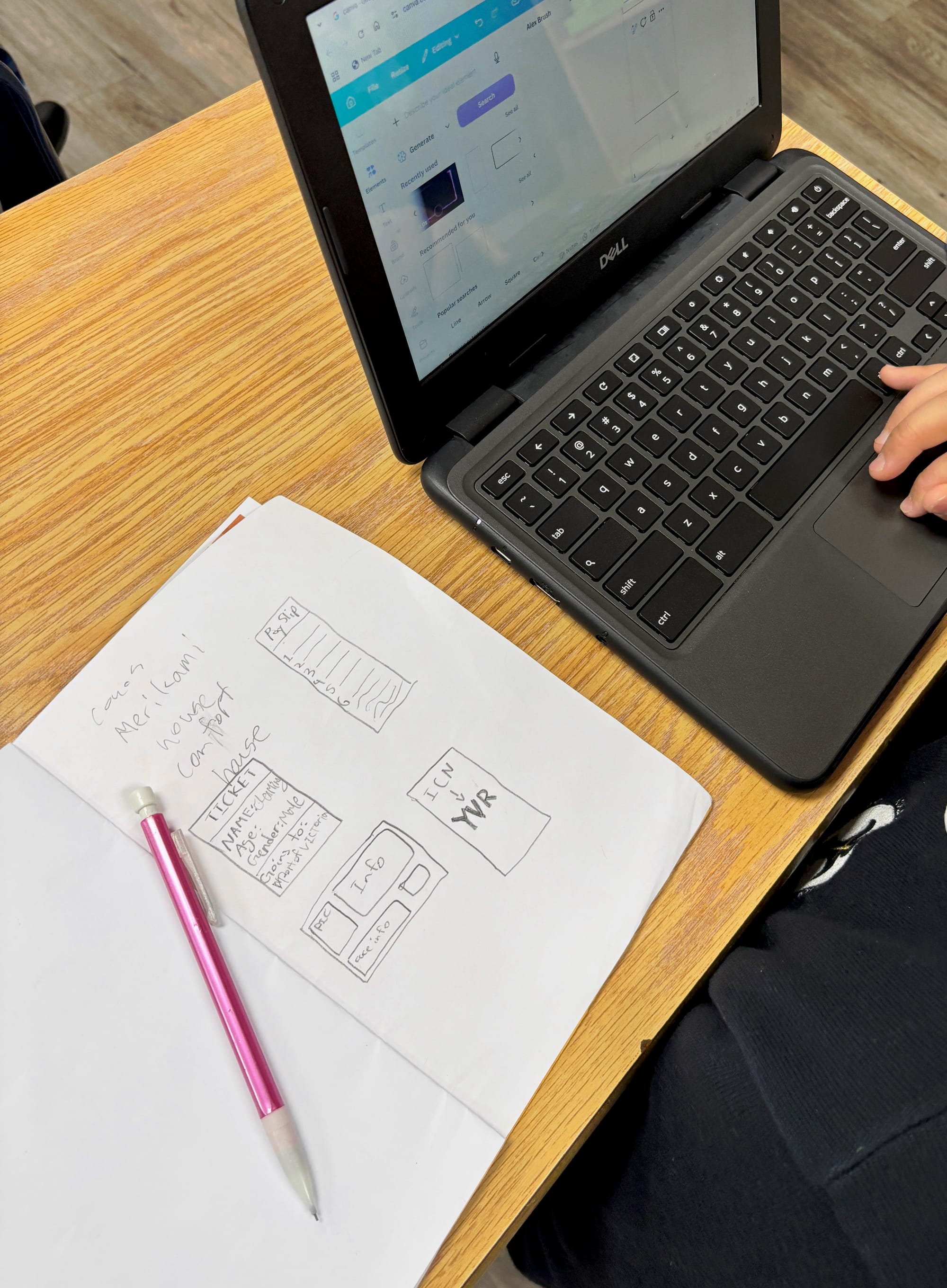
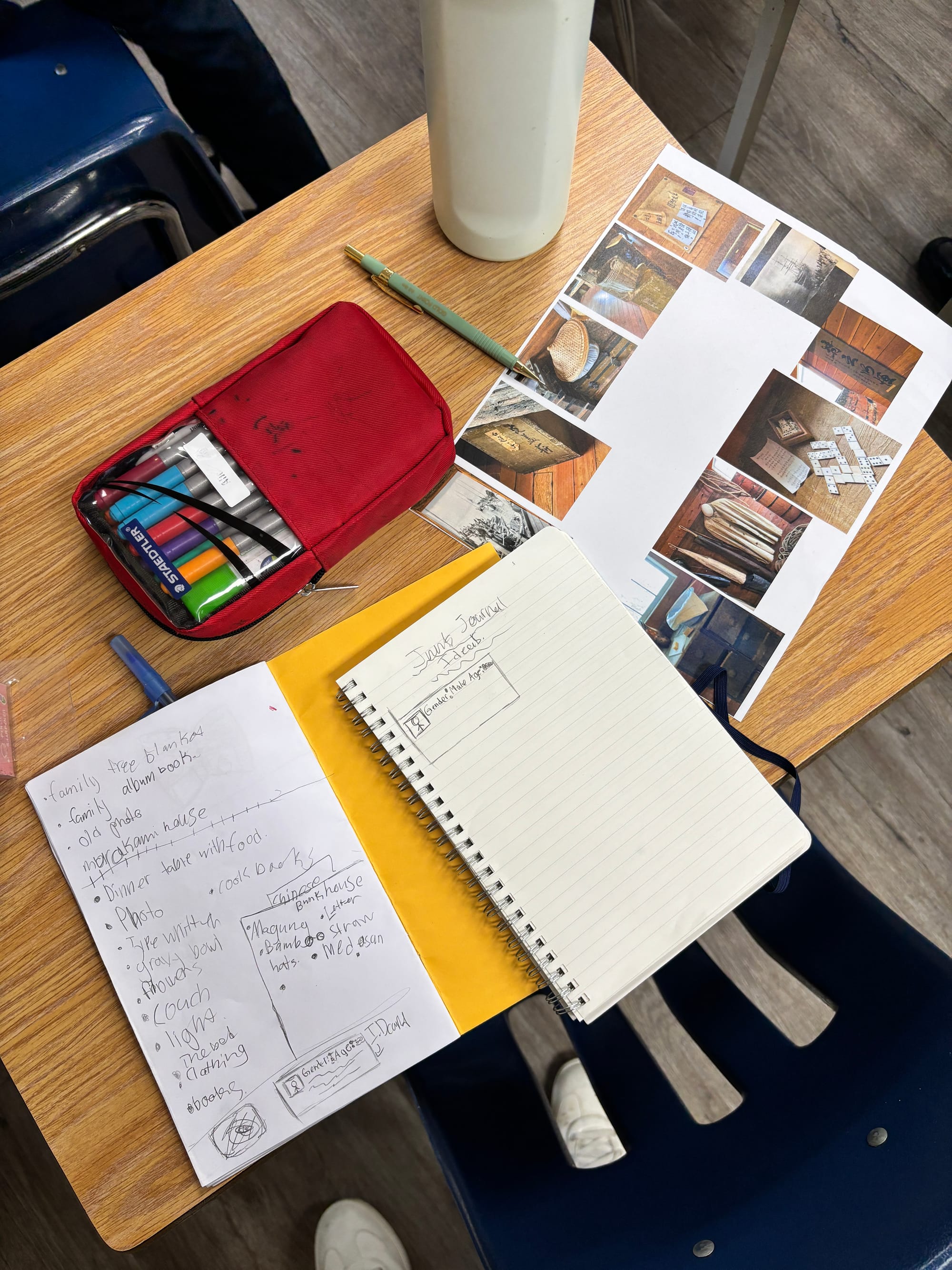
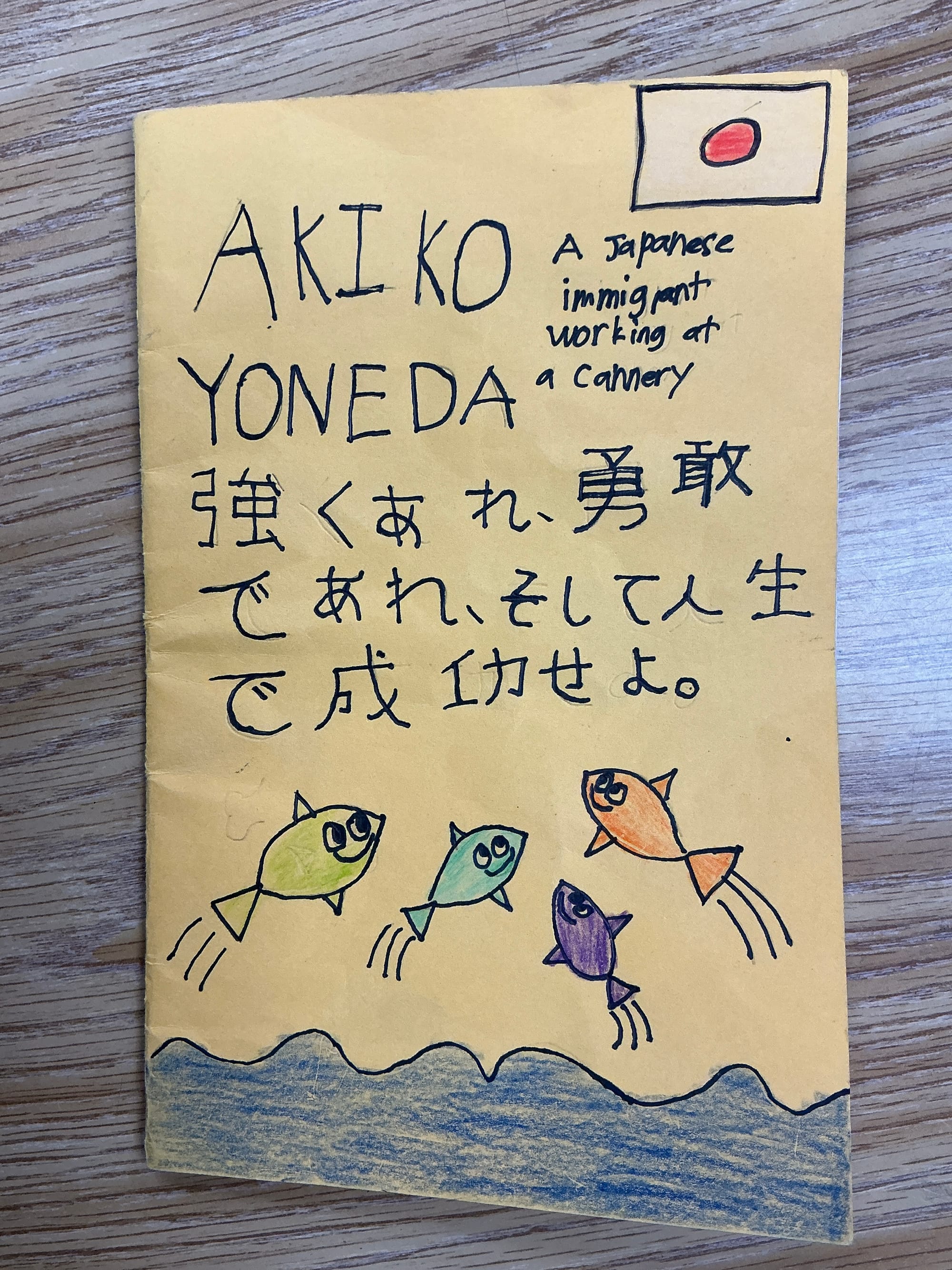
Pages combined field-trip photographs with handwritten diary entries, sketches, printed Canva artifacts and pieces of historical information.
But the most interesting part wasn't any individual ticket, photograph or diary entry. It was what happened when everything was put together. Students had taken dozens of small pieces of information and turned them into the story of a person.
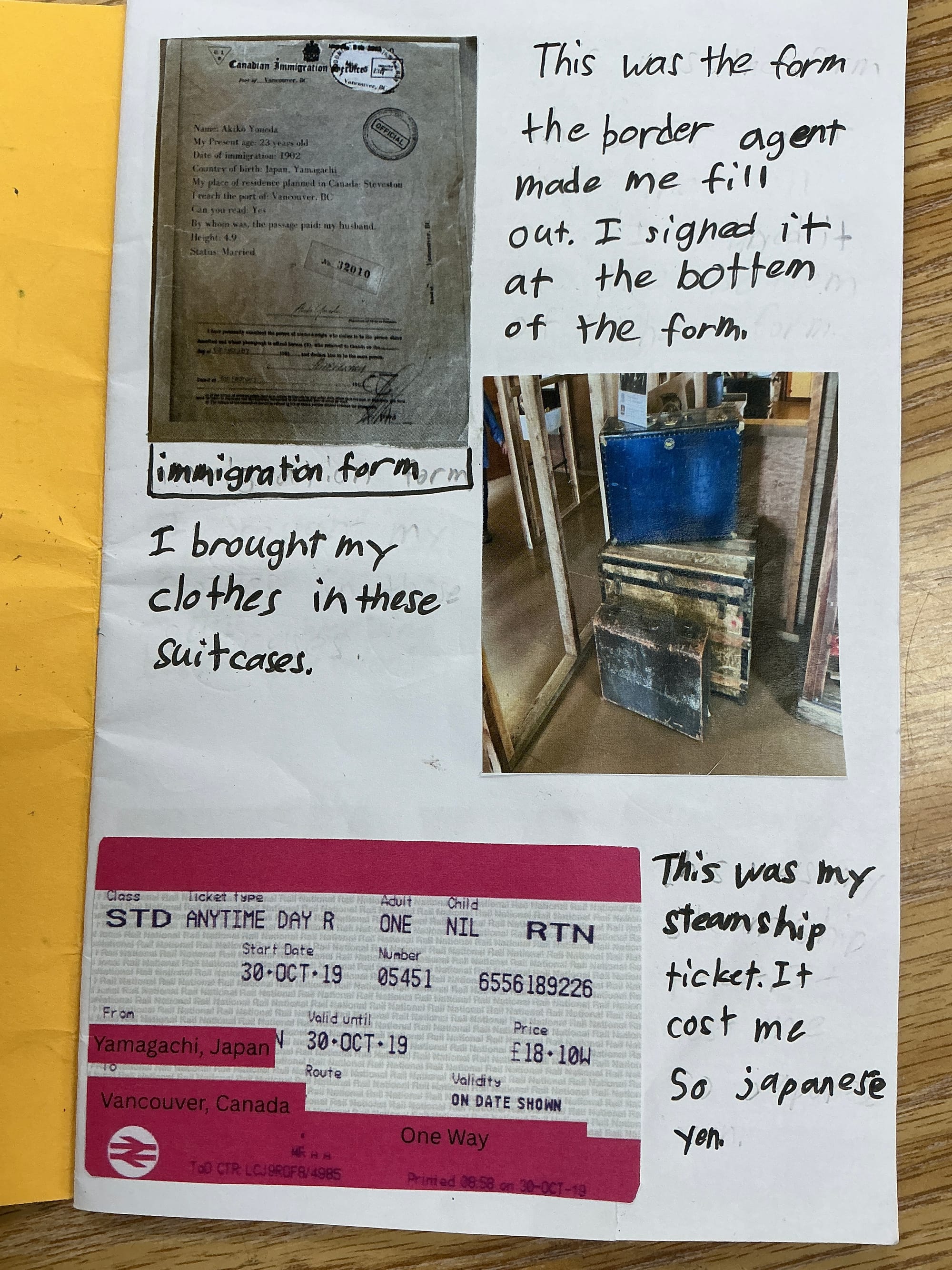
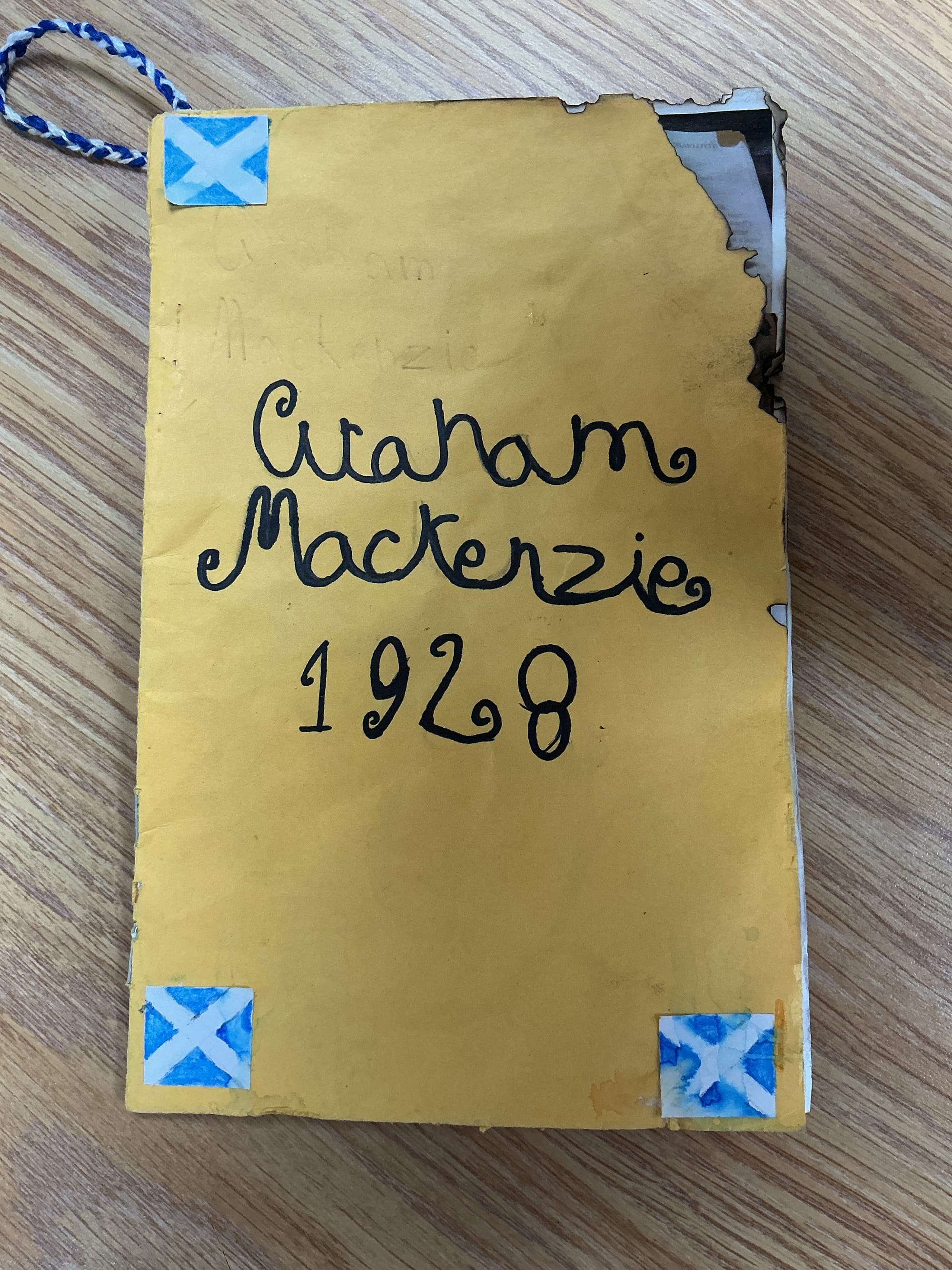
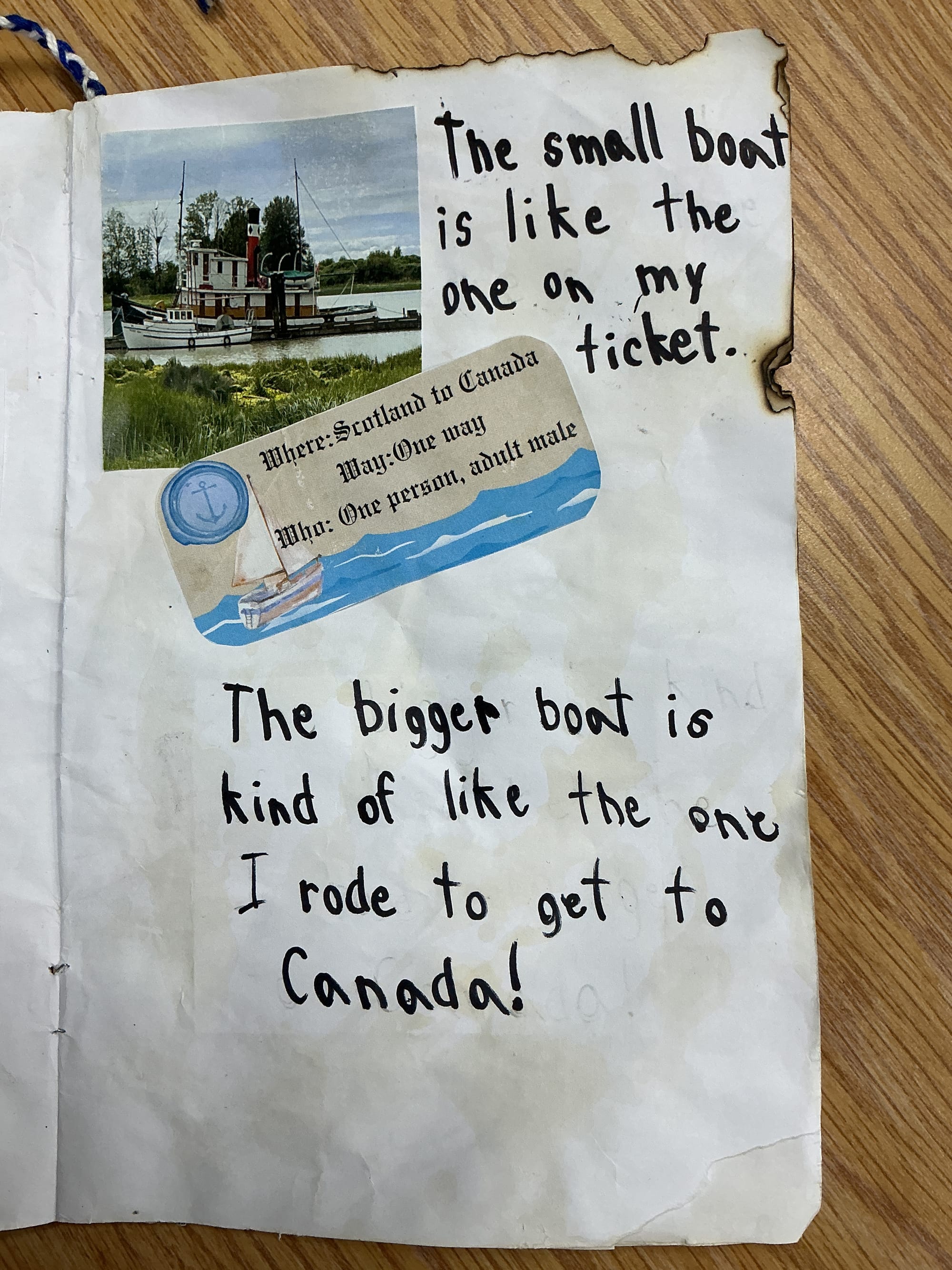
They had to understand enough about immigration, working conditions, culture and daily life to decide what belonged in that story. They had to write empathetically from another perspective while still grounding their ideas in historical evidence. And they had to communicate all of that creatively through the design of their journals.
That's a lot of learning packed into a few scraps of paper!
Designing the Field Trip Around the Learning 🧳
This project started with a field trip that was already booked.
We didn't change Britannia's educational program. We didn't need to. Instead, we asked what students could do with everything that program was already giving them.
The interpreters at Britannia were incredibly accommodating once they understood why students were carrying iPads and what they were creating afterwards. They even helped guide students toward information that might be useful for their characters.
The teachers and I got to watch students flex a huge range of skills along the way: historical comprehension, evidence gathering, perspective-taking, writing, research, design and creative expression.
The field trip became the bridge connecting all of them.